Living Room Ideas With TV: 2026 Layout & Design Guide
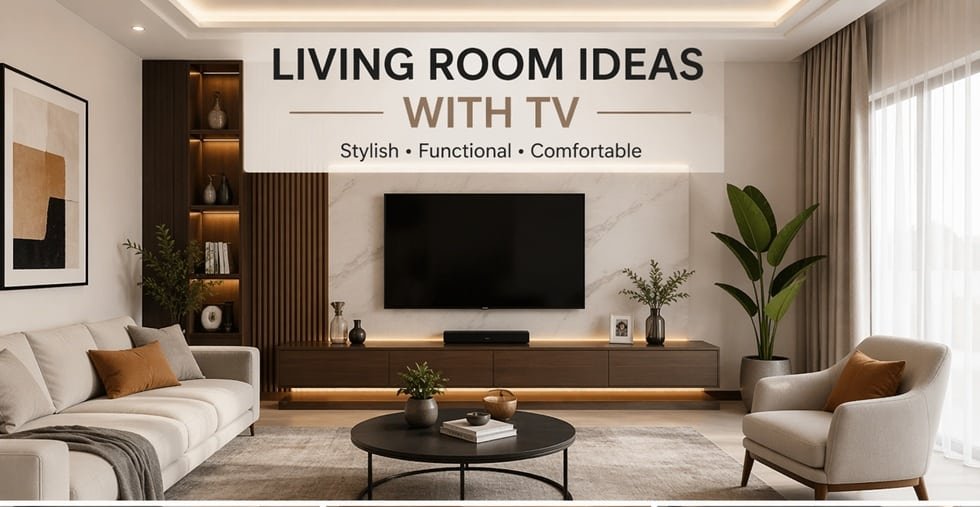
The best living room ideas with a TV balance the screen as a functional focal point without letting it dominate the room. Use a media console or built-ins, mount the TV at eye level (42 inches from floor to center), frame it with art or shelving, and hide cables for a clean look.
The TV is the most unavoidable design challenge in modern American living rooms. It’s a large black rectangle that dominates the space if you let it — or disappears into an intentional design if you plan around it. This guide shows you exactly how to integrate a TV into your living room without turning your home into a sports bar. You’ll learn viewing distance math, correct mounting height, 12 layout configurations for every room shape, accent wall ideas, cable management, budget-friendly updates, and rental-safe solutions. Every recommendation is grounded in interior design principles and real-world US product pricing for 2026.
TV Size, Viewing Distance & Mounting Height: Get This Right First
Before you design the room, get the technical fundamentals correct. Most design mistakes start here.
Ideal TV Size for Your Room
The general rule: the TV diagonal should match how far you sit from it.
| Seating Distance | Recommended TV Size |
|---|---|
| 6–8 feet | 55″ |
| 8–10 feet | 65″ |
| 10–12 feet | 75″ |
| 12+ feet | 85″+ |
Formula: Viewing distance (inches) ÷ 1.5 to 2.5 = TV diagonal size.
Correct Mounting Height
The center of the TV screen should sit at 42 inches from the floor — approximately eye level when seated on a standard sofa.
Mounting too high is the #1 design mistake Americans make, especially when placing TVs above fireplaces.
Viewing Angle Matters
- Don’t mount the TV so high you tilt your head up
- Center viewing angle should be within 15 degrees of horizontal
- If above fireplace, use a tilting mount angled slightly downward
12 Living Room Layout Ideas With a TV
Different room shapes and lifestyles call for different approaches.
1. Classic Media Console Setup
A low, wide media console with the TV mounted or placed above it. The console holds a soundbar, streaming devices, and storage baskets.
- Best for: Rentals, traditional living rooms, first homes
- Price range: $200–$1,500 (IKEA BESTÅ, West Elm, Crate & Barrel)
2. Built-In Cabinetry Wall
Floor-to-ceiling built-ins with the TV centered, surrounded by shelving, books, and decor.
- Best for: Homeowners, long-term renters, design-focused spaces
- Price range: $3,000–$15,000 (custom or IKEA PAX/BESTÅ hack)
3. Gallery Wall Around the TV
Frame the TV with art, mirrors, and botanical prints in varied sizes. Makes the TV feel like part of a curated collection.
- Best for: Modern, eclectic, boho spaces
- Tip: Keep frames in a similar color tone for cohesion
4. Floating Shelves Flanking the TV
Two open shelves on either side hold plants, books, ceramics, and decor, breaking up the black rectangle.
- Best for: Minimalists, small spaces, mid-century modern
- Price range: $40–$200 per shelf
5. Accent Wall Behind the TV
Paint, wood slats, shiplap, or wallpaper behind the TV creates depth and disguises the screen.
- Best for: Farmhouse, contemporary, Scandinavian
- Popular treatments: shiplap, vertical wood slats, dark paint, stone veneer
6. Corner TV Setup
Tuck the TV into a corner on an angled stand or corner-mount bracket. Saves wall space.
- Best for: Small living rooms, awkward room shapes
- Downside: Limits seating flexibility
7. TV Above Fireplace
Traditional American layout, but risks neck strain. Use a tilting mount and verify mantle clearance.
- Best for: Open-concept homes, traditional architecture
- Warning: Heat damage risk — check fireplace specs
8. Hidden TV Cabinet
Cabinet doors, barn doors, or sliding panels conceal the TV when not in use.
- Best for: Formal living rooms, traditional decor
- Price range: $800–$4,000 (custom work)
9. Samsung Frame TV as Art
The Frame TV displays artwork when off, blending into a gallery wall setup.
- Best for: Design-forward homes, open-concept spaces
- Price range: $1,000–$2,500 for 55″–75″
10. Floor-Standing TV Stand
Modern swivel stands let you reposition the TV without wall mounting.
- Best for: Renters, frequent movers, flexible layouts
- Price range: $150–$600
11. Dual-Purpose Media Wall
The TV wall includes a fireplace, bookshelves, and hidden storage — everything in one feature.
- Best for: Modern open-concept homes
- Price range: $5,000–$20,000 custom
12. Sectional Facing TV With Console Table Behind
Use a console table behind the sofa to anchor the seating zone and hide cables running to the TV.
- Best for: Open-concept, loft-style apartments
- Bonus: Console adds lamp space and visual separation
How to Arrange Furniture Around a TV
Getting furniture placement right is 80% of the design.
The Conversation Distance Rule
The sofa should sit 8–10 feet from the TV for comfortable viewing and conversation. Closer means eye strain; farther means squinting.
Seating Arrangements That Work
- Sofa facing TV — classic, works in rectangular rooms
- L-shaped sectional — maximizes seating in corners
- Two sofas parallel with TV at one end — formal, great for entertaining
- Sofa + two armchairs facing TV — flexible, conversation-friendly
- Sectional with accent chairs — blends viewing and socializing
Rug Placement
- Rug should be large enough to sit under the front legs of all seating
- 8×10 minimum for standard living rooms; 9×12 for larger spaces
- Leave 6–18 inches of floor between rug edge and walls
Cable Management: The Detail That Separates Good From Great
Visible cables ruin even the best TV wall design.
Renter-Friendly Cable Hiding
- Cable raceways — paintable channels that stick to walls ($15–$40)
- Cord covers — fabric sleeves that wrap multiple cables ($10–$25)
- Over-door cord organizers
- Under-console cable boxes — consolidate chargers and power strips
- Velcro cable ties — group cables neatly
Permanent Installations
- In-wall cable management kits ($30–$100, requires drywall cutting)
- Recessed outlets behind TV — makes flush wall mounting possible
- Ethernet + HDMI wall plates — professional look
Power Outlet Tip
Install a recessed outlet behind where the TV will be mounted. This lets the TV sit flush against the wall without a visible power cord.
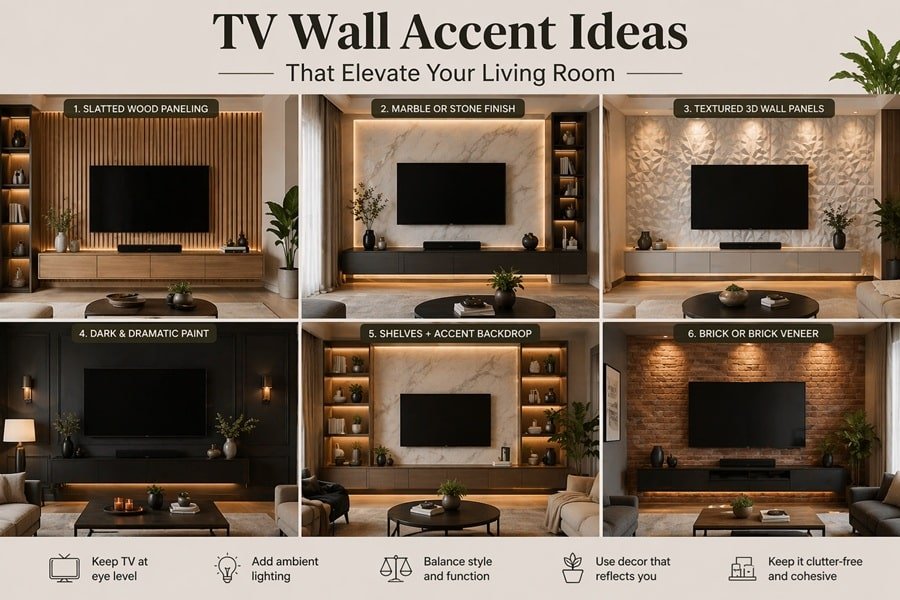
TV Wall Accent Ideas That Elevate Your Living Room
Popular 2026 Accent Wall Styles
- Vertical wood slats (fluted panels) — modern, texture-rich
- Shiplap or board-and-batten — farmhouse, coastal
- Dark moody paint (deep green, navy, charcoal) — dramatic, premium
- Stone veneer or faux brick — industrial, rustic
- Textured wallpaper — grasscloth, linen, geometric
- Limewash or plaster finish — European-inspired luxury
Color Choices Behind TVs
Best: Dark, warm tones help the black TV “disappear” visually Worst: Bright white or stark colors — make the TV stand out harshly
Lighting the Accent Wall
- LED strip lighting behind the TV (bias lighting) reduces eye strain and adds ambiance
- Wall sconces flanking built-ins add warmth
- Uplights graze wall texture beautifully
Small Living Room TV Solutions
Small spaces need smart TV integration.
Space-Saving Strategies
- Wall-mount the TV — saves floor space
- Corner placement — uses dead space
- Floating shelf below TV — replaces bulky media console
- Smaller TV size — 43″–55″ is plenty for under 150 sq ft
- Swivel wall mount — angle TV toward kitchen or dining
- Behind-sofa console — hides cables and adds function
What to Avoid
- Oversized TV for the room (looks cartoonish and strains eyes)
- Bulky entertainment centers (visually closes the space)
- TV above head height (causes neck strain)
- Dark accent walls in tiny rooms (closes them in)
Lighting Around a TV
Bad lighting kills both the viewing experience and the room vibe.
The Three-Layer Rule
- Ambient — general room lighting from a ceiling fixture or lamps
- Task — reading lamps near seating
- Accent — bias lighting behind TV, wall sconces, LED strips
Bias Lighting Benefits
A warm LED strip mounted behind the TV (Govee, Philips Hue Play, Amazon Basics) serves three purposes:
- Reduces eye strain during night viewing
- Enhances perceived contrast of the TV image
- Adds ambient glow to the accent wall
Typical cost: $25–$120 for a TV-sized LED kit.
Avoid
- Overhead lighting directly behind your seating (causes glare on screen)
- Windows directly across from the TV without curtains (daytime glare)
- Cool white bulbs (make the room feel like an office)
TV Stand vs. Wall Mount vs. Built-Ins
| Option | Cost | Best For | Drawbacks |
|---|---|---|---|
| Media console (floor) | $200–$1,500 | Renters, traditional style | Takes floor space |
| Wall mount only | $40–$200 | Minimalists, small rooms | Shows cables without planning |
| Floating media console | $300–$1,200 | Modern, mid-century style | Installation required |
| Built-in cabinetry | $3,000–$15,000 | Owned homes, long-term | Expensive, permanent |
| Samsung Frame + art | $1,000–$2,500 | Design-focused homes | Higher TV cost |
| Swivel floor stand | $150–$600 | Frequent movers | Less flush-looking |
Best US Retailers for Living Room TV Furniture (2026)
| Retailer | Best For | Price Range |
|---|---|---|
| IKEA | BESTÅ modular units | $200–$1,500 |
| Wayfair | Wide selection, all budgets | $150–$2,500 |
| West Elm | Mid-century, modern | $500–$3,000 |
| Crate & Barrel / CB2 | Contemporary design | $600–$3,500 |
| Article | Minimalist, quality | $400–$2,000 |
| Target | Affordable basics | $150–$800 |
| Amazon | Budget + fast shipping | $100–$1,000 |
| Floyd | Modular, sustainable | $400–$1,800 |
Budget Breakdown: Living Room TV Wall Makeover (USA)
| Category | Budget | Mid-Range | Premium |
|---|---|---|---|
| TV mount or stand | $40–$150 | $200–$500 | $600–$1,500 |
| Media console | $200–$500 | $600–$1,500 | $2,000–$4,000 |
| Accent wall materials | $50–$200 | $300–$800 | $1,200–$4,000 |
| Cable management | $20–$60 | $80–$200 | $300–$600 |
| Lighting (bias + sconces) | $40–$120 | $200–$500 | $600–$1,500 |
| Decor (shelves, art) | $100–$300 | $400–$1,000 | $1,500–$4,000 |
| Total | $450–$1,330 | $1,780–$4,500 | $6,200–$15,600 |
Prices reflect 2026 US retail.
Common TV Placement Mistakes to Avoid
- ❌ Mounting too high — neck strain and awkward viewing angles
- ❌ TV on a cold white wall — makes the screen stand out harshly
- ❌ Visible cables — instantly cheapens the design
- ❌ Undersized rug — furniture floats and looks disconnected
- ❌ TV facing a window — daytime glare is brutal
- ❌ Tiny TV in a huge room — visual imbalance
- ❌ Massive TV in a tiny room — overwhelming, strains eyes
- ❌ Ignoring lighting — the most underrated design element
Renter-Friendly TV Wall Ideas
You can still create a stunning TV setup without drilling permanently.
- Freestanding TV console — no wall mounting required
- Swivel floor stand — relocates easily between rooms
- Leaning shelves — hold decor without anchors
- Peel-and-stick wood slats or shiplap — accent wall illusion
- Command strips — hold lightweight frames and decor
- Removable wallpaper — behind the TV for color punch
- Tension-rod curtains — frame TV alcoves
- Plug-in sconces — no hardwiring needed
- Cord covers painted to match the wall
- Large leaning mirrors to balance the TV visually
FAQs
1. How high should a TV be mounted in a living room?
The center of the TV screen should be approximately 42 inches from the floor — roughly eye level when seated on a standard sofa. Mounting higher forces you to tilt your neck upward, causing strain over time. If above a fireplace, use a tilting mount angled slightly downward to compensate.
2. What’s the ideal viewing distance for a 65-inch TV?
For a 65-inch 4K TV, the optimal viewing distance is 8 to 10 feet from the screen. The general formula is TV diagonal × 1.5 for the minimum distance and × 2.5 for the maximum. Sitting closer than 6 feet can strain your eyes; sitting farther than 12 feet makes text hard to read.
3. Should I put my TV above the fireplace?
Only if you can install a tilting mount and your ceiling height allows — otherwise the TV sits too high. Also check the fireplace specs: many manufacturers warn against mounting electronics above gas or wood-burning fireplaces due to heat damage. Measure the mantle-to-ceiling clearance before deciding.
4. How do I hide TV cables without cutting into the wall?
Use paintable cable raceways from Amazon or Home Depot ($15–$40) to channel cables down the wall. Alternatively, fabric cord covers wrap multiple cables neatly. For permanent hiding, in-wall cable management kits ($30–$100) tuck cords inside drywall — check rental agreements before installing.
5. What goes well next to a TV on the wall?
Floating shelves with plants, books, and decor break up the black rectangle. Framed art or a small gallery wall creates balance. Wall sconces add warm lighting. Avoid filling every inch — leave negative space so the TV doesn’t compete with surrounding decor. Keep accents in similar tones for cohesion.
6. Is a media console necessary if I wall-mount the TV?
Not strictly, but it adds functionality and anchors the wall visually. A console holds soundbars, streaming devices, game consoles, and cable boxes while offering decor space. Alternatives include floating shelves, built-ins, or leaning a console-style bench under the TV — all work depending on your style.
7. What’s the best TV wall color?
Warm, darker tones work best — deep greens, warm grays, navy, charcoal, or even a moody terracotta. Dark colors help the black screen visually blend into the wall instead of standing out. Avoid stark white, which makes the TV look like a harsh black rectangle by contrast.
Key Takeaways
- Mount the TV so its center is 42 inches from the floor — eye level when seated
- Match TV size to viewing distance using the 1.5–2.5× rule
- Use a media console, built-ins, or gallery wall to integrate the TV visually
- Hide cables with raceways, cord covers, or in-wall management kits
- Warm, darker accent walls help the TV visually blend in
- Add bias lighting behind the TV for eye comfort and ambiance
- Renter-friendly solutions (leaning shelves, peel-and-stick, floor stands) deliver design impact without drilling