How to Plan a Pool Renovation: A Practical Guide to Surfaces, Safety, and Backyard Function
Key Takeaways
- A successful renovation addresses structural, safety, maintenance, and comfort concerns, not appearance alone.
- Inspect the pool shell, finish, equipment, deck, drainage, and access points before selecting materials.
- Prioritizing required repairs ahead of optional features helps control costs and avoid mid-project changes.
- Combining related work can reduce the need for repeated demolition and keep the pool out of service for less time.
- Material choices should suit the climate, expected maintenance, foot comfort, and how the backyard is used.
Planning a pool renovation starts with more than choosing a new color or adding a water feature. An aging pool may have worn finishes, inefficient circulation, uneven decking, dated lighting, or drainage issues that affect how safe and enjoyable the space feels.
A clear plan helps homeowners distinguish between cosmetic updates and repairs that should be completed first. By documenting current conditions, setting priorities, and reviewing the entire backyard rather than just the pool, it is easier to create a finished space that works well for daily use.
Signs a Pool Needs More Than a Simple Repair
A single cracked tile or worn seal may call for a targeted repair. However, several problems that appear at once can point to a broader need for renovation. Rough or stained interior surfaces, recurring water loss, loose coping, deck cracks, poor circulation, and noisy equipment often make it sensible to evaluate the entire system before addressing one visible issue.
For pools with a deteriorating plaster finish, pool replastering may be one part of a larger plan that also considers waterline tile, lighting, steps, fittings, and equipment performance. Coordinating these items can prevent newly completed surface work from being disturbed by later repairs.
What to Check Before Planning
Inspect the Structure and Surroundings
Start with the pool shell. Note cracks, hollow areas, loose material, stains, and signs of movement or leaks. Structural concerns, plumbing failures, and electrical issues should be evaluated before cosmetic work begins. Then look beyond the water: inspect deck condition, drainage paths, gates, fencing, shade, seating, landscaping, and the route workers will need to use for access.
Document Existing Conditions
- Photograph the pool, deck, coping, drains, and equipment pad.
- Record equipment model numbers, approximate ages, and recurring repair issues.
- Measure pool dimensions, deck areas, gates, and narrow access paths.
- List what currently feels inconvenient, unsafe, difficult to clean, or uncomfortable.
Defining the Renovation Scope
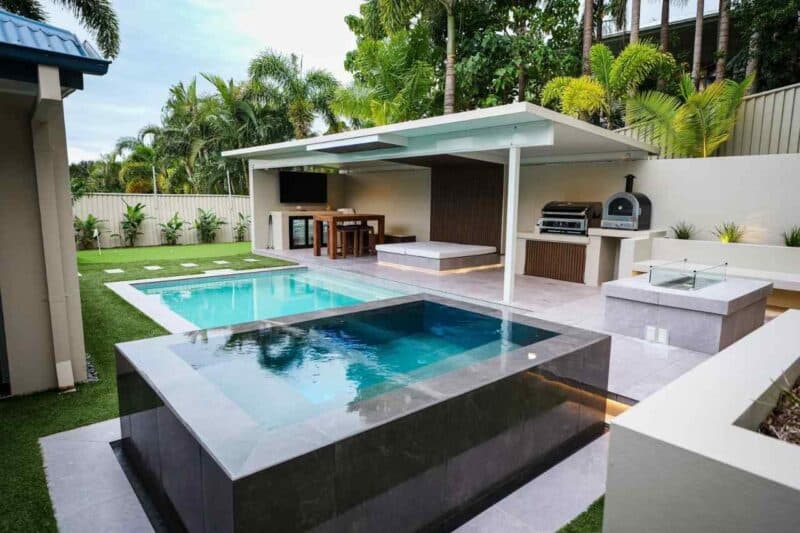
Organizing the project into levels keeps decisions manageable. A surface refresh may include an interior finish, tile, coping repairs, and lighting. A functional renovation may add plumbing, pumps, filters, drainage, deck work, or safety improvements. A full backyard update can combine pool changes with shade, seating, landscaping, and entertaining areas.
Make three lists before choosing finishes: needed, helpful, and optional. Needed work protects the structure, addresses safety, or restores reliable operation. Helpful changes improve comfort or reduce maintenance. Optional features are worthwhile only if they support how the household will actually use the space.
Surface, Tile, and Decking Choices
Interior Finishes and Waterline Tile
Pool surfaces vary by pool type, texture, color, repair method, and maintenance needs. Plaster can provide a traditional smooth finish, while quartz and pebble finishes may offer different textures and visual depth. Tile, fiberglass coatings, and liner systems can also be appropriate in specific situations. View samples outdoors and, when possible, near water, because direct sunlight can make color and texture look very different.
Waterline tile is both a design element and a practical transition at the pool’s edge. Ceramic, porcelain, glass, and stone each have different cleaning needs and appearances. Whatever finish is selected, consistent water care matters. Healthy swimming practices include maintaining a clean and safe pool environment, which should remain part of the maintenance plan after renovation.
Choosing Decking for Comfort and Drainage
Concrete, pavers, natural stone, porcelain, and composite surfaces can all serve different needs. Compare how hot each material gets in summer, its wet-surface traction, repairability, maintenance requirements, and how well it fits the landscape. Drainage deserves equal attention. Deck slopes should direct water away from the home and avoid areas where puddles can form near walking paths or pool entries.
Equipment and Lighting Updates
Renovation is a practical time to inspect pumps, filters, heaters, valves, plumbing connections, automation controls, and electrical components. Replacing unreliable equipment after a new finish is installed can add avoidable disruption. Updated lighting, timers, and accessible controls can improve visibility and make routine operation easier without changing the character of the backyard.
Safety Features to Review
Review gates, self-closing access points, barriers, handrails, step visibility, deck traction, and nighttime lighting. Check drain covers for damage, looseness, or missing components. Information about pool and spa drain cover safety can help homeowners understand why properly maintained anti-entrapment components matter.
Local requirements can vary by city, county, and the type of work being completed. Confirm applicable rules before changing barriers, electrical systems, drainage, or pool geometry, especially when a renovation alters access or safety features.
Building a Realistic Budget
Separate fixed work from optional upgrades. Fixed costs may include inspection, demolition, repairs, surface preparation, materials, labor, permits, disposal, and cleanup. Optional costs might include upgraded lighting, heating, water features, expanded decking, shade structures, or landscaping.
Set aside a contingency for hidden conditions uncovered after demolition, such as plumbing failures, structural damage, drainage problems, or electrical updates. When comparing written estimates, confirm the materials included, permit responsibilities, schedule assumptions, change-order process, warranty details, and maintenance instructions.
A Step-by-Step Planning Process
- Identify appearance, maintenance, comfort, and safety concerns.
- Inspect the structure, finish, plumbing, equipment, deck, and drainage.
- Rank work as needed, helpful, or optional.
- Set a budget that includes a contingency reserve.
- Finalize dimensions, finishes, access, lighting, and backyard features.
- Review a written scope that lists each major task and material.
- Plan for weather, inspections, material lead times, and curing periods.
- Complete a final walkthrough, test equipment, and collect care instructions.
Questions to Ask Before Work Begins
- What must be repaired before cosmetic upgrades begin?
- Which existing components can remain in place?
- How long will the pool be unavailable?
- What conditions could increase the final cost?
- Who is responsible for permits, inspections, and cleanup?
- How will nearby landscaping, pets, children, and outdoor areas be protected?
- What maintenance will the new finishes and equipment require?
The strongest renovation plans balance appearance with safe access, comfortable surfaces, dependable equipment, practical maintenance, and the long-term function of the entire backyard. A detailed inspection and a focused scope provide a better foundation than adding features simply because they look appealing in a sample or showroom.