What Is PVD Coating?
PVD stands for Physical Vapor Deposition, a high-tech vacuum-coating process originally developed for aerospace and medical equipment . In simple terms, PVD vaporizes metal (such as titanium or zirconium) into a plasma and deposits an extremely thin film onto a surface inside a vacuum chamber . Unlike traditional plating or painting, this film bonds at the molecular level, essentially fusing with the faucet or sink material. The result is a durable, tightly-adhering finish that doesn’t merely sit on top of the substrate – it becomes part of it. PVD coatings are typically just a few microns (often ~0.3–0.5 μm) thick , yet they exhibit remarkable performance.
PVD coating was introduced to home fixtures around the late 20th century (it’s been used on faucets for over 30 years now ). Early on, it was adopted in high-end kitchen and bath design as an “advanced finish” technology, often marketed as lifetime finish due to its longevity. Over time, it has moved from a novelty to a gold standard for premium kitchen fixtures. Today, most luxury faucet manufacturers rely on PVD for their top-tier finishes because of its superior durability and appearance. (In fact, many will proudly label products “PVD-coated” as a hallmark of quality.)
How PVD Changed the Kitchen Fixture Industry
Before PVD came along, kitchen faucets and sinks were finished with methods like electroplating, powder-coating, or clear lacquer. Each had its merits but also significant drawbacks over years of use:
- Electroplating (Chrome/Nickel): This century-old process electrochemically deposits metal layers (e.g. chrome over nickel) onto the faucet. While it produces a beautiful shine, traditional electroplated finishes are prone to peeling and corrosion over time . If the underlying metal or plating layers get exposed (say by a scratch or pinhole), moisture can creep under and cause the plating to flake off or the base metal to rust. Standard chrome plating also limited consumers to a narrow palette (mostly silver tones), and it could contain trace heavy metals from the plating bath .
- Paints & Powder Coatings: To achieve colors like black, white, or bronze, some fixtures were painted or powder-coated. These finishes wrap the fixture in a colored layer, but they chip and scratch relatively easily. A dropped pan or an abrasive scrub pad could mar a painted faucet, revealing bare metal. Over time, UV light and cleaning chemicals might also cause discoloration or flaking.
- Clear Lacquer on Brass: Polished brass fixtures were often protected with a clear lacquer coat to prevent tarnishing. This gave a lovely initial shine, but lacquer is an organic layer that wears down and cracks, especially under heat and moisture. Once breached, the brass beneath would oxidize (turn dull or green). Homeowners with 1980s-era lacquered brass faucets often saw the “lifetime” lacquer fail, leading to patchy tarnish.
In short, pre-PVD finishes had a tendency to degrade: peeling chrome, chipped enamel, or tarnished brass were common eyesores after just a few years of heavy use. This created frustration for homeowners and a reputation that fashionable finishes (like gold or black) meant high maintenance or short lifespan.
PVD was a game-changer. Introduced in the 1990s for residential fixtures, it allowed manufacturers to offer bold new looks without sacrificing durability. With PVD, a faucet could be bright brass or matte black yet stay that way for decades without peeling or fading. This technology “set new standards in design and durability,” as noted by luxury brand Dornbracht . Companies began marketing PVD finishes under names like “Brilliance” or “Vibrant” and backing them with lifetime warranties, signaling confidence that the color would not corrode or dull. By the 2000s, most high-end brands had transitioned their specialty finishes to PVD, and even mid-range manufacturers followed for popular colors.
The industry shift is evident: hansgrohe, for example, reports that PVD now makes up the majority of their high-quality special finish products due to its versatility and durability . Kohler similarly notes that its premium PVD faucet finishes resist scratching and tarnishing far better than basic plated finishes, exceeding standard durability benchmarks two-fold . In practical terms, this means fixture makers can now confidently offer trendy finishes (warm gold, matte black, etc.) that maintain their showroom look for years. Designers embraced this, making fixtures a focal point of kitchen design rather than a maintenance headache. Homeowners, too, began to see a luxurious faucet or sink as an investment piece—with PVD, a statement faucet in brushed gold is no longer something that will peel or discolor in a year, but a long-lasting enhancement to the home’s value.
The Science Behind PVD: How the Process Works
To appreciate why PVD coatings perform so well, it helps to understand the science behind them. The PVD process is highly technical, akin to an industrial ballet of physics and chemistry:
- Vacuum Chamber Setup: The faucet or sink (or its components) is placed in a vacuum chamber and carefully cleaned of any contaminants. A high vacuum environment is crucial – it allows vaporized particles to travel unimpeded and ensures no oxidation during deposition .
- Evaporation & Ionization: Inside the chamber, a solid metal “target” material is heated (often with an electric arc or magnetron sputtering) until it vaporizes into a cloud of atoms . Common target materials are metals like titanium or zirconium, or their alloys. This metal vapor is then bombarded with a reactive gas (such as nitrogen, methane or oxygen depending on the desired coating) which can form metal compounds (nitrides, carbides, etc.). A plasma of ionized metal and gas is created, filling the chamber.
- Deposition: The fixture pieces are rotated on racks (often using a planetary gear system) to expose all sides evenly . The metal/gas ions from the plasma deposit onto the surface of the fixture, atom by atom, forming an incredibly thin, uniform film. Because the substrate (the faucet/sink) is also biased with an electric charge, the metal ions are literally driven and “planted” into its surface, creating a microscopic bond. This isn’t painting or electroplating – it’s closer to a fusion. As hansgrohe describes, the result is a 0.3 micron thick layer that is bonded so well it becomes like a part of the faucet itself .
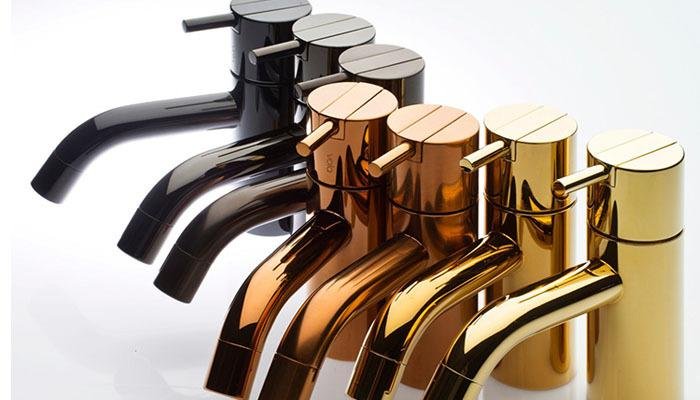
- Color Formation: By tweaking the target material and reactive gases, different colors and properties can be achieved. Titanium nitride (TiN), for example, produces a classic brilliant gold tone (often used for “brushed gold” or brass-look finishes). Zirconium nitride (ZrN) yields a warmer, brass/gold that many brands market as “French gold” or “lifetime brass.” Introduce a bit of carbon into the mix and you get rose gold or coppery hues (from titanium carbonitride). Oxygen can create tinted oxides. For a black or gunmetal finish, manufacturers often use combinations like titanium carbonitride or other ceramic blends – essentially creating a charcoal grey ceramic layer. The key is that no paints or dyes are involved: the colors are a result of light interacting with the metal-compound film itself. By changing the gas composition during deposition, the coating color can be precisely tuned . This is how one PVD chamber run might coat faucets in a gleaming gold, and the next run produce a matte black, simply by changing target materials and gases.
- Moderate Temperature, Broad Compatibility: PVD typically occurs at a moderately elevated temperature (a few hundred degrees Celsius), which is much lower than, say, the melting point of brass or steel. This allows PVD to be done on a variety of base materials (even on some plastics or glass) without damaging them . It’s a dry process with no liquid chemicals – meaning unlike electroplating, which uses toxic plating baths, PVD produces no hazardous chemical waste . It’s an environmentally cleaner technology.
The end result is a superbly robust, tightly-adhering coating that has a different nature than any traditional finish. Under a microscope, the PVD layer is dense and non-porous, with excellent coverage even around edges and corners. It’s as if the faucet was “dipped in a metal vapor alloy” and emerged with a new skin that is harder than steel, yet only microns thick. Because the coating is so thin and uniform, fine design details or threading on the fixture remain intact (contrast that with thick powder coats which can blur details).
In summary, PVD’s secret lies in this plasma deposition process that creates an atomic-level bond. Once a faucet is PVD-coated, the finish cannot be “peeled off” or chemically stripped without grinding or damaging the substrate itself . This is a key difference: we’re not adding a fragile layer; we’re transforming the surface chemistry of the object. That is why PVD finishes are so resistant to flaking and wear – the finish is literally part of the metal.
Why Homeowners Prefer PVD Over Traditional Finishes
For homeowners and interior designers, the practical benefits of PVD translate into peace of mind and lasting beauty. Here are the core reasons PVD-coated faucets and sinks have won favor over traditional finishes:
- Exceptional Durability: The foremost appeal is durability. PVD finishes are highly scratch-resistant and corrosion-resistant, far beyond electroplated or painted surfaces . In everyday use, this means a PVD faucet won’t easily get those fine scratches from cleaning or cooking activities that can plague a standard chrome faucet. If you accidentally bang a pot against a PVD stainless sink, you’re far less likely to see a scrape. Homeowners with busy kitchens or kids (think metal toy cars being banged on the sink!) appreciate that a PVD finish is tough enough to handle real life. One leading brand’s tests showed a PVD coating emerging unscathed after 500 cycles of abrasive scrubbing, whereas standard plated finishes showed visible wear . This kind of abrasion resistance is a big selling point – your faucet can maintain a like-new sheen even under heavy daily use.
- No Peeling or Chipping: Unlike a painted-on coating, PVD doesn’t peel. Many homeowners have horror stories of inexpensive plated fixtures flaking or lacquer peeling off, leaving an ugly patch. PVD’s molecular bond means no blistering or flaking over time . Even at the edges or threads, a properly applied PVD finish stays put. This reassurance is huge – one can choose a trendy color like matte black or white knowing it won’t start chipping at the corners (a common issue with painted black faucets) .
- Long-Term Color Stability: PVD finishes do not fade or tarnish. The color you see on day one is the color you’ll see years later. For example, a brushed gold PVD faucet will remain that exact warm golden hue – it won’t gradually dull or turn greenish as old brass plating or unprotected brass would. PVD coatings are inert; they don’t oxidize or patina. Homeowners who love the look of real copper or bronze but not the upkeep can get a “living finish” look in a PVD that actually stays constant (more on color options shortly). This long-lasting color is a key reason PVD is considered a “lifetime finish” .
- Stain and Fingerprint Resistance: Many PVD finishes are offered in brushed or matte textures, which naturally hide fingerprints and water spots better than mirror-polish chrome. Furthermore, the PVD layer is extremely smooth at the microscopic level, which makes it harder for dirt and mineral scale to cling. Homeowners find that PVD-coated stainless steel sinks, for instance, show fewer water spots and wipe clean more easily than uncoated stainless . Essentially, the slick, hard surface sheds grime. Some manufacturers even add an extra oleophobic treatment on top of PVD (advertised as “nano-coating”) to further repel fingerprints, but even out-of-the-box PVD tends to smudge less. This means less daily cleaning and no need for special polishes.
- Corrosion Proof: PVD acts as a barrier against water and air reaching the substrate. A quality PVD faucet will not pit or corrode, even in high-humidity or coastal environments that wreak havoc on normal finishes. For example, salty air can cause unprotected chrome to pit over time, but PVD coatings are exceptionally resistant to salty sea air and harsh cleaners . Homeowners in oceanfront homes or those with hard water prefer PVD for this reason – it’s far less likely to develop rust spots or pinhole corrosion.
- Low Maintenance: With PVD, the days of having to routinely polish your fixtures are over. Traditionally, if you had unlacquered brass you’d need to periodically wax or polish it, and if you had painted finishes you had to be careful not to scratch them during cleaning. PVD requires no special maintenance apart from gentle cleaning. There’s no worry about removing or re-applying protective coatings; the protection is the coating. As long as you avoid extremely abrasive cleaners (which one should avoid on any finish), a PVD fixture will look after itself. We’ll discuss specific care differences later, but homeowners love that they can “set it and forget it” – the faucet will look great with minimal effort.
- Luxurious Aesthetics: Beyond the technical perks, there’s an emotional reason as well: PVD finishes look and feel premium. They often have a rich luster or a silky brushed texture that just telegraphs quality when you see and touch it. Homeowners enjoy that a PVD brushed nickel or gold faucet doesn’t just resist damage – it also tends to have a depth and consistency to its color that cheap finishes lack. In a sense, PVD allowed the fixtures industry to elevate finishes to jewelry-like quality, making even utilitarian items like kitchen taps into design statements. This ties into trends (below) where faucets are chosen to coordinate with cabinet hardware and lighting as a cohesive design element.
Finally, a telling reason homeowners prefer PVD: warranty and trust. Most manufacturers implicitly reveal which finish is superior by offering longer warranties on them. It’s common to see “PVD finish – Limited Lifetime Warranty” whereas a basic painted finish might have 1 year, or standard chrome 5 years. This reflects the confidence in PVD. Homeowners have caught on that if they want a fixture that truly lasts, PVD is the safest choice. As one review succinctly put it: if you want a faucet that “maintains its appearance for years”, PVD is the superior choice . In other words, PVD lets you invest in a faucet once and enjoy it long-term, rather than dealing with finishes that degrade and drive you to replace fixtures more frequently (a point often noted in The Difference Between Cheap and Premium Kitchen Faucets). For anyone remodeling a kitchen with longevity in mind, these advantages make PVD-coated fixtures extremely attractive.
Color Options Made Possible by PVD
One of the most exciting ways PVD transformed kitchen design is by unleashing a rainbow of durable color finishes. In the past, if you strayed from chrome or nickel, you were in risky territory (finishes like antique bronze or painted white were niche and often problematic). PVD opened up a broad spectrum of metal colors that simply weren’t feasible before – and it made them tough enough for the kitchen. Here are some of the popular PVD finish colors now available, and how they complement various design styles:
- Matte Black: Arguably the hottest finish of the past few years, matte black owes much of its rise to PVD. A matte black faucet or sink exudes modern, sleek style and provides high contrast in light kitchens. It’s also a versatile neutral that pairs with a wide range of palettes. Matte black PVD fixtures are in highest demand for their contemporary look and because they can seamlessly coordinate with other black hardware . Designers love using a black faucet to anchor an all-white kitchen or to complement industrial themes with concrete and stainless elements. Before PVD, black faucets were usually just painted and prone to chipping; now matte black PVD ensures a robust finish that stays deep black without fading or scratching. It’s an ideal choice for modern, minimalist, and even farmhouse kitchens (black hardware being a staple in many styles).
- Gunmetal Gray: A close cousin to black, gunmetal (or graphite) PVD finishes have a softer, smoky-gray character. Gunmetal is less stark than pure black, offering a more understated, neutral tone . This finish works great if you want the modern vibe of dark fixtures but with a bit more warmth. Gunmetal PVD sinks and faucets often have a subtle metallic sheen, making them easy to mix with stainless steel appliances or brushed nickel hardware. For instance, you might choose a gunmetal PVD sink to blend with stainless countertops, as it won’t contrast as sharply as true black. It’s a versatile, contemporary option that complements both light and dark kitchens – from white marble and gray color schemes to rich wood tones. Gunmetal fixtures also hide water spots and fingerprints exceptionally well due to their medium-dark color and matte hue.
- Brushed Gold: In the world of kitchen design, gold is back. PVD brushed gold (sometimes called “champagne bronze” or “sunrise gold” by various brands) is extremely popular in luxury kitchens. It offers a soft, brushed-metal gleam with a warm golden tone – think elegant but not gaudy. Surveys show brushed gold now ranks very high among faucet color preferences . This finish immediately adds a note of opulence and can act as a stunning accent against darker cabinet colors (deep blues, charcoals, or black cabinets paired with brushed gold hardware is a leading trend). The PVD process is what makes brushed gold viable: it’s typically achieved with titanium nitride coating, giving a stable golden hue that won’t tarnish or flake like old brass plating did. One caveat: as gorgeous as gold sinks and faucets are, they can dominate a design. In smaller kitchens or neutral palettes, designers use them as a singular focal point – for example, a brushed gold faucet paired with a white marble countertop creates a jewel-like centerpiece. Thanks to PVD, homeowners can embrace this luxe look with confidence that the gold tone will remain rich and brilliant for the long haul (Kohler’s design team even perfected PVD to give their gold finishes the “brilliance they deserve” without dulling ).
- Rose Gold: For those craving a unique, trendy twist, rose gold PVD finishes bring a warm, pink-tinted glow to fixtures. Rose gold (essentially a coppery gold) has been a fashionable color in decor and jewelry, and it’s made its way into kitchens via PVD-coated faucets and handles. The look is delicate and eye-catching – often used in eclectic or glam kitchen designs. However, it’s less universal in appeal compared to brushed gold or black . Rose gold fixtures tend to be chosen for customized projects or as statement pieces in an otherwise neutral kitchen. For example, a rosé-gold faucet might be the perfect accent in a kitchen with blush-toned backsplash tiles or copper pendant lights. Because it’s a distinctive hue, many homeowners use rose gold sparingly. PVD technology ensures that the rosy color stays true (it’s often achieved with a mix of gold and copper-toned coatings) so it doesn’t turn brassy over time. If you’re looking for a touch of feminine warmth or a conversation piece, rose gold is a beautiful PVD option – just keep in mind it works best when deliberately coordinated with other elements in the space.
- Copper: Real copper sinks and faucets have long been loved for their rich orangey-brown color, but pure copper is a “living finish” – it oxidizes and changes (patinas) dramatically unless sealed. Enter PVD copper finishes: these replicate the look of polished or brushed copper without the headache of constant polishing or color change. A copper-toned PVD faucet has that inviting reddish-metallic sheen that brings warmth and an industrial chic to kitchens. It pairs wonderfully with natural materials like wood and stone, or as a bold accent against matte black. And unlike actual copper or brass, a PVD copper finish won’t turn green or dull – it’s locked in place by the inert coating . This makes it ideal for homeowners who want the vibe of copper but also want a carefree experience. Do note that copper finish (and similarly, oil-rubbed bronze finishes) tend to lean traditional or rustic in style. They’re popular in farmhouse kitchens, or kitchens with brick and timber, where a shiny chrome faucet might feel out of place but a copper one looks perfectly at home.
- Champagne: “Champagne bronze” or simply champagne is a term many manufacturers use for a very soft, muted gold – imagine the gentle hue of champagne or a very light brass. This PVD finish has become a favorite for those who want a hint of gold’s warmth without the intensity. Champagne fixtures have a subtle elegance; they often look silver in some light, gold in others. This chameleon quality makes them easy to integrate. For instance, a champagne PVD faucet can coordinate with stainless steel appliances (picking up the cooler notes) yet also complement warm cabinet hardware. It’s a lovely choice with off-white or beige kitchens where a bright gold would be too loud, but plain nickel might feel too cold. Technically, champagne is achieved by mixing small amounts of warm tint into a mostly nickel-colored PVD layer, resulting in a very light brass tone. The PVD ensures the color stays uniform and doesn’t wear off. Use champagne fixtures to add understated luxury – they say “premium” in a quiet way. This finish also has broad appeal, which is why many higher-end developers choose champagne or light bronze faucets in model homes for a high-end look that isn’t polarizing.
- Bronze: Oil-rubbed bronze (ORB) was the trend in the early 2000s, and while it’s less dominant today, a bronze/brown PVD finish is still prized for classic and traditional designs. PVD allows for bronzy tones that can range from deep chocolate brown to a lighter burnished bronze. These finishes give a sense of warmth and old-world charm. They pair perfectly with rich wood cabinetry and farmhouse or Tuscan-style decor. Because true oil-rubbed bronze (a chemically darkened real bronze) can wear to expose coppery highlights, PVD bronze is an attractive alternative that keeps a consistent color without rub-off. It’s more niche in appeal (modern kitchens rarely use bronze tones) , but for a period-style kitchen or an upscale traditional home, a brushed bronze PVD faucet can be the ideal finishing touch. Plus, the durability of PVD means this bronze won’t flake like some painted ORB finishes did. It’s a testament to PVD’s versatility that even “antique” looks can be achieved with a high-tech process.
- Titanium Gray: Sometimes called graphite, pewter, or titanium, this is a sleek deep gray/silver finish that many contemporary European fixtures feature. Imagine a shade darker than classic brushed nickel – more like a gunmetal crossed with stainless steel. Titanium PVD finishes provide a modern, industrial vibe. They coordinate extremely well with stainless steel sinks and appliances, often creating a monochromatic, sophisticated look. Brands like GROHE, for instance, developed a “Hard Graphite” PVD color to achieve an ultra-dark grey faucet that still has metallic character . A titanium gray PVD faucet can be a great choice if you want something edgier than standard chrome but not as dark as black. It’s also very forgiving with smudges. These grey tones tend to be used in minimalist and industrial loft kitchens, or paired with concrete countertops and black accents for a moody palette. The name “titanium” hints at the method – such finishes often involve titanium-based coatings. The key benefit is you get that matte steel look with superior hardness. It won’t show water spots as easily as plain stainless and adds a distinct designer touch to the kitchen.
Of course, the above are just some popular examples. PVD can produce finishes in polished versions too (polished gold, polished nickel) and even exotic colors like blue or violet (rarely used in kitchens, but seen in some decorative hardware). The takeaway is that PVD unlocked an unprecedented range of finish colors and made them durable enough for daily use. Designers now mix and match fixture colors much more freely. It’s not uncommon in 2025 to see a kitchen with a matte black PVD sink and a brushed gold PVD faucet as a deliberate two-tone statement – something that, without PVD, would have been a maintenance nightmare (imagine trying to keep a painted black sink looking good!). With PVD, even bold combinations are practical. This wide palette also allows homeowners to coordinate fixtures with cabinet hardware and appliances for a cohesive look. For example, you can now get cabinet pulls in the same PVD brass as your faucet, or a sink that exactly matches your gunmetal light fixtures. In design terms, PVD brought both color and confidence – you can choose the finish your heart desires knowing it will stay beautiful.
(As seen in our internal guide “Top Kitchen Trends of 2025: Colors, Materials & Smart Accessories,” these warm metallics and matte blacks are dominating kitchen design, and PVD technology is precisely what enables these trend-setting finishes to perform in busy home kitchens.)
PVD on Stainless Steel vs Brass vs Zinc
Not all kitchen fixtures are made of the same base metal, and the substrate plays a role in the overall performance of a PVD finish. Let’s compare how PVD coating works with stainless steel, brass, and zinc alloy – the three most common base materials for sinks and faucets:
Stainless Steel (304-grade): Stainless steel is a fantastic foundation for PVD. High-end kitchen sinks are often made of 304 stainless steel (an alloy with chromium and nickel that is naturally corrosion-resistant). When you apply PVD on stainless, you create a powerhouse combo: the stainless steel resists rust from within, and the PVD layer protects and adds color on the surface. One big advantage here is that if somehow the PVD layer is scratched, the exposed stainless steel beneath still won’t rust (304 forms a self-healing oxide layer). Therefore, PVD-coated stainless sinks are extremely durable – they’re effectively double shielded against corrosion. Many premium sink brands now offer colored stainless sinks exclusively with PVD coatings for this reason. The surface hardness from PVD also helps stainless steel, which on its own can scratch from heavy use; a PVD gold or black stainless sink will be more scratch-resistant than a plain stainless one. It’s worth noting that PVD doesn’t significantly change the texture of stainless – for instance, a brushed stainless sink can be PVD-coated in color and still retain that brushed grain, just in a new hue. Handmade 304-grade stainless steel sinks with advanced PVD coating, such as the premium PVD-coated fixtures from brands like Crauf , combine the best materials science with craftsmanship. These sinks not only boast modern colors but also have the longevity of true professional-quality stainless steel. In summary, stainless + PVD = a long-lasting, worry-free marriage, ideal for kitchen sinks and even stainless-steel faucets. Many “nano-coated stainless steel” products on the market are essentially stainless items with PVD – emphasizing the nanometer-thin, bonded nature of the coating for marketing.
Brass: Brass (an alloy of copper and zinc) has been the traditional material for faucet bodies for decades due to its machinability and decent corrosion resistance. High-quality faucets are usually solid brass internally. PVD coatings work excellently on brass as well – in fact, many PVD-finished faucets are brass-based. The brass provides a sturdy, stable substrate, and the PVD film prevents the brass from exposure to water or air, so no tarnishing, dezincification, or corrosion of the brass occurs. This is a big improvement over older methods: previously, to protect brass fixtures, manufacturers would electroplate them with nickel/chrome or seal in lacquer, as raw brass would corrode or leach zinc in water over time. PVD now does that job far better, sealing in the brass with an impervious layer. If you cut a cross-section of a PVD-coated brass faucet, you’d see layers somewhat like: Brass → (maybe a nickel underlayer for smoothness) → PVD titanium nitride (gold) layer on top, for example. The adhesion of PVD on brass is very strong when done correctly – the coating effectively “bites” into the brass surface on a microscopic level . One consideration: brass is softer than stainless steel, so if the substrate is very soft (in cheaper brass alloys), a hard PVD coating over it can behave like an eggshell on a soft core – if the brass underneath dents or deforms, the ultra-hard PVD can crack . Thus, reputable manufacturers use high-grade brass and proper process controls to avoid any bonding issues. When you buy a premium brass faucet with PVD (say a PVD brushed nickel faucet), you’re getting the benefit of brass’s robust, weighty feel and the PVD’s armor-like surface. These faucets can truly last a lifetime. Comparatively, a cheap brass faucet with only basic plating might eventually corrode or peel, but a PVD-coated brass faucet will not – which is why choosing a quality brand matters. In sum, brass fixtures + PVD coating yield excellent results, and virtually all luxury brass faucets today feature PVD in their decorative finishes.
Zinc Alloy (Zamak): Zinc alloys are commonly found in lower-end or mid-range fixtures, often for faucet handles or sometimes entire faucet bodies in budget products. Zinc is cheaper and lighter than brass, but it’s also far less durable – it can corrode (white rust) and it’s structurally weaker. Can PVD be applied to zinc alloy components? Technically yes, PVD can coat almost any metal if process conditions are adjusted. It can greatly improve the surface hardness and corrosion resistance of zinc parts by acting as a protective skin. However, zinc-alloy fixtures remain the weak link in terms of overall lifespan. If a zinc faucet is PVD-coated, the finish may not peel, but if the zinc beneath corrodes or cracks, the coating can fail. Also, zinc’s melting point is lower, which means PVD processing needs to be done carefully at lower temperatures. The industry typically reserves PVD for brass and stainless pieces, and uses heavy electroplating on zinc parts (e.g., a zinc handle might be nickel-chrome plated and maybe clear coated). One reason is that zinc requires “heavily coating” to prevent corrosion in moisture – often multiple layers of plating. PVD could be that heavy-duty layer, but cost-wise it’s not usually spent on inexpensive zinc faucets. If you do come across a PVD-coated zinc fixture, be aware that while the surface will be much improved (scratch and tarnish resistant), the underlying metal is still prone to weaknesses. For example, a zinc faucet might corrode from the inside-out if water leaks to internal parts, or it might snap under stress where a brass one wouldn’t. So, while PVD on zinc can prevent the typical surface corrosion for some time, it doesn’t make a cheap metal into a premium one. Think of it as a great coat of armor on a not-so-great soldier – better than no armor, but the core strength is lacking. Homeowners should manage expectations: a $50 faucet won’t magically become equal to a $500 solid brass faucet just because it says “PVD finish”. Manufacturers know this too; hence PVD is a hallmark of higher-end fixtures which are usually brass or steel to begin with. As a consumer tip: if you see PVD finishes offered, it’s often on a fixture that’s brass or stainless, because those brands are targeting longevity.
In short, the substrate matters for maximizing PVD’s benefits. PVD will add hardness and chemical resistance to any of these metals, but pairing it with a robust base (304 stainless or brass) gives the best results. Stainless steel + PVD offers top-tier corrosion resistance (ideal for sinks), and brass + PVD offers proven durability and structural strength (ideal for faucets). Zinc + PVD is uncommon and generally not recommended for long-term performance – those fixtures are best for decorative, low-use situations if at all. When shopping, look for clues: for example, a faucet advertised as “all-brass construction, PVD finish” or a sink as “304 stainless with PVD coating” is likely to be a premium, long-lasting piece. Manufacturers also often list compliance to salt-spray tests or warranty length as evidence of durability on these. To illustrate, one guide notes: stainless steel is naturally rust-resistant, brass resists corrosion when properly plated, whereas zinc-alloy is less durable and prone to corrosion unless heavily protected . That aligns with how each fares under a PVD coat as well.
(For a deeper dive into materials, see our post “The Difference Between Cheap and Premium Kitchen Faucets,” which discusses why solid brass or steel fixtures with advanced coatings stand the test of time better than low-end materials.)
Scratch Resistance, Corrosion Protection & Lifespan
We’ve touched on these aspects throughout, but let’s explicitly examine how PVD coatings excel in scratch resistance, corrosion protection, and overall lifespan, especially compared to conventional finishes.
Scratch & Wear Resistance: PVD coatings are exceptionally hard – in many cases harder than hardened steel or chrome plating. For example, a common PVD material like zirconium nitride can reach about 2800 HV on the Vickers hardness scale (around HRC 80) . By comparison, hard chrome plating is around 800–1000 HV, and stainless steel is roughly 200 HV. This incredible hardness means PVD surfaces are highly resistant to scratches, scuffs, and abrasion from everyday materials. GROHE (a leading faucet maker) notes that their PVD finishes achieve three times the surface hardness of standard electroplated finishes . In practical terms, if you brush a steel wool pad or drop utensils on a PVD-coated sink, it’s far less likely to leave a mark. Similarly, PVD faucets won’t get those fine scratches around the handle that you often see on heavily-used chrome faucets. In fact, GROHE cites that their PVD surfaces are ten times more scratch-resistant than traditional chrome plating . That’s a dramatic difference – a PVD faucet can truly maintain a flawless look even under rigorous cleaning and use. Manufacturers often demonstrate this with lab tests: as mentioned earlier, hansgrohe’s scratch test using Scotch-Brite pads under 300g pressure showed the PVD finish completely intact after 500 cycles, whereas standard polished chrome and brass showed wear . It’s worth noting that while PVD is extremely scratch-resistant, it’s not scratch-proof against everything. A diamond or ceramic knife could still scratch just about anything (including PVD). Also, a sharp impact that gouges the underlying metal can cause the PVD layer to crack (the “eggshell effect” on a soft substrate) . But these are extreme cases. Under normal kitchen use, PVD acts like an armor: keys, knives, scrubbers, even sand won’t easily faze it. This is a huge benefit in kitchens, where grime often needs scrubbing – you can scrub a PVD sink without worrying that you’re microscratching the finish the way you would with acrylic enameled sinks or even chrome.
Corrosion & Tarnish Resistance: The PVD layer serves as a barrier against water, oxygen, salts, and acids, protecting the metal beneath. It’s usually non-porous and covers the fixture uniformly, which means corrosive substances can’t penetrate. Traditional plated finishes often have micro-pores or weak spots where corrosion starts (for instance, cheap chrome might get tiny rust spots in a coastal home). PVD largely eliminates that issue. In neutral salt-spray tests (ASTM B117, a standard corrosion test), the best finishes like PVD show zero signs of rust even after 96–200+ hours . To put that in perspective, a mediocre plating might start to pit after 24–48 hours in salt spray, whereas PVD sails past 200 hours without blemish. Some advanced PVD coatings, when optimized, have been shown to withstand 1,000+ hours of salt spray with no corrosion, a level of protection far beyond typical needs . What this means for real life: even if you live near the ocean or have very hard, mineral-rich water, a good PVD faucet or sink won’t develop ugly corrosion spots. Also, PVD materials (like nitrides) don’t chemically react the way bare metals do. So a PVD brass finish will never verdigris (turn green), a PVD nickel won’t yellow or dull, and a PVD black won’t fade to grey. There is also high resistance to household chemicals – PVD can shrug off most cleaning agents that would normally cause tarnishing or spotting on a lesser finish. (One still shouldn’t soak fixtures in strong acid or bleach, as it could etch even a PVD surface slightly, but day-to-day exposures are fine.) Additionally, PVD doesn’t chip or crack, so there aren’t entry points for moisture to attack the underlying metal. All this contributes to PVD-coated fixtures often exceeding standard corrosion test requirements by leaps and bounds. For instance, many faucet manufacturers double the required test duration for PVD finishes – Kohler has stated their finishes exceed industry durability standards two times over , and this includes corrosion endurance.
Lifespan & Longevity: Given its hardness and inertness, a PVD finish can last a very long time – essentially the entire life of the fixture under normal use. Many companies warranty their PVD finishes for 10 years, 15 years, or even lifetime for residential use. In moderate wear conditions like a faucet, a quality PVD coating can easily last 10+ years without significant wear , and often much longer. There are examples of PVD-coated faucets installed in the 1990s that still look new today, barring perhaps a few tiny scuffs. Most homeowners will find that they remodel or change styles before the PVD finish ever gives out. In low-wear applications (say a cabinet knob or a decorative trim piece), a PVD finish could effectively last for decades or centuries because there’s almost nothing to cause wear – it just sits there resisting oxidation. On a kitchen faucet, the finish does see mechanical action (hands turning it, etc.), but even then PVD’s strong adhesion means it won’t start peeling at edges or around joints, which is where normal finishes often fail first. The underlying metal or mechanics of the faucet (like cartridges, seals) will typically determine the product’s lifespan rather than the finish. This is why we call PVD a “lifetime” finish – manufacturers are confident that under normal circumstances, the finish will outlast everything else. To give a comparative sense: a cheap chrome-plated faucet might start pitting or flaking in 5 years in a harsh environment, a good chrome faucet might last 10-15 years before dulling or slight corrosion, but a PVD faucet could easily go 20+ years looking practically the same as day one. It’s not invincible (if you truly abuse it, you can damage it), but it sets a new bar for longevity. In many cases, PVD-coated faucets in public or commercial settings (which see heavy use) have remained unblemished where standard finishes required frequent replacement. This durability is one reason luxury brands exclusively use PVD for specialty colors – they want the customer to enjoy that finish for the product’s full life.
To sum up: PVD finishes drastically improve scratch and corrosion resistance, thereby extending the usable life of kitchen fixtures. They endure the knocks, scrapes, moisture and time better than any previous finishing method. It’s no exaggeration to say that PVD turned what used to be the weak link of a faucet (the finish) into a strong point. Your faucet or sink is now more likely to go out of style than wear out! And if you choose a timeless design, it truly can be a decades-long fixture in your home. This longevity is a major selling point for sustainability as well – fewer faucets ending up in landfills due to finish failure. It’s interesting how a nanometers-thin coating can have such an outsized impact on product lifespan.
Maintenance Differences Between PVD and Traditional Coatings
One might assume that such a high-performance finish requires special care. The good news is that maintaining PVD-coated fixtures is actually easier than maintaining many traditional finishes. Here’s why and how to care for them:
Routine Cleaning: For day-to-day cleaning, treat PVD much like you would plain stainless steel or chrome – with gentle methods. Usually, warm water and a bit of mild dish soap on a soft sponge or cloth is all you need to remove fingerprints, smudges, and light grime . Wipe, then rinse and dry with a soft towel to prevent water spots. PVD’s smooth surface often makes this even simpler than on regular stainless steel; since dirt and minerals have a harder time sticking, you might find you don’t even need soap except for greasy splatters. Importantly, you should avoid abrasive cleaners (no scouring powders, no steel wool) on PVD finishes – but that’s a rule for any quality fixture finish. The difference is, a PVD finish can actually tolerate a bit more scrubbing without damage compared to a plated finish; however, it’s wise to use non-scratch sponges to preserve the decorative sheen. No polishing or waxing is required – unlike unlacquered brass that needed periodic polishing, PVD brass stays shiny on its own. In fact, applying brass polish or silver polish is unnecessary and could even dull a PVD surface (those polishes assume there’s oxidation to remove; with PVD there isn’t).
Resistance to Stains and Spots: One lovely aspect of PVD maintenance is fewer water spots and fingerprints. As mentioned, a PVD-coated sink has an extremely smooth, hydrophobic surface. Users often report that water beads off and doesn’t leave heavy spotting, meaning they spend less time towel-drying the sink after each use . Many PVD sinks are matte or brushed, which further conceals any minor spotting. By contrast, a polished chrome sink (if there were such a thing) would show every droplet. With PVD matte black or gold, you get a forgiving finish. Fingerprints are also less visible, especially on brushed gold, rose gold, or gunmetal finishes – a quick wipe now and then is enough, whereas polished stainless steel might need constant attention to look pristine. Some brands market their PVD as “nano-coated stainless” highlighting that it’s fingerprint-resistant . This isn’t an extra layer, but inherent to PVD plus the brushed texture.
Avoid Harsh Chemicals: While PVD is chemically inert to many substances, strong acids, alkalis, and bleach can potentially discolor or etch the coating if left in contact too long. For example, avoid bleach-based cleaners, industrial solvents, or anything with hydrochloric acid on your PVD fixtures (this is the same advice as for chrome or stainless). Ammonia-based glass cleaners (like regular Windex) are generally okay for quick cleaning, but prolonged use could dull the surface slightly over time. It’s best to stick to pH-neutral or mild cleaners. If you need to disinfect, use a mild soap or a vinegar solution (vinegar is fine for brief cleaning of mineral deposits, just don’t soak the fixture in it for days). The good news: because PVD doesn’t corrode, you don’t need aggressive cleaners. There’s no rust or tarnish to scrub off. Cleaning a PVD faucet is really about removing surface grime, which gentle methods handle well. Many manufacturers, like those in our How to Maintain Stainless Steel Products guide, specifically recommend just a soft cloth and soapy water for PVD and caution against abrasive pads – the same guidance as for stainless steel care. Following these simple practices will keep a PVD finish looking new.
No Rejuvenation Needed: With traditional brass or bronze fixtures, homeowners sometimes had to re-lacquer or apply a new clear coat after years once the old one wore off. With PVD, there’s no re-coating or resurfacing ever needed. The finish you have will remain, and if truly damaged, the only fix is to replace that part (since you can’t “touch up” PVD easily outside a factory). However, needing a touch-up is exceedingly rare unless there was an accident (like a deep gouge). In everyday use, you’ll never have to think about re-finishing your faucet. If a PVD fixture does get a superficial scratch (say, from a diamond ring scraping it), often it’s so fine you can live with it because the underlying color is similar (e.g., a scratch on a gold PVD might reveal the nickel under-layer which is close in color). But generally, PVD prevents those scratches to begin with.
Cleaning up Traditional Finishes vs PVD: It’s illuminating to compare: Take an old chrome faucet – over time its nickel layer might corrode under the chrome, causing green/white crusty buildup if the plating pinholes. You’d have to gently use a chrome polish or aluminum foil trick to remove rust, etc., and eventually, the plating would fail. With a PVD faucet, you simply won’t encounter that scenario. Or consider an oil-rubbed bronze faucet: its patina can wear unevenly; people sometimes resort to touch-up waxes or sprays to restore color – not an issue with PVD bronze, which stays uniform. In essence, PVD turns high-maintenance finishes into low-maintenance ones. Want a polished gold faucet? Go PVD and you don’t need to ever polish it like you would real gold. Want matte black? PVD and you won’t be repainting chips or dealing with chalking paint down the line.
To maintain the like-new sparkle, a bonus tip: periodically give the fixture a thorough but gentle clean with soapy water, then dry it. This removes any film of grease that can attract dust. Because PVD surfaces are so smooth, doing this even once a week can keep them gleaming. Avoid using any cleaners that claim to “remove tarnish” or “scrub” – those are unnecessary and potentially harmful to the finish’s luster.
Homeowners who follow basic care (no abrasive scrubbing, no harsh chemicals) will find that PVD finishes essentially take care of themselves. They don’t require pampering, just common-sense cleaning. If you’re ever unsure, it’s wise to consult the manufacturer’s care instructions – nearly all will echo the above points. For instance, Ruvati (sink maker) advises to clean PVD sinks with mild soap and a soft sponge, avoid steel wool or bleach, and you’ll keep the finish pristine . That’s pretty much the standard. As we emphasize in How to Maintain Stainless Steel Products, gentle cleaning is key to preserving any quality metal finish – and PVD is no exception, though it is more forgiving than most.
One last note: PVD-coated fixtures often look brand-new for years with minimal effort, so if you’re someone who doesn’t want to be constantly wiping your faucet or fretting over water spots, it’s a smart choice. You get both the aesthetic and functional rewards of a beautiful finish and an easy-clean surface. In contrast, a cheap chrome faucet might require diligent drying to avoid pitting, and a painted black sink might drive you mad with its fragility during cleaning. PVD frees you from those worries, letting you enjoy your kitchen rather than constantly maintain it.
PVD in Modern Kitchen Design Trends (2024–2025)
Flip through any kitchen design magazine or scroll design blogs in 2024-2025, and you’ll notice gleaming gold faucets, matte black sinks, and other striking fixtures taking center stage. PVD coating is a major enabler of these modern kitchen trends, marrying the demand for bold finishes with the need for durability.
One of the biggest trends is the resurgence of warm metallic finishes. According to the National Kitchen & Bath Association’s 2024 trend report, gold-tone faucets have rocketed to the top of designers’ wish lists. In that survey, nearly 50% of experts picked gold as the number-one faucet color for 2024, edging out even classic stainless steel (48%) and black (45%) . This is a remarkable shift – a decade ago, shiny brass/gold was considered outdated; now brushed or champagne gold is the height of chic. What changed? In part, PVD made gold viable by ensuring those finishes don’t tarnish or flake. So designers are confidently specifying gold fixtures, knowing they will keep their luxe look. The same NKBA report also noted that matte and brushed finishes are overwhelmingly favored (over 60% preference) vs. glossy . PVD excels here too: it easily produces matte/brushed textures that are not only stylish but also resilient. The result is a trend landscape where muted, refined finishes like brushed brass, matte black, and satin nickel are all the rage – precisely the kind of finishes PVD delivers best.
Matte Black Mania: The trend of matte black fixtures continues strong into 2024-2025. Designers use black faucets and hardware to add contrast and drama, especially in kitchens with lighter cabinetry or countertops. Black pairs with virtually any other color scheme, which gives it longevity as a trend. PVD has been crucial in this trend because it solved the biggest problem with black faucets of old (chipping and peeling). Now matte black faucets from reputable brands are almost always PVD-coated or similarly treated for durability. Homeowners have embraced black sinks as well – a bold look that PVD makes practical (e.g., PVD-coated stainless steel sinks in gunmetal or black won’t scratch up like older enamel-coated black sinks did). Many Top Kitchen Trends of 2025 lists highlight black and gold as the two dominant finishes, often used together for a chic mixed-metal effect.
Mixed Metals & Two-Tone Designs: A modern trend is mixing metal finishes in the same kitchen – say, brass cabinet knobs with a black faucet, or stainless appliances with a gold faucet and black light fixtures. This adds visual interest and layers of texture. PVD’s wide color range facilitated this by providing consistent, high-quality finishes across different fixture types. For instance, you can have a gold PVD faucet from one brand and gold PVD cabinet handles from another, and they’ll both have that rich, fine-brushed look (whereas in the past, trying to match a gold lacquered faucet to gold painted handles would likely clash). Some faucets themselves are two-tone: we’ve seen designs with black and gold combination faucets or black with stainless accents. These are usually only possible thanks to PVD or similar vapor deposition methods allowing selective coating. Such showpiece faucets act like “functional jewelry” in the kitchen, a concept increasingly seen in high-end homes. As discussed in Top Kitchen Trends of 2025: Colors, Materials & Smart Accessories, mixing metals – when done intentionally – is a trend that’s here to stay, and PVD coatings ensure those mixed-metal fixtures hold up equally well.
Return of Warmth: The broader design movement is moving away from all-white, ultra-minimalist kitchens toward ones with warmth, personality, and even retro touches. Warm metallic fixtures (brushed coppers, champagnes, aged brass looks) play into this by introducing color and patina in a controlled way. PVD, interestingly, even allows for “vintage” finishes that are actually very modern in performance (for example, a PVD “antique brass” finish that looks aged but never actually corrodes further). Designers in 2024 are combining these finishes with natural materials – think a champagne-gold faucet with a farmhouse sink and butcher-block countertops: classic meets contemporary. The ability to reliably get those warm finishes (without client complaints of “my faucet is turning green!”) is largely thanks to PVD.
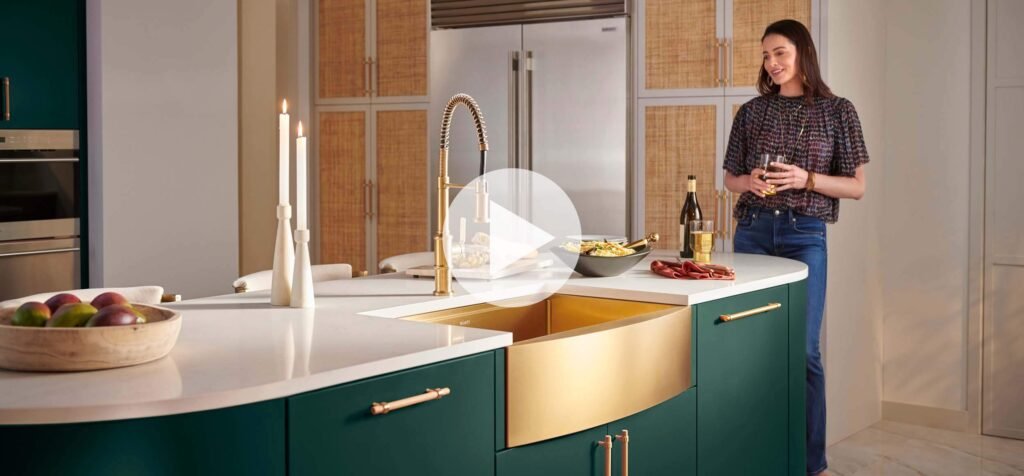
Bold Sinks: Sinks are no longer all stainless silver either. A growing trend is the colored workstation sink – large stainless sinks coated in PVD to be black, gunmetal, or gold, often with integrated accessories. These make a serious style statement and turn the sink area into a focal point (especially in open kitchens or island installations). In multifamily and luxury developments, colored PVD sinks are used to distinguish units and add that wow factor in model kitchens. The multifamily market has seen rising demand for these; as one industry source notes, PVD kitchen sinks are gaining popularity steadily because residents “want more variety in fixture colors” and a unique look . It’s now quite feasible to have a bold gunmetal apron-front sink that ties together with black cabinet pulls and a stainless countertop – a previously rare combination.
Luxury and Personalization: High-end kitchen brands (the Mieles, Kohlers, and Dornbrachts of the world) have fully embraced PVD finishes in their product lines, and it trickles down to mainstream trends. For example, Dornbracht’s luxury faucets come in a range of PVD finishes like CYPRUM (rose gold) and platinum matte – setting design trends that others follow. Kohler’s “Vibrant” PVD finishes introduced colors like Modern Brushed Gold and Matte Black across their portfolio, which quickly became consumer favorites. This focus on finish options aligns with the general trend of personalizing the kitchen. Homeowners see fixtures as an extension of their style: you might choose a faucet finish specifically to echo an accent color in your backsplash or to complement your countertop hue. Because PVD offers so many stable colors, manufacturers can cater to these personal tastes. We even see limited-edition finishes or regional favorites (e.g., a “English gold” PVD or “French brass”) being offered. It’s a far cry from the old choice of “Chrome, Brass, or maybe White.”
Smart Fixtures, Lasting Finishes: Another trend is smart faucets and high-tech fixtures (touchless, voice-activated, LED-lit, etc.). These often come at a higher price point, and buyers expect them to last. Naturally, they are paired with PVD or equally robust finishes – it would be counterintuitive to have a state-of-the-art faucet with a flimsy coating. Thus, as smart faucets become more common (one of the 2025 trends), PVD will likely be the default finish for them, to ensure the tech outlives the finish. Manufacturers highlight PVD in marketing such smart products, underscoring that technology meets durability.
In essence, PVD coating has not only kept up with kitchen design trends – it has helped create them. It freed designers to use whatever metal tones and matte effects they imagined, without worry about performance. The trend cycle in fixtures, which used to be held back by practicality (e.g., “clients love this look but it will tarnish, so maybe not”), is now more liberated. As a result, kitchens in 2024-2025 are seeing bolder fixture choices: gold faucets in modern kitchens, black sinks in family homes, mixed metals, etc., all made possible by finishes that can handle it. And because these finishes last, it pushes a mindset of investing in quality. As noted in The Difference Between Cheap and Premium Kitchen Faucets, people are leaning towards spending a bit more upfront for fixtures that won’t need replacement. PVD fits perfectly into that narrative as a premium feature.
Looking ahead, we expect PVD to continue dominating luxury and even mid-range kitchen fixtures. The palette might evolve (perhaps more soft tones, or new interesting PVD colors will gain popularity), but the underlying demand for beautiful, resilient finishes is here to stay. In summary, the modern kitchen trend can be summed up as “personalization without compromise,” and PVD coating is a key tool allowing homeowners to get the personalized look they want with no compromise on durability or functionality.
How to Choose a PVD-Coated Sink or Faucet
With all this information in mind, you might be convinced that PVD is the way to go for your next kitchen fixture. But not all PVD products are created equal. Here’s a handy guide to selecting a high-quality PVD-coated sink or faucet that meets your needs:
- Prioritize Quality Base Materials: Always check what the fixture is made of. The best PVD faucets are typically made from solid brass or high-grade 304 stainless steel (for sinks and some faucets). These materials ensure longevity and provide a perfect foundation for the PVD coating. Avoid fixtures where the base is cheap zinc or plastic – even if the finish is PVD, the product won’t hold up as well. A good spec sheet or product description will tout solid brass construction or 304 stainless. As a rule, if a company is investing in PVD finishes, they likely use quality substrates too, but double-check. As discussed, brass and stainless offer the best durability . In a sink, 16-18 gauge stainless steel with PVD is ideal. In a faucet, look for brass internals with PVD exterior. The product’s weight can be a clue: a heftier faucet is usually brass.
- Look for the “PVD” Label (and Warranties): Make sure the product explicitly states it has a PVD finish (or similar terminology like “Physical Vapor Deposition coating” or trade names like “Vibrant® PVD” etc.). If the description just says “brushed gold finish” or “black finish” without details, it could be paint or simple plating. Manufacturers proud of PVD will say so. Also check the warranty on the finish – a long warranty (5+ years, or lifetime for residential) is a sign of confidence. Many brands offer a lifetime warranty against tarnish or peeling for PVD finishes . If a finish only has a one-year warranty, be cautious – it might not be PVD or not a durable implementation. Another tip: some product listings mention passing salt-spray tests (e.g., “guaranteed 200 hours salt spray”) – PVD finishes will excel there, so that’s a positive sign. Reputable companies will often brag that their coating is PVD and eco-friendly, etc., as a selling point.
- Choose Finish Color Wisely: PVD opens up many color options, so think about your kitchen’s overall design and coordinate your finishes. Do you want the faucet to match the cabinet hardware or contrast it? If you’re doing a full remodel, many designers suggest sticking to two metals max for consistency. For example, you might choose all your fixtures in brushed nickel PVD, or do a two-tone approach like black and brass. If you love a specific PVD color (say matte bronze), ensure you can get complementary pieces (sink, knobs, light fixtures) in that tone or a harmonious mix. Sometimes it’s easiest to pick a finish from a particular brand’s suite so everything matches perfectly. However, you can also successfully mix brands – just be mindful that “brushed gold” from one brand might be a slightly different shade than another’s. When in doubt, order a sample or view them in person. On the upside, PVD finishes are quite consistent, so matching is easier than with natural finishes. Also consider how the color works with your countertops and cabinets: e.g., brushed gold PVD faucets pop against navy or black cabinets, gunmetal sinks blend well with concrete or grey tones, matte black goes with almost anything but especially white or very light wood kitchens, etc. (Our earlier section on color options provides guidance on pairing colors with design elements.)
- Assess Style and Function Alongside PVD: Don’t choose a fixture solely for its finish – also ensure the faucet or sink style and features suit your needs. PVD faucets come in modern minimalist designs, traditional ornate designs, and everything in between. If you want a pull-down sprayer, for instance, make sure the model has that feature in the PVD finish you desire. Check the faucet height, handle configuration, etc., as those practical aspects are crucial. Similarly, for sinks: decide if you want an apron-front style, a workstation ledge, single vs double bowl, etc. Once you know the type, see which manufacturers offer that in PVD colors. Fortunately, many popular models now have PVD variants. For example, if you’re after a workstation sink (with integrated accessories and ledges), brands like Ruvati, Kraus, and Crauf have PVD-coated options in multiple colors. It can be helpful to read reviews on the specific model – see if people mention the finish. If multiple reviews praise “the color hasn’t scratched or faded,” that’s a great sign. Essentially, combine your functional requirements with the finish – you don’t want to compromise functionality just to get a certain color.
- Brand Reputation and Expertise: Lean towards brands known for quality when it comes to special finishes. Not all companies apply PVD with the same rigor – it requires expensive machinery and expertise. Trusted brands (Kohler, Crauf, Grohe, Delta’s Brizo line, Moen’s high-end, Franke, Dornbracht, etc. have invested in PVD tech and have a track record. They often do the coating in-house or in tightly controlled facilities. These brands also tend to have better base materials and engineering. On the flip side, if you see a no-name import faucet in “rose gold PVD” for a suspiciously low price, it might not truly have the same quality PVD (or it might be a thin decorative PVD on subpar metal). That’s not to say you must buy only the most expensive; there are mid-range brands with excellent PVD offerings too. Just do a bit of homework: a quick search like “Brand X PVD finish reviews” can reveal if people had issues. Generally, premium kitchen fixtures from established brands will use PVD correctly and honor warranties if something goes wrong. Also consider customer support and availability of parts – a finish that lasts 20 years is great, but you want the company to be around to support the product too!
- Beware of “PVD vs Electroplating” Marketing Hype: Some salespeople might throw terms around. It’s useful to know that a well-made multi-layer electroplated chrome faucet is actually very durable (just less so than PVD in extreme tests). So, if you prefer a classic chrome look, that’s fine – chrome plating is still used because it’s already quite durable and cost-effective. But for colors, PVD is superior. If someone tries to upsell you a “titanium coating” etc., that usually refers to PVD. Just ensure it’s not confused with cheaper methods. Powder-coated matte black, for example, is cheaper and okay for low-use, but for a kitchen faucet the PVD black is worth the investment. Don’t hesitate to ask: “Is this finish a PVD coating?” If the salesperson is unsure, check the spec sheet or find another source.
- Maintenance & Care Considerations: Finally, consider how you use your kitchen and choose accordingly. If you’re rough on your fixtures or want absolutely zero patina over time, lean towards the PVD finishes that hide wear best – satin or brushed textures in medium colors (like brushed nickel, gunmetal) are nearly foolproof. Polished PVD finishes (like polished gold or polished chrome PVD) are also extremely durable, but they’ll show fingerprints more, so be prepared for a bit more wiping if you go that route. Also, think about water quality – if you have very hard water, a dark finish like black might show mineral deposits (white spots) more unless you keep up on cleaning; a PVD stainless or nickel might be more forgiving in that case. The good news is PVD can handle any water type without corrosion, but the aesthetics of spotting are something to consider. In terms of cleaning, as we said, it’s simple: just avoid steel wool or harsh chemicals. Most manufacturers include care instructions – follow those to keep the warranty valid and the fixture looking great. If you equip yourself with a soft cloth and gentle cleaner (and maybe a microfiber towel for drying), you’re set for PVD maintenance.
In summary, choosing a PVD-coated fixture involves combining your style preferences with due diligence on quality. Aim for a reputable brand, verify the base material is solid (brass or stainless), confirm the finish is indeed PVD, and pick a color that complements your kitchen design. If you do that, you’ll likely end up with a faucet or sink that not only elevates your kitchen’s look but also stands the test of time. Remember that a faucet is a high-use item – investing in a good one pays off in daily satisfaction. As we always note in The Difference Between Cheap and Premium Kitchen Faucets, a premium fixture might cost more upfront but saves you from the costs and hassles of early replacements, leaks, or finish failures. With PVD, you truly “get what you pay for” in longevity.
When evaluating options, it’s worth considering companies that specialize in this niche of high-performance fixtures. For example, you might look at premium PVD-coated fixtures from brands like Crauf, which specializes in handmade 304-grade stainless steel sinks with advanced coating technology. These specialized brands often combine top-tier materials with cutting-edge finishes, giving you an heirloom-quality product. But whether you go with a boutique manufacturer or a big name, the key is that PVD will ensure your chosen finish remains as stunning in year 10 as it was on day 1.
Final Thoughts
The advent of PVD coating has truly transformed the look and performance of kitchen fixtures. It’s a prime example of materials science elevating everyday living – taking something as utilitarian as a faucet or sink and imbuing it with aerospace-grade resilience and luxurious style. What used to be a dilemma (“Do I choose a pretty faucet that might not last, or a durable one that’s plain?”) is no longer an issue. With PVD, you can have both: breathtaking aesthetics and rock-solid durability in one package.
From a design perspective, PVD opened new creative avenues. Homeowners can now express their personal style through fixture finishes in ways that were impractical before. Want a gleaming gold focal point to tie together brass accents in your kitchen? Done. Crave an ultra-modern monochromatic look with everything in matte black? Achievable. Even commercial kitchens and experimental designs benefit – we’re seeing PVD in restaurant interiors and on appliance trims, proving it’s not just a residential luxury but a design workhorse.
From an engineering perspective, PVD has set a new benchmark for what “premium finish” means. It forced the industry to up its game – many brands now advertise cycle tests, hardness values, and salt-spray hours for their finishes because PVD brought those metrics into the spotlight. Consumers have become more educated (you, reading this, are now among them!), and they expect their high-end fixtures to have these advanced finishes. In turn, this drives innovation and better products across the board. It’s likely that PVD or similar vapor deposition techniques will continue to evolve (perhaps even more eco-friendly or faster application methods), further solidifying their role.
One could argue that PVD coating turned kitchen fixtures from purely functional items into lasting works of art. Consider that in past generations, a “good faucet” was one that didn’t leak and had decent chrome plating. Today, a good faucet is also one that complements your décor and maintains its elegance indefinitely. Kitchens are the heart of the home, and fixtures are the jewelry of the kitchen – PVD ensures that jewelry doesn’t tarnish.
In closing, if you’re planning a kitchen update or selecting fixtures for a new home, paying attention to the finish is as important as the style or brand. PVD-coated sinks and faucets are more than a trend; they represent a smart long-term investment in quality. They’ll keep their lustre, resist life’s wear and tear, and continue to elevate the space for years to come. The upfront cost might be a bit higher than a basic fixture, but the return on investment is a kitchen that looks impeccable and performs flawlessly far into the future.
“How PVD coating transformed the look of kitchen fixtures” is not just a catchy phrase – it’s the reality that our kitchens today can be both beautiful and resilient in ways our parents or grandparents could only dream of. And as technology advances, who knows? We might soon see even more incredible finishes (imagine self-healing PVD or new color effects) grace our homes. But one thing is certain: PVD has set a new gold standard (literally) for kitchen fixture finishes, and it’s here to stay.
Here’s to a future of kitchens that shine brightly, work hard, and stand the test of time – all thanks to a little magic from the world of physical vapor deposition.