

Your Ultimate Relocation Checklist: From Moving to Temporary Housing
The Foundation: Strategic Relocation Planning (8-6 Weeks Out)

Moving to a new home is a big life event. It brings excitement, but also many tasks. From packing boxes to finding new services, it can feel like a lot. But a well-planned move can be smooth and stress-free.
We know the challenges that come with any relocation. Whether you’re moving across the street or across the country, careful planning is key. This extensive guide will help you manage it all.
We will walk you through every important step of relocation planning. We’ll cover everything from the first planning stages and budgeting to packing tips and setting up your new home. Our goal is to give you a clear roadmap for a successful move.
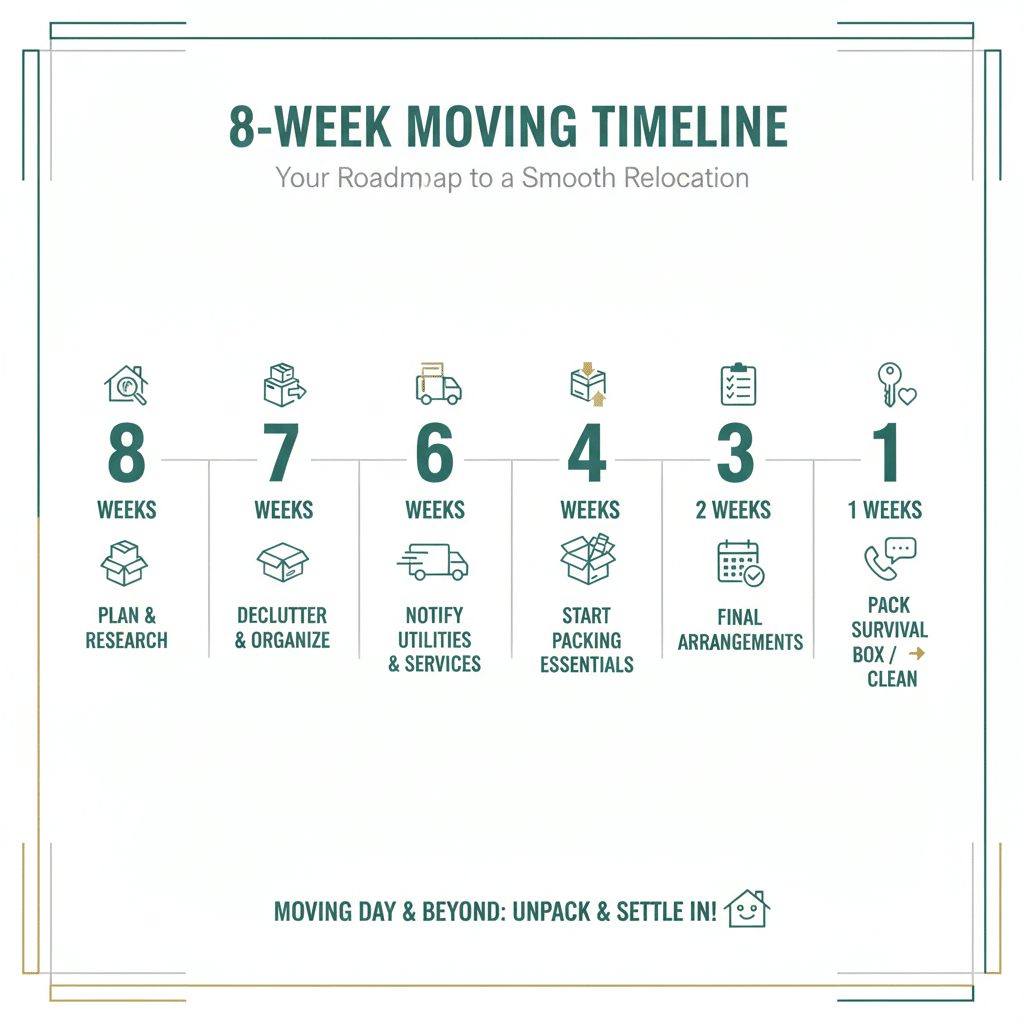
The moment you know a move is on the horizon, the clock starts ticking. While the thought of relocating can feel overwhelming, approaching it with a strategic mindset and a clear timeline can transform potential chaos into a manageable process. Our experience shows that starting at least 8 weeks in advance is ideal for a less stressful experience. This initial phase is about laying a solid foundation for everything that follows.
Your first step should be to create a master plan. This isn’t just a simple to-do list; it’s a comprehensive overview that maps out key milestones, deadlines, and responsibilities. Think of it as your relocation blueprint. This plan should include everything from decluttering your current home to researching your new neighborhood. For instance, if you’re moving out of state, this is the time to dive deep into researching the cost of living, school districts, and even local laws in your new destination.
One of the most impactful activities during this foundational stage is decluttering. This isn’t merely about tidying up; it’s about making conscious decisions about what truly deserves a place in your new home. Not only does decluttering lighten your load emotionally, but it also significantly reduces moving costs. Statistics show that decluttering can cut moving expenses by 15-25% because movers often charge by volume or weight. Every 100 pounds of items you shed can save you $50-100 in moving costs. We recommend using the “Keep, Sell, Donate, Discard” method to systematically go through your belongings.
Alongside decluttering, establishing a realistic moving budget is paramount. This early financial planning will dictate many of your subsequent decisions, such as whether to hire professional movers or opt for a DIY approach. We’ll dig deeper into budgeting shortly, but for now, understand that foresight here prevents unexpected financial strain later.
Finally, consider the scope of your move. Are you moving locally or starting on a long-distance journey? The answer will influence the complexity of your planning. For those with extensive belongings or complex logistical needs, seeking expert Bernard Movers relocation planning services can help create a detailed inventory and timeline, ensuring no stone is left unturned. Professionals can offer invaluable assistance in navigating the intricacies of packing, transportation, and even unpacking, providing peace of mind during a significant life transition.

Creating a Realistic Moving Budget
Understanding the financial implications of your move is critical. Moving costs can vary widely depending on distance, volume of belongings, and services required. The average cost of a local move is around $2,500, while a long-distance move can range from $5,000 to $10,000 or more. These figures highlight the necessity of meticulous budgeting.
When creating your moving budget, we advise breaking it down into several categories:
- Professional Mover Quotes: If you plan to hire movers, obtain at least three quotes from reputable companies. Be sure these quotes are comprehensive, detailing services like packing, transportation, and insurance.
- DIY Expenses: For those opting for a DIY move, factor in truck rental costs, fuel, packing supplies (boxes, tape, bubble wrap), and potential equipment rentals (dollies, moving blankets).
- Packing Supplies: Even with professional movers, you might handle some packing yourself. Budget for new boxes, tape, markers, and protective materials.
- Travel Costs: Don’t forget expenses related to your actual travel, including flights, gas, temporary accommodation (hotels), and meals during transit.
- New Home Setup: Account for initial costs in your new home, such as utility deposits, new furniture, or minor renovations.
- Unexpected Costs: This is crucial. We strongly recommend setting aside 10-15% of your total moving budget as a buffer for unforeseen expenses. Things like last-minute storage needs, unexpected repairs, or additional insurance can quickly add up.
The decluttering efforts mentioned earlier directly impact your budget. By reducing the sheer volume and weight of items, you can significantly lower the cost of hiring movers, as many charge by weight or cubic feet for long-distance moves.
To Hire or Not to Hire: Movers vs. DIY
One of the biggest decisions in relocation planning is whether to hire professional movers or handle the move yourself. Each option comes with trade-offs in terms of cost, time, effort, safety, and convenience. Professional movers often come with a higher upfront cost—local moves may run around $2,500, while long-distance moves can range from $5,000 to $10,000 or more—but they save significant time and physical effort. Full-service moving companies handle everything from packing and loading to transportation and unloading. There are also hybrid options, where you pack your belongings while movers handle the heavy lifting and transportation. This is particularly helpful for long-distance moves, where driving a large moving truck across states can be daunting. When selecting movers, it’s important to research reviews, compare quotes, verify licensing, and ensure insurance coverage for your belongings.
On the other hand, a DIY move is often chosen to save money. This approach typically involves renting a moving truck, enlisting friends or family for help, and managing all packing and labor yourself. While the upfront cost is usually lower, hidden costs can quickly add up—your time, physical exertion, potential injuries, and the risk of damaging valuable items. DIY moves are also extremely time-consuming, requiring meticulous planning and execution. Additionally, peak moving times such as weekends, holidays, and summer months often increase truck rental prices due to high demand. Ultimately, the choice between professional movers and a DIY move depends on your budget, schedule, physical ability, and willingness to manage the logistics yourself.
The choice depends on your budget, timeline, physical capabilities, and the amount of stress you’re willing to manage. For many, a hybrid approach—packing non-fragile items themselves and hiring movers for furniture and transportation—offers a good balance.
The Nitty-Gritty: Packing and Logistics (4-2 Weeks Out)
With your master plan in place and your budget set, the next phase of relocation planning shifts to the intricate details of packing and coordinating logistics. This period, typically 4-2 weeks before your move, is where the bulk of the physical preparation takes place, alongside critical administrative tasks. Effective execution during this stage is vital for a smooth transition.
Our strategy for packing involves a systematic, room-by-room approach. Begin with items you use infrequently, such as seasonal decorations, books, or guest room contents. Save the essentials for last. A well-thought-out labeling system will be your best friend during unpacking, preventing frantic searches for basic necessities. Special attention must be paid to fragile items, ensuring they are adequately protected. Furthermore, identifying and securing important documents is a non-negotiable step, as these should always remain with you.
Beyond packing, this phase is crucial for managing utility transfers and mail forwarding. Proactive communication with service providers ensures you won’t be left without electricity or internet in your new home. This is also the time to make arrangements for your children and pets, preparing them for the upcoming changes to minimize their stress.

Your Guide to Effective Relocation Planning for Packing
Packing is an art and a science. Doing it right not only protects your belongings but also streamlines the unpacking process. Here’s our guide to effective packing:
Essential Packing Supplies: Before you begin, gather all necessary supplies:
- Sturdy Moving Boxes: Varying sizes, preferably double-walled for heavier items.
- Packing Tape: Strong, wide tape for sealing boxes securely.
- Bubble Wrap & Packing Paper: For cushioning fragile items.
- Markers: For clear labeling.
- Scissors/Box Cutter: For opening and assembling boxes.
- Stretch Wrap: For furniture protection.
- Moving Blankets: For larger, delicate items.
- Ziploc Bags: For small parts, screws, and hardware.
Packing Fragile Items: Fragile items require extra care. We recommend the “double-boxing” technique for extremely delicate pieces. Wrap each item individually in packing paper or bubble wrap. Place it in a smaller box, cushioning all sides with crumpled paper. Then, place this smaller box into a larger moving box, filling any gaps with more packing material. Mark these boxes clearly as “FRAGILE” on all sides.
Labeling Best Practices: This is perhaps the most overlooked yet critical aspect of packing. A clear and consistent labeling system will save you hours of frustration later.
- Room Destination: Clearly write the room where the box belongs (e.g., “Kitchen,” “Master Bedroom,” “Living Room”). Consider using color-coded labels for each room for quick identification.
- Brief Contents List: Jot down a few key items inside (e.g., “Pots & Pans,” “Books & DVDs,” “Linen Closet”).
- Handling Instructions: Add “FRAGILE,” “THIS SIDE UP,” or “HEAVY” as needed.
- Box Number: Assign a unique number to each box and maintain a master list or digital inventory of what’s in each numbered box. This is also a security measure, helping you track if any boxes go missing.
Creating a Digital Inventory: Before packing, take photos or even a video of your belongings, especially high-value items. This serves as a record for insurance purposes and helps you verify that everything arrived safely. You can also create a simple spreadsheet listing each box number and its general contents. This digital inventory is invaluable for both tracking and efficient unpacking.
Managing Utilities, Mail, and Important Records
This administrative legwork is often less exciting than packing but just as vital. Neglecting these tasks can lead to uncomfortable first nights in your new home or missed critical communications.
Utility Transfer Checklist: Approximately two weeks before your move, contact all your utility providers.
- Disconnect Dates: Schedule a disconnection date for your old home for electricity, gas, water, internet, and cable. Ensure this is for the day afteryour move.
- Connect Dates: Schedule connection dates for your new home, ideally for the day before your arrival. This ensures services are active from day one.
- New Services: If you’re changing providers, research and book new internet, cable, or security services in advance, as installation appointments can sometimes have lead times.
Mail Forwarding: Don’t rely solely on updating your address with individual contacts. The U.S. Postal Service offers a reliable mail forwarding service. We advise forwarding mail via the U.S. Postal Service website (usps.com/manage/forward.htm) at least two weeks before your move. USPS typically forwards mail for one year, but magazines are only forwarded for 60 days, so update subscriptions directly.
Transferring Prescriptions and Medical/School Records: Contact your doctors, dentists, and pharmacies to transfer prescriptions and request copies of your medical records. For families, ensure you obtain school records for your children well in advance. This smooths the enrollment process in their new schools.
Securing Vital Documents: Create an “important documents” folder or box that will travel with you, not with the movers. This should contain:
- Passports, birth certificates, Social Security cards.
- Deeds, leases, and mortgage documents for both old and new homes.
- Moving contracts and insurance policies.
- Vehicle titles and registration.
- Medical records and prescription information.
- Financial statements and tax documents.
Keeping these critical papers close at hand ensures you have immediate access to them, preventing potential headaches during the move and upon arrival.
The Final Stretch: Moving Week and Arrival
As moving day approaches, the focus shifts to execution and preparing for your arrival. This final stretch is often the most intense, but with careful planning, it can be managed effectively. Our goal is to ensure your moving day is as smooth as possible, and your first moments in your new home are welcoming, not chaotic.
A crucial element for moving day is preparing a “moving day survival kit.” This separate bag or box should contain essentials you’ll need immediately. On the day itself, we recommend performing a final walkthrough of your old home after the movers have loaded everything. This ensures nothing is left behind and allows you to document the condition of the property for security deposit purposes.
If you’ve hired movers, supervising them and understanding the Bill of Lading (your contract and inventory) are key. This document details your belongings and the terms of service. Upon arrival, securing your belongings and ensuring their safety is paramount. Your first night in the new home should be focused on comfort and basic functionality, not exhaustive unpacking.

Navigating Temporary Housing During Your Relocation
Sometimes, the timing of a move isn’t perfect. There might be a gap between when you need to move out of your old home and when you can move into your new one. This is where temporary housing becomes a critical part of your relocation planning. Planning for this scenario in advance can save you significant stress and expense.
Several options are available for temporary housing:
- Short-Term Rentals: Websites like Airbnb or VRBO offer a wide range of furnished properties for short stays. These can be ideal for families or individuals who need a home-like environment for a few weeks or months.
- Corporate Housing: Specifically designed for longer stays, corporate housing provides fully furnished apartments with all utilities included. These are often a more cost-effective and comfortable alternative to extended-stay hotels for durations of a month or more.
- Extended-Stay Hotels: These hotels offer amenities like kitchenettes and laundry facilities, making them suitable for shorter temporary stays, usually a few days to a few weeks. They can be a good option if you need immediate accommodation while searching for a more permanent solution.
When planning for a gap between move-out and move-in, consider the following:
- Storage Solutions: If your belongings can’t go directly into your new home, you’ll need to arrange for temporary storage. Factor this into your budget and timeline.
- Essentials for Temporary Stay: Pack a separate suitcase with clothes, toiletries, and any personal items you’ll need for the duration of your temporary housing. Treat it like an extended vacation.
- Cost Comparison: Research the costs of different temporary housing options in your new area. Corporate housing or short-term rentals can sometimes be more economical than extended-stay hotels for longer periods.
For those undertaking a Detroit relocation, Detroit relocation furnished rentals offer a comfortable and convenient solution, allowing you to settle into the city without the immediate pressure of setting up a new household. These options provide flexibility and a ready-made living space, perfect for bridging the gap between homes or for those needing a temporary base while exploring their new surroundings.
Frequently Asked Questions about Relocation Planning
We understand that relocation planning can spark many questions. Here, we address some of the most common concerns we encounter, offering insights to help you steer your move with greater confidence.
How far in advance should I start planning my move?
Our recommendation is to start planning at least 8 weeks in advance. This timeframe allows ample opportunity for decluttering, securing quotes from movers, organizing logistics, and managing administrative tasks without feeling rushed. For long-distance moves, especially those involving cross-country travel or international relocation, extending this timeline to 3-6 months is often beneficial. If you’re moving during peak season (typically May through September, weekends, and holidays), starting even earlier is advisable, as demand for movers and truck rentals is higher and prices can be steeper. Early planning significantly reduces stress and often leads to cost savings.
How can I reduce my moving costs?
Reducing moving costs is a priority for many. Here are our top strategies:
- Declutter Ruthlessly: As mentioned, this is the most effective way to cut costs. Movers often charge by weight or volume, so fewer items mean a lower bill. Sell, donate, or discard anything you don’t truly need or love.
- Move During Off-Peak Times: If possible, schedule your move for weekdays, mid-month, or during the off-season (fall or winter, excluding holidays). Demand is lower, and prices are often more competitive.
- Get Multiple Quotes: Always obtain at least three detailed quotes from different moving companies. This allows you to compare services and prices effectively.
- DIY Packing: Pack your own boxes. While full-service packing is convenient, it adds significantly to the cost.
- Source Free Boxes: Check local grocery stores, liquor stores, or online community groups for free, sturdy moving boxes.
- Disassemble Furniture Yourself: If movers charge for disassembly and reassembly, doing it yourself can save money.
- Pack an Essentials Box: Avoid paying movers to transport items you’ll need immediately. Pack a “first night” box with essentials and transport it yourself.
What are the most important documents to keep with me during a move?
Creating an “essentials box” or bag that travels with you (not on the moving truck) is crucial. This should contain all vital documents that you cannot afford to lose or be without, even temporarily. We recommend including:
- Identification: Passports, birth certificates, Social Security cards, driver’s licenses, and any other government-issued IDs for all family members.
- Legal Documents: Deeds, leases, mortgage documents, car titles, marriage certificates, wills, and power of attorney documents.
- Financial Records: Bank account information, credit cards, checkbooks, investment statements, and recent tax returns.
- Medical Records: Health insurance cards, prescription information, vaccination records, and any important medical histories for family members and pets.
- Moving Contracts: Your Bill of Lading, moving company contact information, and insurance policies related to your move.
- New Home Paperwork: Your new lease agreement, purchase agreement, or homeowner’s insurance policy.
- Contact Information: A list of important phone numbers (doctors, schools, family, emergency contacts) in case your phone is lost or uncharged.
Having these documents readily accessible provides peace of mind and ensures you’re prepared for any administrative tasks or emergencies that may arise during your relocation.
Conclusion
Relocation planning is undoubtedly a significant undertaking, but it doesn’t have to be a source of overwhelming stress. By breaking down the process into manageable steps, starting early, and utilizing a comprehensive checklist, you empower yourself to steer this transition with confidence and control.
We’ve explored the foundational steps of strategic planning, emphasizing the importance of an 8-week head start, ruthless decluttering, and meticulous budgeting. We’ve guided you through the nitty-gritty of efficient packing, from sourcing supplies to labeling best practices, and highlighted the critical administrative tasks of managing utilities, mail, and vital records. Finally, we’ve provided insights into the often-challenging moving week, offering strategies for a smooth moving day and even navigating temporary housing solutions.
Every successful move begins with a plan. By embracing the principles of thoughtful preparation, you can transform a daunting task into an exciting new chapter. Here’s to a well-planned, stress-free relocation and a wonderful new beginning in your new home!