Why Visual Impact Matters in Kitchen Remodeling
A kitchen remodel isn’t just about new appliances or cabinets – it’s about creating a visual transformation that captivates at first glance. Humans are hardwired to notice balance, contrast and light; a well-designed kitchen speaks to these instincts. Studies show people subconsciously prefer symmetry and order in spaces . For example, aligning islands, fixtures and lighting can provide the balance our brains crave, making the room feel calm yet purposeful . Material choices and surface finishes amplify this effect: glossy, reflective surfaces bounce light and enlarge the perceived space, while matte or textured surfaces absorb light for a cozy, tactile warmth . In other words, strategically chosen high-impact kitchen fixtures (bold hardware, sculptural lights, striking sinks) become visual anchors. They guide the eye to key zones – often the island, sink, or range – ensuring a powerful first impression. In turn, buyers report feeling more confident in a home that “feels right” immediately, so these fixtures contribute not just style but real high ROI kitchen upgrades by making even a minor remodel feel bespoke.
The Psychology of First Impressions in Home Design
The kitchen is the heart of the home, and first impressions count. Color and contrast influence mood and perception: calm neutrals like whites, creams and pale grays open up the space and create a relaxing backdrop , whereas bold warm hues (reds, oranges) can spark energy and even stimulate appetite . Accent colors (e.g. brushed gold or gunmetal faucets) draw the eye like jewels in the space. Light and texture also play a subtle role: rough or dark surfaces absorb light and add visual depth, while shiny, polished fixtures catch and reflect light, making a space feel more expansive . Designers note that every material interacts with light differently – for instance, a satin black faucet pops against a bright countertop, whereas a marble backsplash shimmers under recessed lighting. These “primary focal areas” – islands, sinks, range hoods, pendant lights – are where the eye naturally travels first. By deliberately using contrasting shapes (an oversized orb pendant above a linear island, for example) and rich textures (wood, stone, metal), a kitchen remodel can satisfy our instinctual preference for balance and interest . In short, thoughtful fixture choices exploit our visual habits: symmetry, contrast and material interplay create an inviting space that buyers want to stop and admire.
Fixture #1: Workstation Sinks
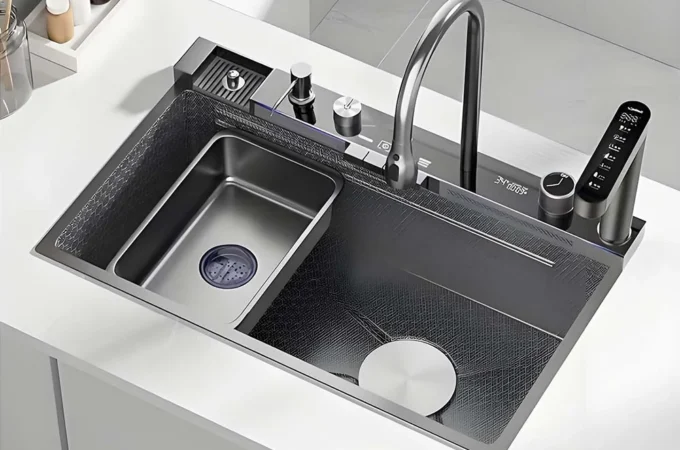
Modern workstation sinks (deep bowls with built-in ledges) completely reframe the sink area as a functional focal point. These sinks often measure 10–12 inches deep and include integrated rails or ledges for cutting boards, colanders, drying racks and more . The engineering logic is obvious: a thicker-gauge stainless steel basin not only withstands heavy use, but the multi-tiered design lets you prep food over the sink and minimize mess on the countertop. As Manor House’s 2025 trends report explains, “workstation sinks are designed for multitasking” with accessories (cutting boards, colanders, drying racks) that “streamline kitchen workflows by minimizing clutter and maximizing efficiency” . The before-and-after effect is dramatic: a plain undermount sink beside flush counters is ordinary, but a dedicated workstation model transforms the sink into a premium prep station.
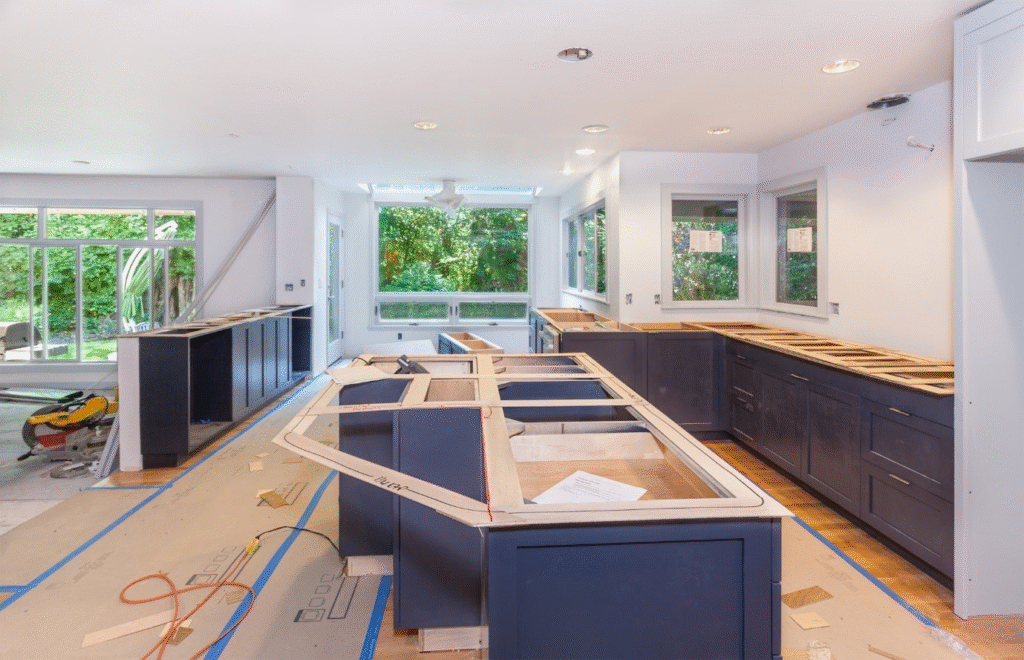
Workstation sinks suit many styles. Sleek stainless varieties complement modern or Scandinavian layouts, while fireclay or copper renditions evoke farmhouse or transitional kitchens. They pay off in daily workflow – you can chop, rinse and rinse again without moving around – and their visual heft punches up even modest budgets. Homeowners often see high ROI on sink upgrades: a basic sink-and-faucet refresh (roughly $800–$1,500 installed) recoups about 85–95% of its cost in added home value . In other words, upgrading to a heavy-duty workstation sink (especially paired with a premium faucet) looks and feels luxurious. One caveat: mistakes to avoid include choosing a sink too large for the base cabinet or forgetting the required trim kit – as Choosing the Right Sink Size for Your Cabinet Width notes, fitting the sink properly is critical. For example, a 36″ cabinet usually needs a 30″ sink to leave room for mounting hardware. Also ensure the faucet spout height matches the bowl depth, or water will splash.
Many brands now offer workstation and deep-bowl sinks with premium accessories. In fact, Crauf’s collection includes exactly this – “…premium workstation and deep-bowl sink options from Crauf, known for handmade stainless steel construction and high-impact PVD finishes.” This highlights how quality materials and finishes (like PVD coating) turn a sink into a design statement. As explained in The Rise of Multi-Functional Kitchen Sinks in Modern Homes, homeowners are gravitating toward sinks that do more than just hold water. The result is a kitchen area that not only improves workflow but also signals a full-scale renovation at a glance.
Fixture #2: Premium Kitchen Faucets
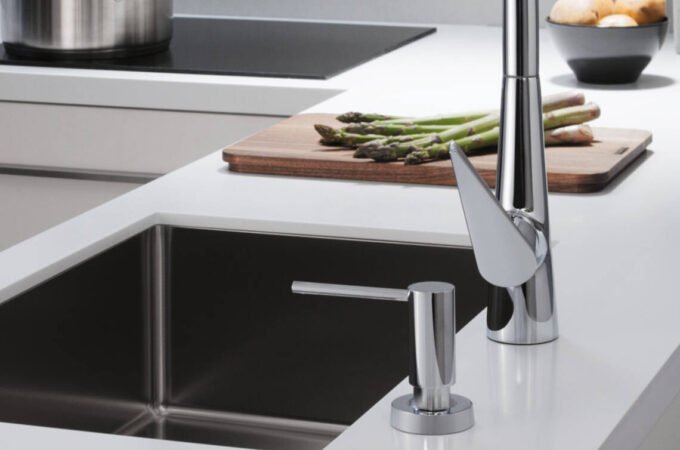
A faucet may seem small, but it’s a focal point above the sink and one of the first things guests notice. Replacing a builder-grade tap with a premium faucet yields a huge visual upgrade. In engineering terms, top faucets use solid brass or stainless steel bodies – the “gold standard” for durability – whereas inexpensive fixtures often contain zinc or even plastic components that corrode or wear out. This means a high-end faucet holds its finish and function far longer. Premium faucets also use ceramic-disk cartridges for drip-free performance (many cheap taps still rely on rubber washers that wear). The sprayhead design is another differentiator: a detachable, dual-spray head (stream/spray mode) or articulating spring coil spout significantly improves ease-of-use. These features let you rinse large pots or fill vessels quickly.
Visually, luxury faucets come in standout finishes. Beyond classic chrome and nickel, designers now favor brushed gold, champagne bronze or matte black. These create contrast against countertops or walls – for example, a satin black faucet pops dramatically against a white marble counter. When coated with PVD, the finish has exceptional color retention (no flaking or tarnish) . In fact, faucet upgrades boast excellent cost-effectiveness: updating the sink and faucet can recoup ~85–95% of the investment . This means a ~$1,000 faucet replacement can add a nearly equivalent amount to perceived home value.
Stylistically, the right faucet complements the sink style and overall kitchen aesthetic. A high-arc contemporary faucet suits modern or transitional designs, while a more angular bridge faucet or pot filler fits farmhouse or traditional spaces. A common mistake is mismatching scale – a tiny faucet on a deep bowl looks out of place – or skimping on cartridge quality and then dealing with leaks. Always align the spout size to the sink depth, and consider a pull-down sprayer for maximum utility. Lever handles versus cross-handle choices should echo the kitchen’s vibe (e.g. sleek levers for minimalist design). The difference between a cheap tap and a premium faucet often comes down to these subtle engineering details and finish quality. Upgrading just the faucet often instantly makes the kitchen look like it’s been fully renovated, because it’s such a prominent piece of hardware.
Fixture #3: PVD-Coated Hardware & Fixtures
PVD finishes are a next-level upgrade that instantly elevate a kitchen’s look. Physical Vapor Deposition (PVD) is a high-tech plating process that fuses metal vapors (titanium, zirconium, etc.) onto steel at the atomic level . The result is a remarkably hard, corrosion-resistant coating that won’t peel or tarnish like traditional electroplating . For homeowners, PVD means color longevity – your gold, copper or black fixtures will retain their richness indefinitely – plus extraordinary scratch resistance. As PVD specialists note, this coating “becomes a part of the material” to create a surface that’s “exceptionally strong, wear-resistant, heat-resistant, and corrosion-resistant” .
In practice, PVD transforms sinks, faucets, knobs and cabinet hardware into cohesive design elements. A brushed-gold PVD faucet matched with gold hardware and trim creates an elegant, unified feel. Gunmetal or brushed black PVD provides a modern, industrial edge. (Indeed, popular finishes now include rich gunmetal and “moody” matte blacks as durable alternatives to plain chrome .) Unlike cheaper plated hardware, PVD-coated handles and pulls maintain their finish in tough kitchen conditions (steam, grease, cleaning chemicals) . For example, rinsing a hot pan or cleaning with abrasive detergents has virtually no effect on PVD surfaces . Because of this, just swapping ordinary chrome or painted fixtures for PVD versions “elevates the entire kitchen” in an instant – walls seem taller, cabinets more luxurious – without moving walls.
From a trend perspective, the look of PVD has become synonymous with high-end renovation. Articles like How PVD Coating Transformed the Look of Kitchen Fixtures highlight how new PVD colors (brushed gold, rose gold, champagne bronze, even deep gunmetal) can update a room’s palette. For a modern kitchen renovation, these finishes feel very current and shareable on social media (PVD colors are trending on Pinterest and Instagram). The downside: PVD hardware can be pricier upfront, but it’s a small fraction of kitchen costs and really looks custom. In a luxury context it feels like an entire remodel. (And remember, even modest new fixtures often carry a ~90% resale ROI , so PVD knobs and taps do more than look good – they hold buyer appeal.)
Fixture #4: Statement Lighting
Large, sculptural lighting fixtures are like jewelry for the kitchen ceiling. A bold chandelier or cluster of pendants immediately creates a focal point over an island or dining nook. For instance, a tiered glass orb fixture can catch your eye from the entry, drawing attention upward and illuminating the space architecturally. From an engineering standpoint, statement lights often use powerful LEDs to provide both ambient glow and task illumination. Features like dimming or color temperature control add flexibility. But their main role is aesthetic: oversized or unusual shapes (geometric, linear, or organic) break up flat ceiling planes and cast interesting shadows and highlights on surrounding materials.
Installing one or two eye-catching fixtures can dramatically alter the ambiance. Warm brass or gold lights add warmth and glamour, while matte black or chrome make a bold, modern statement. Many designers are mixing finishes (e.g. a glass pendant with a copper accent ring). Placing dramatic lights above the island or range also enhances workflow, ensuring key areas are well-lit for cooking. Professional ROI data reinforces the impact of lighting: kitchen lighting upgrades generally recoup about 70–85% of their cost . In practical terms, simply replacing standard flush-mounts with an elegant pendant can make the space feel brand new.
Designers caution against a common mistake: too-small fixtures or poor placement. A tiny chandelier in a spacious kitchen looks mismatched; conversely, a grand light in a cramped nook overwhelms. Ideally, a statement light should be scaled to the island or dining table (for example, spanning about 75% of an island’s length) and hung at about 30–36 inches above a countertop. It should also reflect the style of the kitchen – e.g. a linear industrial fixture above a farmhouse table, or a minimal globe cluster in a sleek, transitional kitchen. Because lighting is both functional and decorative, it’s one of the best kitchen upgrades for instant luxury. Pairing up/down lighting (pendant down, under-cabinet lights up) can also emphasize textures like backsplashes or countertops, highlighting the material-to-light interactions that our eyes love.
Fixture #5: Modern Backsplashes
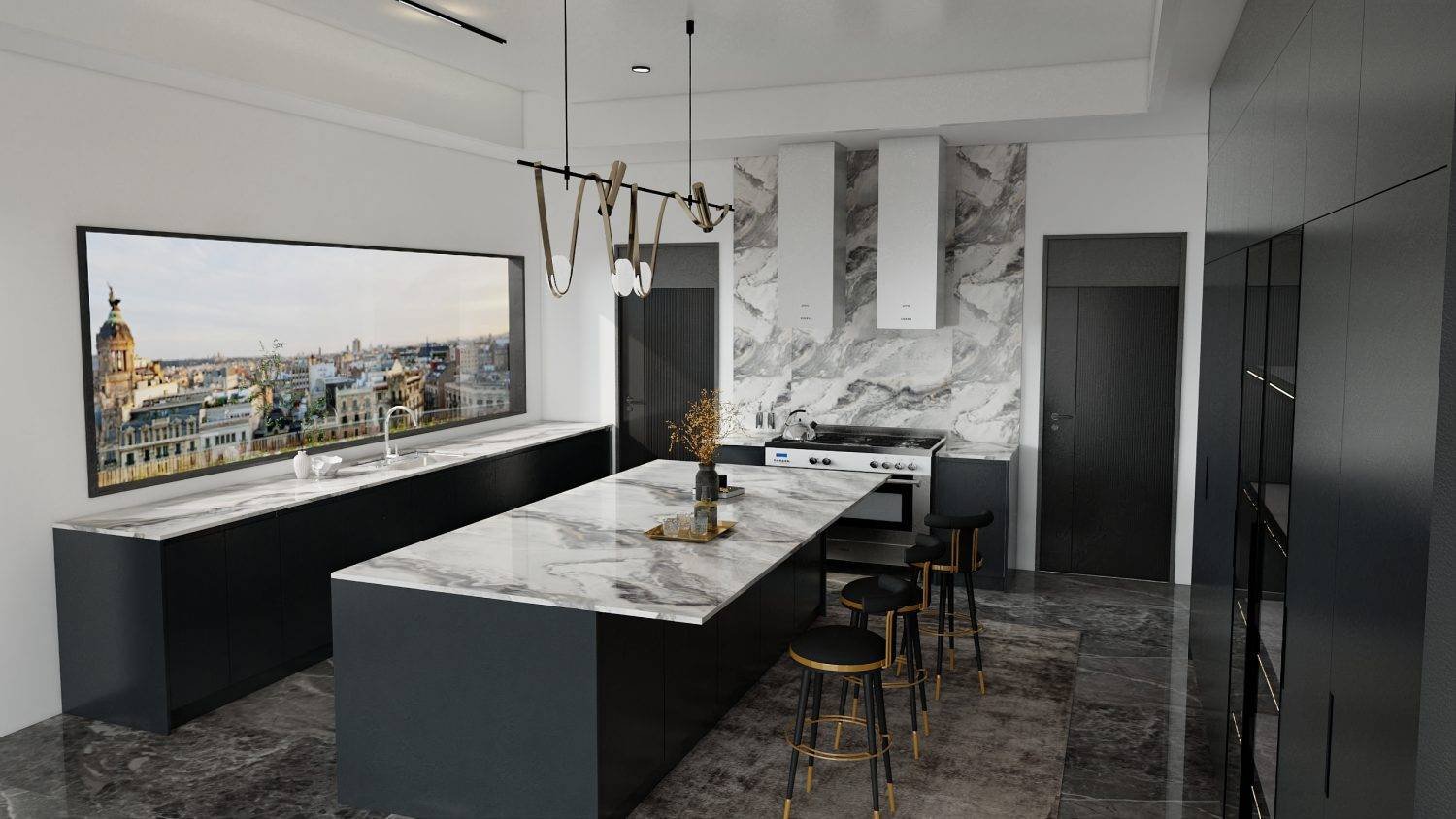
A backsplash covers a large vertical plane in the kitchen and therefore has a huge visual impact. Modern backsplashes have moved far beyond plain white subway tile – they range from floor-to-ceiling slabs of marble or quartz to graphic-patterned tiles that draw focus across the room. When well-chosen, a backsplash provides both color and texture contrast. For example, a bold herringbone tile behind a stove becomes an artful centerpiece, whereas a seamless porcelain slab in a dramatic veined pattern looks luxurious and uncluttered. Material science plays a role: new large-format porcelain panels can mimic marble without stain issues, and glass or metal tiles can reflect light in unique ways.
Installing a high-contrast backsplash is like hanging a painting over your counters. It can tie together cabinet color and countertop tone. However, homeowners should note that intricate backsplashes don’t always translate to resale value as directly as some other upgrades: one ROI survey found decorative backsplashes recoup only about 35–50% of the cost . So while a custom backsplash feels high-end, it’s worth balancing extravagance with broad appeal (timeless marble vs. a very niche pattern, for example). On the flip side, even a fairly simple full-height backsplash (say, a single slab or neutral tile) can visually streamline a renovation: long lines of uninterrupted material lend a seamless visual transformation that conveys investment and quality.
In terms of style, backsplashes adapt to every trend. Concrete-look tiles fit a modern industrial loft; hand-painted tiles suit eclectic or bohemian kitchens; metallic mosaics (golds, bronzes) add opulence to a contemporary space. Textured 3D tiles create depth, while neutral stone keeps a minimalist kitchen feeling calm. Lighting interactions matter here too: under-cabinet LEDs can make glossy tiles sparkle, or highlight the depth of a carved stone. A common pitfall is busy pattern on a busy countertop – for instance, a bold backsplash paired with an ornate countertop can overwhelm. Typically, pick one showstopper: either the backsplash or the countertop should be the star. Regardless, a new backsplash is one of the most affordable high-impact additions and is often listed among the best kitchen upgrades by designers, precisely because it redefines the room’s style without moving walls.
Fixture #6: High-Impact Countertops
A new countertop is one of the most noticeable kitchen upgrades because it covers the largest surface area. Thick, bookmatched slabs of quartz or granite add instant heft and sophistication. From an engineering perspective, modern countertops are often man-made quartz (engineered stone) which resists scratching and staining better than porous natural stone. Indeed, recent UK data shows 92% of homeowners upgraded their worktops when renovating, with engineered quartz chosen by 42% . These materials come in bold patterns (marble-like veining) or solid “concrete” and even textured finishes that catch light. High-contrast quartz edges (waterfall edges) extending to the floor turn an island into a centerpiece.
Countertops dominate visual space, so their ROI is very high. One remodeling study notes that replacing countertops (especially with quartz or granite) typically returns 75–85% of its cost . The cost-effectiveness stems from sheer visual weight: a pristine white or black countertop dramatically updates the color scheme. Conversely, neglecting counters (cheap laminate with chipped corners) undermines a remodel’s polish. Common mistakes include choosing a loud, busy pattern in a small kitchen (which can make the space feel cluttered) or skimping on edge detail (a simple square edge vs. a sleek bevel can feel less upscale).
Stylishly, counters can suit any kitchen genre. White or Carrara-look quartz feels classic and bright, ideal for Scandinavian or transitional kitchens. Dark soapstone or black granite creates a moody, contemporary vibe. Wood countertops (butcher block) fit modern rustic or farmhouse styles – though these require more maintenance. Color psychology plays a role: light-colored counters expand the sense of space, while dark counters ground the design and hide specks. Even small changes like adding a textured waterfall reveal (a visible end-grain wood on the side of an island) can suggest a much larger overhaul. Because counters are so central, swapping them out is often called one of the best kitchen upgrades for making an old kitchen look brand new.
Fixture #7: Oversized Drawer Pulls & Handles
Sometimes it’s the smallest details that feel most refined. Oversized, high-quality handles and knobs act like jewelry on cabinetry. These scaled-up pulls (often 10–12 inches long) offer a strong visual rhythm across drawer banks and doors. The engineering is simple – sturdier hardware requires robust anchoring – but the effect is far from subtle. For example, a 12″ matte black bar pull on white cabinets provides bold, clean lines that immediately read as custom-designed. Similarly, a long brass handle gives a linear accent that draws the eye across the kitchen. These large pulls also enhance usability; you can grip them with two hands to open hefty drawers smoothly.
In design terms, oversized hardware suits modern, transitional and even modern-farmhouse kitchens. They add an architectural detail against otherwise flat facades. A common style mistake is choosing handles that are too small for wide drawers – nothing looks more disproportioned than a 2-inch knob on a 36-inch drawer. Another pitfall is mismatched finishes. In a gold-and-white kitchen, for instance, swap all pulls to a brushed gold PVD finish for a unified, high-end feel. (Mixing too many metals or using cheap, tarnishing knobs will undercut the “luxury feel” instantly.) While hardware upgrade cost is low, its kitchen visual transformation power is high: new pulls can make old cabinets look custom without repainting. In ROI terms, hardware itself is a minor expense, but it lends polish to other investments like cabinetry – often tying together various high-impact kitchen fixtures into a coherent, upscale package.
Fixture #8: Open Shelving & Display Units
Open shelving has surged in popularity for good reason: it immediately makes a kitchen feel airy and curated. Removing an upper cabinet wall in favor of shelves (either floating wood planks or glass) draws the eye through the space and showcases attractive dishware or cookbooks. From a workflow perspective, open shelves put everyday items within easy reach, but more importantly, they let personal style show. A shelf lined with earthenware jugs or artful pottery becomes a focal vignette. Designers often light open shelves from below or above to highlight displayed objects.
This fixture works in many styles – boho kitchens love eclectic open displays, while a minimalist kitchen may feature just one shelf of neatly arranged glassware. Common mistakes include over-cluttering the shelves; unlike closed cabinets, open shelving should feel edited. The effect is that even a modest cabinets renovation feels curated and high-design. In terms of renovation ROI, open shelves are a low-cost change with moderate impact: they refresh the look but rarely push up resale value alone. Still, they satisfy the Instagram-era desire for lived-in styling and can be paired with accent lighting or contrasting back panels for extra flair. For example, installing a floating oak shelf on a dark painted wall behind it can create a dramatic shadowline that adds depth to the kitchen’s visual palette.
Fixture #9: Integrated Appliances
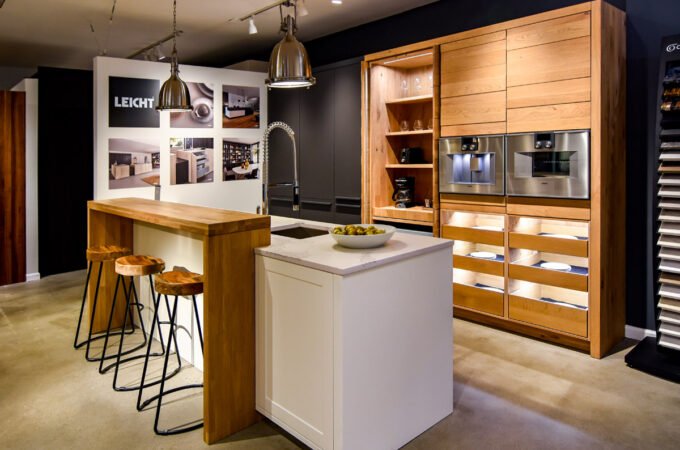
Integrating appliances is a staple of modern kitchen renovation – it makes bulky appliances vanish visually. Panel-ready refrigerators, dishwashers and wall ovens slide into cabinetry so their fronts align seamlessly with cabinet doors. The engineering involves custom panel kits and flush-door installation so there are no gaps or exposed edges. The impact is almost magical: a space looks custom-built rather than pieced together. For instance, a floor-to-ceiling wall of white cabinets uninterrupted by a chrome fridge looks clean and spacious.
From a practical standpoint, integrated appliances still perform like any fridge or oven, but they give the illusion of extra cabinetry. This can dramatically open up a kitchen appearance without moving any walls. Suiting styles like modern and transitional, integrated designs are less common in ultra-cozy farmhouses (where a rustic stainless fridge might be a deliberate statement). The main drawback is cost: custom panels and installation raise expense. But consider the ROI perspective: buyers often equate integrated appliances with professional-grade or luxury kitchens. Even though this upgrade costs thousands, it feels like a full remodel – exactly the kind of “small change with big effect” that a luxury-focused renovation blog highlights. In fact, industry studies show small cosmetic changes can yield ROI comparable to major projects . This means that in many cases, making appliances disappear by integration can make a kitchen seem entirely new.
Fixture #10: Architectural Range Hoods
A range hood is literally at the head of the kitchen, so an eye-catching hood design serves as sculpture. Architectural hoods – whether streamlined stainless canopies or custom wood enclosures – become focal points above the cooktop. Functionally, they ventilate steam and smoke, but the visual benefit is enormous. A wide copper hood, for example, gleams as the centerpiece in a traditional kitchen, while a minimalist flat-panel hood suits a sleek modern space. Some hoods even incorporate integrated lighting that highlights the backsplash and counters below.
From an engineering standpoint, range hoods must be sized to the cooktop (typically slightly wider than the stove) and vented properly. But in a design context, their finish and shape matter most. A flared hood adds vertical height; a simple box hood underscores modern geometry. Color and material play into color psychology too: a brass or bronze hood adds warmth, whereas a black or stainless hood feels technical. Compared to other fixtures, the ROI of a statement hood is indirect (it’s part of the overall kitchen’s feel), but it looks distinctly high-end. On renovation budgets, a fancy hood can be costly, but many homeowners feel it’s worth the spend for the wow factor. Common mistakes include choosing a hood that’s too narrow for the stove or hanging it too low (min 24″ above gas burners), which spoils the proportion. A well-designed hood can turn an ordinary range into an island centerpiece, giving the kitchen a custom, built-in look without expanding the footprint.
Final Thoughts
Thoughtfully chosen fixtures – from a new workstation sink to cutting-edge PVD hardware – can make a kitchen renovation feel complete, even if the layout stays the same. Market data confirms that small kitchen remodeling ideas often yield disproportionately high returns . For example, a minor remodel (just updating surfaces and fixtures) returned about 96% of its cost on resale . In practice, this means you can give your kitchen a luxury feel by swapping out a few key elements. Premium faucets, stylish lighting and a striking backsplash – those high-impact kitchen fixtures – instantly read as upscale. Even upgrades like oversized handles or open shelves contribute to a custom look. The best kitchen upgrades combine aesthetic boldness with solid engineering: durable materials and smart design (thick sink bases, ceramic faucet cartridges, solid stone counters) ensure the room not only looks good but lasts.
In sum, aim for coherence: pick fixtures that play together through color and proportion. Use the trends (e.g. brushed gold and gunmetal finishes ) to feel current, but ground them with timeless textures (marble, wood, white surfaces) so the kitchen stays appealing. By focusing on elements with high visual impact, you often get a result that looks like a full renovation. This approach maximizes both beauty and ROI: small, targeted investments can produce a dramatic kitchen visual transformation that buyers notice – making a modern kitchen renovation feel both luxurious and smart.