Navigating Commercial Construction: Equipment, Licensing, and Environmental Compliance
The Core Pillars of Construction Project Management
Commercial construction projects are complex endeavors. They involve many moving parts, strict deadlines, and significant investments. Successfully completing these projects requires expert guidance and careful planning. This is where construction project management becomes essential.
Construction project management is about leading and organizing a building project from start to finish. It ensures all parts work together smoothly. This includes coordinating many different stakeholders and making the best use of all resources. Our goal is to deliver projects safely, on time, and within budget.
In this extensive guide, we will explore the critical aspects of managing commercial construction. We will dive into topics such as defining the role of a construction manager, the qualifications needed, and the market outlook for this career. We will also cover the phases of a project, different delivery methods, and the procurement process. A special focus will be given to optimizing site operations with specialized equipment, navigating licensing requirements, and ensuring environmental compliance.
Construction project management is inherently mission-based. Unlike ongoing operations, a construction project has a defined beginning and end, with a specific objective to achieve. This necessitates a unique management approach that focuses on clear objectives, efficient resource allocation, and stringent control over project constraints such as scope, time, cost, and quality. The construction sector itself is incredibly diverse, ranging from residential developments to vast commercial complexes and intricate heavy industrial facilities.
Commercial projects, for instance, encompass everything from office buildings and retail centers to hospitals and educational institutions. Heavy industrial projects might involve power plants, refineries, or manufacturing facilities, each presenting distinct challenges and requiring specialized expertise. While residential construction often focuses on individual homes or multi-family dwellings, commercial and industrial projects typically involve larger scales, more complex regulatory frameworks, and a broader array of stakeholders. Understanding these distinctions is crucial for tailoring management strategies effectively.
The methodology chosen for managing a project can significantly impact its success. While traditional Waterfall approaches, characterized by sequential phases, are common in construction, lean project delivery is gaining traction for its focus on minimizing waste and maximizing value.
Feature Waterfall Project Delivery Lean Project Delivery ApproachSequential, linear phases; distinct stages. Iterative, continuous improvement; value-driven. Flexibility Low; changes are difficult and costly once a phase is complete. High; adaptable to changes and continuous feedback. Waste ReductionLess emphasis on explicit waste reduction. Core principle; aims to eliminate unnecessary effort, time, cost. Collaboration Often siloed, handoffs between stages. High; integrated teams, early stakeholder involvement. Risk Management Identified and managed at phase gates. Continuous identification and mitigation throughout. FocusDelivering a predefined scope. Delivering maximum owner value with minimal resources. Defining the Role of a Construction Manager
At the heart of every successful construction project is the construction manager (CM). This professional acts as the central coordinator, orchestrating every aspect from conception to completion. Their leadership duties are extensive, encompassing everything from initial planning and design consultation to final handover. A primary responsibility is budget oversight, which involves preparing detailed estimates, tracking expenses, and implementing cost-control measures to prevent overruns. Quality control is another critical area; CMs ensure that all work adheres to specifications, building codes, and industry standards.
Safety standards are paramount in construction, and the CM is responsible for developing, implementing, and enforcing robust safety protocols to protect workers and the public. Effective communication strategies are also vital, as CMs must liaise constantly with owners, architects, engineers, contractors, and other stakeholders, ensuring everyone is informed and aligned. This role demands a unique blend of technical expertise, leadership, and interpersonal skills to navigate the complexities inherent in large-scale construction.
The Construction Project Management Team
A construction project is a collaborative effort, and the construction manager is supported by a diverse team, each member bringing specialized skills to the table. The project owner commissions and finances the project, making high-level decisions and defining the overall vision. Architects are responsible for the aesthetic and functional design, translating the owner’s vision into detailed plans. Civil engineers ensure structural integrity, site development, and infrastructure planning.
The general contractor (GC) oversees the daily operations on the job site, providing equipment, materials, and labor, and often hiring specialized subcontractors for specific tasks like electrical, plumbing, or HVAC work. Additionally, inspectors (from regulatory bodies or third-party firms) ensure compliance with codes and quality standards. This intricate web of professionals requires seamless coordination, a task that falls squarely on the shoulders of the construction manager.
Professional Pathways: Education, Licensing, and Career Outlook
A career in construction management is both rewarding and challenging, offering significant growth potential. The path to becoming a construction manager typically involves a combination of formal education, practical experience, and professional development.
Many aspiring construction managers pursue bachelor’s degrees in fields such as construction science, construction management, engineering, or architecture. These programs provide a strong foundation in construction methods, project planning, cost control, and business principles. However, a degree is not always the sole entry point; extensive on-the-job training, often starting in the trades or as an assistant to an experienced manager, can also lead to this role. Internships and cooperative programs during college are invaluable for gaining practical experience and making industry connections.
Professional certifications can significantly enhance a construction manager’s credentials and career prospects. The Project Management Institute (PMI) offers the Project Management Professional (PMP) certification, which is widely recognized across industries, including construction. For those specializing in construction, the Construction Management Association of America (CMAA) offers certifications tailored to the unique demands of the construction industry. These certifications demonstrate a commitment to professional excellence and a mastery of advanced project management principles.
Qualifications and California Project Management Licensing
While a strong educational background and professional certifications are highly beneficial, specific qualifications, including licensing, can vary significantly by state and even by the type of construction project. Some states require construction managers to hold a general contractor’s license, especially if they are directly involved in overseeing the physical construction work rather than solely managing the project from a client’s perspective. For instance, aspiring construction managers operating in California should be aware of the specific requirements for obtaining a contractor’s license. Resources like California Project Management Licensing can provide detailed information on the necessary steps, including experience requirements, examination processes, and continuing education mandates. Understanding and adhering to these state-specific regulations is crucial for legal and ethical practice.
Market Outlook and Salary Trends
The construction management profession offers a robust and promising career outlook. The median annual wage for construction managers was $106,980 in May 2024, reflecting a well-compensated field. Entry-level salaries average around $58,000, with significant potential to reach $100,000 or more in subsequent years with experience and advanced roles.
Employment of construction managers is projected to grow 9% from 2024 to 2034, a rate much faster than the average for all occupations. This growth is driven by continued demand for new structures, infrastructure development, and the need to maintain and retrofit existing buildings. Annually, about 46,800 openings for construction managers are projected over the decade, indicating consistent opportunities. In 2024, construction managers held approximately 550,300 jobs, with a notable 36% being self-employed, highlighting entrepreneurial opportunities within the sector. This strong job outlook, coupled with competitive salaries, makes construction management an attractive career path.
Strategic Execution: Phases, Delivery Methods, and Procurement
Effective construction project management relies on a structured approach, breaking down complex undertakings into manageable phases and processes. This systematic execution ensures clarity, control, and accountability throughout the project lifecycle.
Project initiation is the foundational step, where the business case is developed, feasibility is assessed, and key stakeholders are identified. A Project Initiation Document (PID) often outlines the project’s scope and objectives. Following initiation, thorough project planning is essential. This involves creating a comprehensive roadmap, including a Work Breakdown Structure (WBS) that decomposes the project into smaller, manageable tasks. Detailed timelines, budgets, resource allocation, and safety protocols are established during this phase.
The procurement process is a critical component of project planning and execution. It involves identifying and selecting vendors for materials, equipment, and specialized services. This often includes a bidding process, which can be open (publicly advertised) or closed (invitations sent to pre-qualified contractors). Once bids are received, they are evaluated based on factors like cost, experience, and capability. Various contract types are used in construction, such as lump sum (fixed price for the entire project) or cost-plus (reimbursement for actual costs plus a fee), each with its own risk allocation and payment structure.
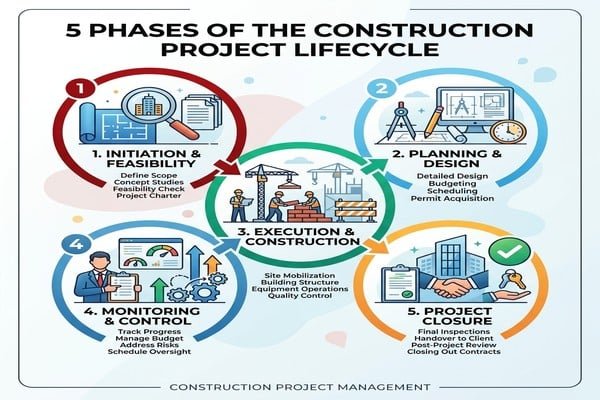
Navigating the Five Phases of Construction
Construction projects typically progress through five distinct phases:
- Design: This phase involves architects and engineers translating the owner’s vision into detailed drawings, specifications, and structural plans. It includes conceptual design, schematic design, design development, and the creation of construction documents.
- Preconstruction: Once designs are finalized, this phase focuses on preparing for physical construction. Activities include site analysis, permitting, detailed cost estimating, value engineering, scheduling, and subcontractor selection.
- Procurement: This phase involves the acquisition of all necessary materials, equipment, and services. It includes the bidding process, contract negotiation, and awarding contracts to general contractors and subcontractors.
- Project Execution: This is the core construction phase where physical work takes place. It involves site preparation, foundation work, structural erection, installation of systems (electrical, plumbing, HVAC), and finishing work. Constant monitoring, quality control, and safety management are critical throughout execution.
- Post-construction: Upon completion of physical work, this phase includes final inspections, commissioning of systems, creation of punch lists (lists of items needing correction or completion), project closeout documentation, and handover to the owner. Warranties and operations manuals are also provided.
Delivery Methods and Procurement
The choice of project delivery method significantly influences how the project team is structured and how contracts are managed.
- Design-Bid-Build (DBB): This traditional method separates design from construction. The owner first hires an architect/engineer to complete the design, then bids the project to general contractors for construction. This sequential approach is often seen as straightforward but can lead to delays if design issues arise during construction.
- Design-Build (DB): In this method, the owner contracts with a single entity (the design-builder) responsible for both design and construction. This integrated approach fosters collaboration, can accelerate project schedules, and often provides a single point of responsibility for the owner.
- Construction Manager at Risk (CMAR): Here, the owner hires a construction manager (CM) during the design phase. The CM provides input on constructability, cost, and schedule. The CM then acts as the general contractor during construction, often providing a Guaranteed Maximum Price (GMP), meaning they are responsible for any costs exceeding that price (barring owner-approved changes), assuming significant financial risk. This method offers early contractor involvement and cost certainty.
Each delivery method has its advantages and disadvantages, and the optimal choice depends on the project’s specific requirements, complexity, and the owner’s risk tolerance.
Optimizing Site Operations with Specialized Equipment
Efficient site operations are fundamental to project success, and the strategic deployment and management of specialized equipment play a pivotal role. Fleet management involves not just acquiring the right machinery but also ensuring its optimal utilization, maintenance, and replacement. Maximizing equipment uptime-the time equipment is available and operational-is crucial for maintaining project schedules and avoiding costly delays.
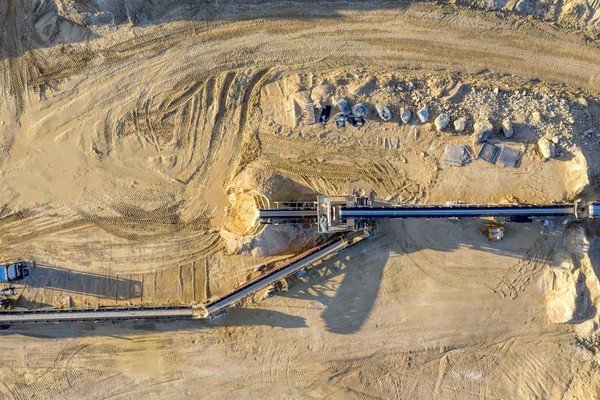
For many construction firms, acquiring and maintaining a diverse fleet of heavy machinery can be a significant capital expenditure. This is where strategic partnerships with equipment service providers become invaluable. Companies specializing in construction equipment service can offer flexible solutions, including rental, maintenance, and repair, which help control costs and ensure that projects have access to the latest, well-maintained machinery without the burden of full ownership. For example, a reliable partner like Kelbe Bros. construction equipment service can provide the necessary support to keep projects moving efficiently.
Site productivity is directly linked to the performance of machinery and the skill of its operators. Investing in operator training not only enhances efficiency but also significantly improves safety on the job site.
Selecting the Right Machinery for the Job
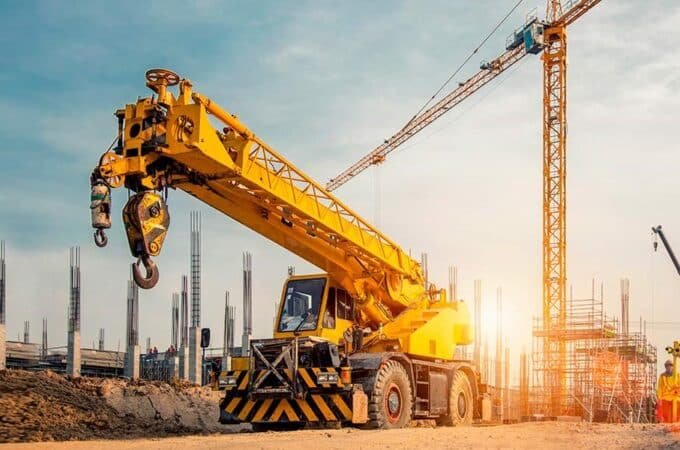
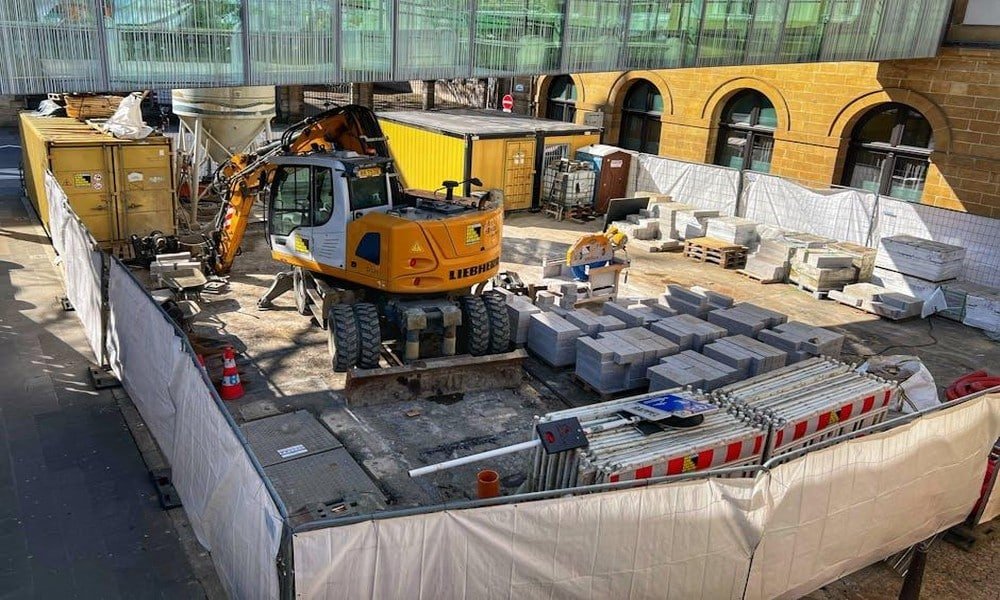
The diverse nature of commercial construction demands a wide array of specialized equipment. Choosing the right machine for a specific task can dramatically impact efficiency and cost-effectiveness. For earthmoving and excavation, Hitachi Excavators are renowned for their power and precision, while Takeuchi Compact Track Loaders offer versatility and maneuverability in tighter spaces. For material handling, Link-Belt Material Handlers provide robust solutions for lifting and moving heavy loads.
When it comes to loading and hauling, New Holland Wheel Loaders are a common sight, known for their capacity and durability. For intricate work or projects with limited access, Hitachi Compact Excavators and Takeuchi Zero Swing Excavators offer the necessary agility without compromising power. Each piece of equipment is designed for specific functions, and a construction manager must carefully assess project requirements to select the most appropriate machinery.
Equipment Maintenance and Safety
Beyond selection, the ongoing maintenance and safe operation of equipment are paramount. Heavy machinery, such as New Holland Crawler Dozers, Hitachi Wheel Loaders, and Link-Belt Excavators, are subject to immense wear and tear. Regular and preventive maintenance is not just about extending the life of the equipment; it’s about ensuring reliability and preventing catastrophic failures that could lead to project delays or, worse, accidents.
Implementing daily maintenance checklists for all machinery, including New Holland Tractor Loaders Backhoes, helps ensure that critical components are inspected, fluids are checked, and minor issues are addressed before they escalate. This proactive approach to preventive care minimizes downtime and maximizes the return on investment for equipment. Furthermore, robust safety protocols, including mandatory operator training and adherence to manufacturer guidelines, are essential to protect personnel and maintain a safe working environment.
Overcoming Challenges: Environmental Compliance and Risk
Construction projects are inherently fraught with challenges, from predictable issues like scope creep and labor shortages to unforeseen disruptions such as supply chain bottlenecks and adverse weather conditions. Effective construction project management requires proactive strategies to mitigate these risks. For instance, weather mitigation involves planning for potential impacts of rain or extreme temperatures. Handling a wet jobsite, a common occurrence, requires specific measures like ensuring proper soil stabilization, implementing effective drainage systems, and having contingency plans for equipment that might get stuck.
Environmental Construction Project Management and Sustainability
Beyond operational challenges, environmental considerations have become increasingly critical. Construction projects must adhere to stringent environmental regulations and increasingly aim for sustainable practices. This involves developing comprehensive waste management plans that detail how various types of waste-from hazardous materials like asbestos and lead to organic waste, packaging, and excess building materials-will be handled, recycled, or disposed of responsibly.
For projects with significant environmental impact, specialized expertise is often required. For example, Environmental Construction Project Management firms specialize in navigating complex environmental regulations, conducting impact assessments, and implementing mitigation strategies to ensure compliance and promote ecological stewardship. Sustainable construction practices also include pursuing certifications like LEED (Leadership in Energy and Environmental Design), which encourages energy efficiency, water conservation, and the use of sustainable materials. Recycling concrete into aggregate, repurposing wood, and salvaging metals are common practices that reduce landfill waste and can even create revenue streams. The broader goal is sustainable development, meeting present needs without compromising future generations.
Managing Site Risks and Digital Tools
Modern construction project management leverages advanced digital tools to manage risks and improve efficiency. Building Information Modeling (BIM) allows for a comprehensive 3D digital representation of a project, enabling better visualization, clash detection, and coordination among trades, reducing design errors and rework. AI-powered scheduling tools can analyze vast amounts of data to optimize project timelines, predict potential delays, and suggest alternative courses of action.
Cloud-based project management software platforms provide real-time data access, facilitating communication, document control, and progress tracking across all stakeholders. These tools are crucial for establishing robust risk allocation frameworks, identifying potential issues early, and implementing timely corrective measures. By integrating these technologies, construction managers can enhance decision-making, improve project predictability, and foster a more collaborative and transparent environment.
Frequently Asked Questions about Construction Project Management
What are the primary duties of a construction manager?
A construction manager’s primary duties are comprehensive and multifaceted. They are responsible for planning, coordinating, budgeting, and supervising construction projects from start to finish. This includes preparing cost estimates, selecting subcontractors, negotiating contracts, ensuring compliance with legal requirements and building codes, managing schedules, overseeing safety protocols, and providing regular progress reports to stakeholders. Their role is to ensure the project is completed safely, on time, within budget, and to the specified quality standards.
What is the job outlook for the construction industry?
The job outlook for construction managers is robust, with a projected growth of 9% through 2034, which is significantly faster than the average for all occupations. This growth is driven by several factors, including the ongoing demand for new residential and commercial structures, substantial investments in infrastructure development, and the increasing need for energy efficiency retrofitting in existing buildings. Additionally, a steady number of openings are expected each year to replace managers who retire or transition to other occupations, ensuring consistent opportunities in the field.
Which software tools are essential for project success?
Essential software tools for construction project success typically include:
- Gantt chart software: For detailed scheduling, task dependencies, and critical path analysis.
- Cloud-based collaboration platforms: To centralize communication, document sharing, and real-time updates among all project stakeholders.
- Building Information Modeling (BIM):For 3D design visualization, clash detection, and improved coordination.
- Cost-estimating software: To prepare accurate budgets, track expenses, and manage financial performance.
- Real-time dashboards: For monitoring key performance indicators (KPIs) and providing immediate insights into project status.
- Mobile field apps: To enable site personnel to update progress, submit daily logs, and access plans from their devices, connecting the field to the office seamlessly.
Conclusion
Navigating the complexities of commercial construction demands a blend of management excellence, technical acumen, and adaptability. We’ve explored the foundational aspects of construction project management, from defining the critical role of a construction manager and the diverse teams they lead, to understanding the educational pathways and promising career outlook in this dynamic field.
Strategic execution, encompassing project phases, delivery methods, and meticulous procurement, forms the backbone of successful projects. Furthermore, optimizing site operations through intelligent equipment selection, proactive maintenance, and robust safety protocols is indispensable. Finally, addressing the myriad challenges, particularly those related to environmental compliance and risk management, requires foresight, innovative solutions, and the judicious application of digital tools.
The future of the construction industry is undoubtedly shaped by the integration of technology and the cultivation of skilled talent. By prioritizing regulatory adherence, embracing sustainable practices, and continuously refining management strategies, we can ensure that commercial construction projects are not only successful but also contribute positively to our communities and environment.