From Hail to Health: A Comprehensive Guide to Inspecting Your Roof for Storm Damage
Hailstorms can be a homeowner’s nightmare. They often sweep through quickly, leaving behind damage that isn’t always obvious at first glance. But ignoring potential roof damage after a storm can lead to big problems later, from costly leaks to structural issues.
We understand the stress and uncertainty that follow severe weather. That’s why we’ve created this comprehensive guide. Our goal is to empower you with the knowledge to assess your roof’s condition accurately.
In the following sections, we will cover:
- How to spot hail’s calling cards from the safety of the ground.
- What different types of roof damage look like, from cosmetic to functional.
- The essential steps involved in a professional roof inspection.
- Crucial actions to take to protect your home and manage insurance claims effectively.
Let’s work together to ensure your roof remains healthy and your home stays protected.
When a severe hailstorm passes through, the first signs of damage often appear not on your roof, but around your property. These visible indicators, known as collateral damage, are your safest and easiest way to tell if your home has been affected. They serve as a crucial preliminary alert that a more thorough inspection of your roof might be necessary.
What is Collateral Damage?
Collateral damage refers to any hail impact on your property other than the roof itself. It’s the easiest and safest evidence for a homeowner to find, as it doesn’t require climbing onto the roof. If you notice dents on your car, mailbox, or the soft metal fins of your air conditioning unit, there’s a high probability your roof also sustained damage. Hailstones, especially larger ones, fall with considerable force, and their impact can leave tell-tale marks on various exterior surfaces.
The presence of collateral damage is a strong indicator that your property was directly in the path of a hailstorm capable of causing significant impact. While it doesn’t definitively prove roof damage, it significantly increases the likelihood. For instance, if you observe damaged screens on your windows or chipped paint on your deck, these are signs that hail was large enough and fell with enough velocity to potentially compromise your roofing materials. This initial ground-level assessment helps homeowners decide when to call in a professional. As we’ve seen in recent years, hailstorms are a growing concern; in 2022 alone, there were over 4,400 severe hail reports, resulting in billions in dollars in property damage across the United States. This trend underscores the importance of being vigilant after any storm.
Key Areas to Check from the Ground
A thorough ground-level check can reveal a surprising amount of information about potential hail damage. Here are key areas to inspect without ever stepping foot on your roof:
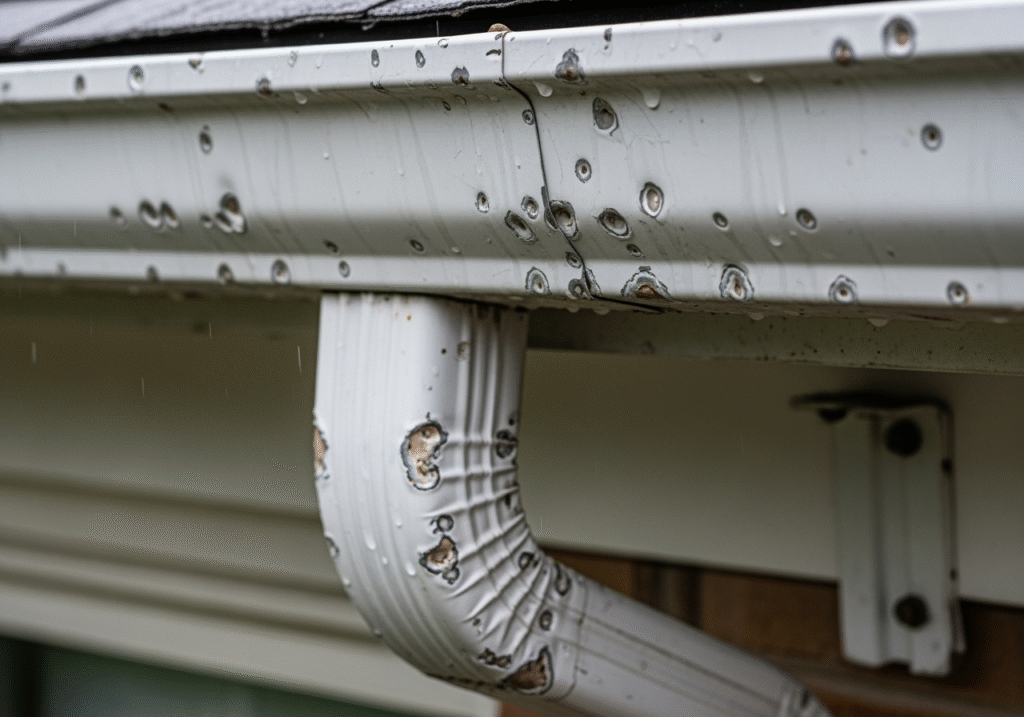
- Dented gutters, downspouts, and metal fascia: These soft metal components are highly susceptible to hail impact. Look for small, circular indentations or “dings.” If you see these, it’s a strong sign that hail was large enough to also affect your roof.
- Chipped or cracked siding (vinyl, wood, or fiber cement): Hail can leave noticeable marks on siding. On vinyl, look for cracks or fractures, especially if the hail was wind-driven. Wood siding might show chipped paint or splintered areas, while fiber cement can exhibit impact marks.
- Damaged window screens, casings, or trim: Tears in window screens or dents in metal window casings and trim are clear indicators of hail impact. Even plastic window frames can sometimes show signs of damage.
- Dents on garage doors or metal sheds: Like gutters, metal garage doors and sheds are prone to denting from hailstones. Check these surfaces carefully for any new indentations.
- Splintered wood or chipped paint on decks and fences: Hail can strip paint from wood surfaces or cause splintering, particularly on older or softer wood.
- Dings on AC units: The aluminum fins of outdoor air conditioning units are very delicate and easily dented by hail. Check the top and sides of your unit for these small impacts.
- Outdoor furniture and accessories:Plastic chairs, tables, and even garden ornaments can show cracks, holes, or significant scuff marks from hail.
- Mailboxes: Both plastic and metal mailboxes can be dented or cracked by hail.
By carefully inspecting these areas from the safety of the ground, you can gather crucial evidence. If your property shows significant collateral damage, it’s a strong signal that your roof likely sustained damage as well, even if it’s not immediately visible. This initial reconnaissance is vital for determining when to seek a professional opinion. For a more comprehensive understanding of what to look for, exploring resources on identifying various types of collateral damage, such as those found in guides on identifying hail damage through collateral evidence, can be incredibly helpful.
Decoding Damage on Your Roof: From Bruises to Cracks
Once you’ve conducted your ground-level assessment and suspect hail damage, the next step involves understanding what hail damage actually looks like on your roof. This requires a closer, often professional, examination, as many critical signs are not visible from the ground. Different roofing materials react to hail impact in unique ways, and distinguishing between functional and cosmetic damage is paramount for insurance claims.
Signs of Hail Damage on Asphalt Shingles
Asphalt shingles are the most common roofing material in many areas, including Pasadena, and they can show hail damage in several ways. One of the most common signs is granule loss. Hail impact can dislodge the protective ceramic granules embedded in the shingle surface, leaving behind random patterns of dark spots where the asphalt mat is exposed. While granule loss might seem minor, it accelerates the aging process of the shingle by exposing it to UV rays, reducing its lifespan. However, it’s important to note that when you lose granules on shingles from a hail storm, you do not necessarily shorten the life of a roof if the underlying mat is not compromised.
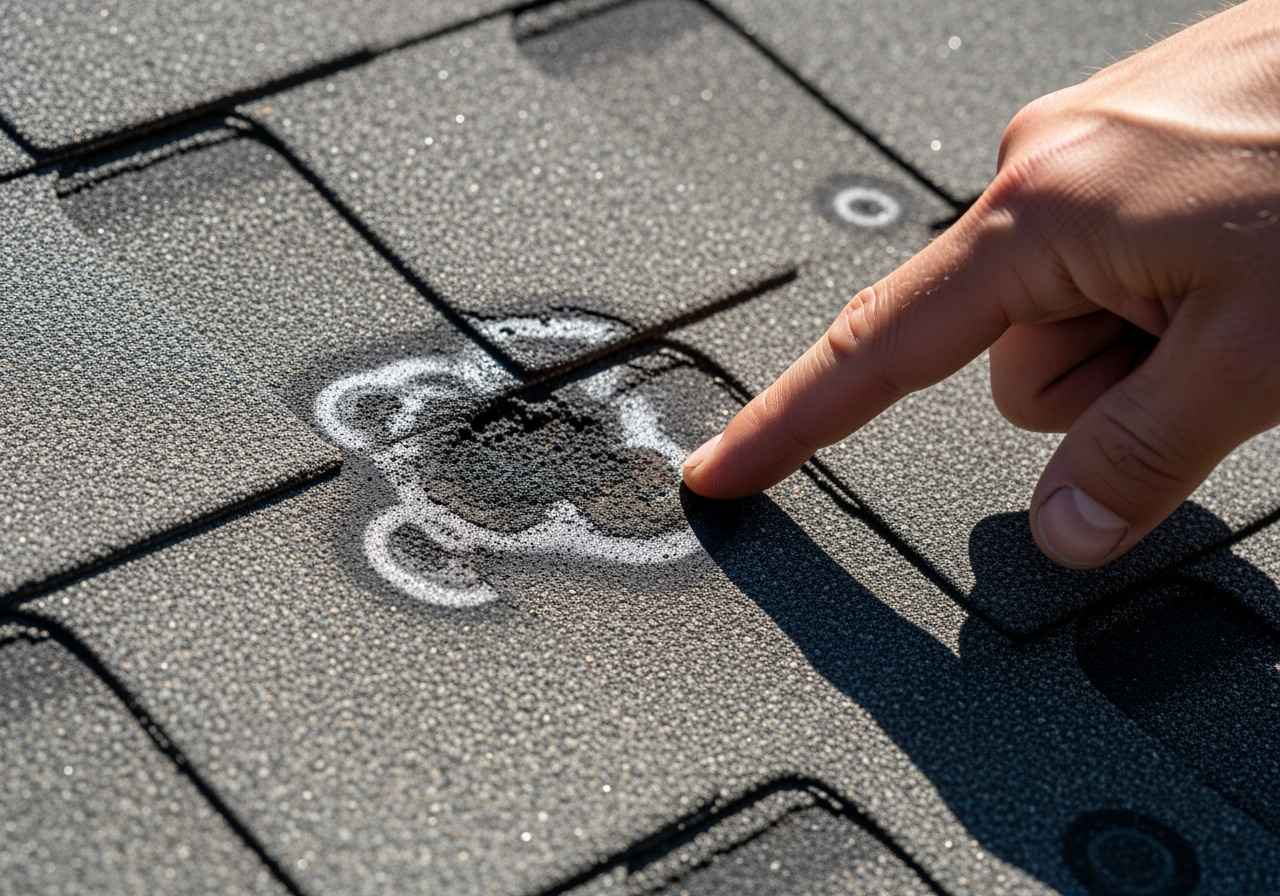
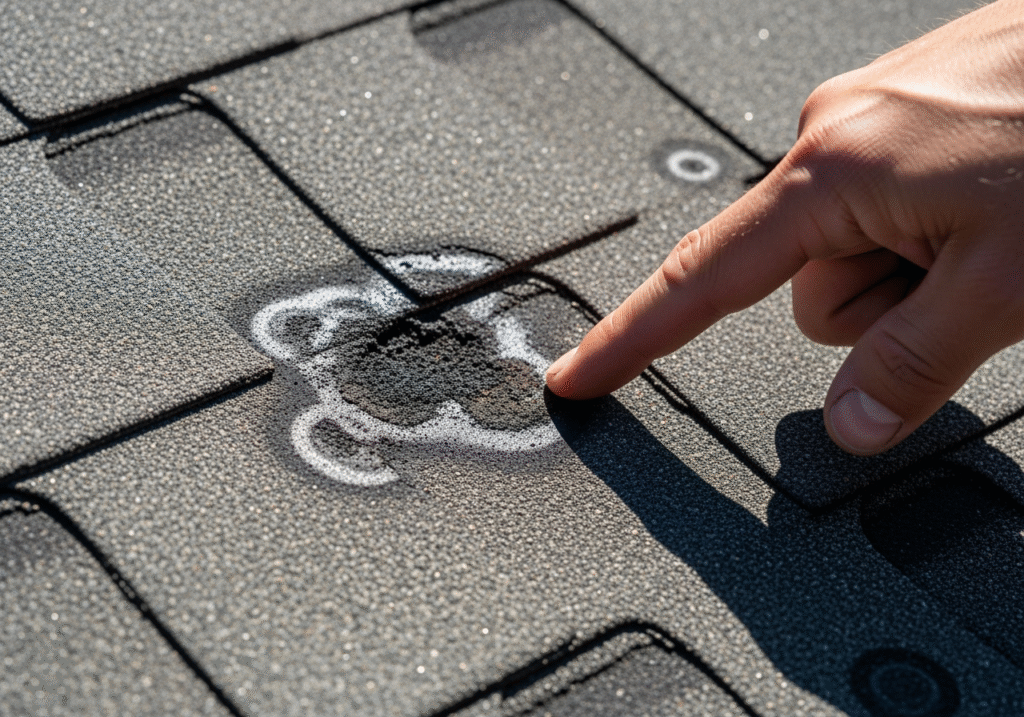
A more significant and functionally damaging sign is a “bruise” or “fractured fiberglass mat.” This is a soft, indented spot on the shingle that indicates the underlying mat has been fractured, compromising the shingle’s integrity. When you press on a bruised shingle, it will feel spongy, much like a bruised apple. This type of damage is critical because it breaks the shingle’s water-shedding capabilities, making it vulnerable to leaks. On average, it takes a 1″ or above diameter hail stone to cause damage to common asphalt shingles, though this can vary based on shingle age, quality, and storm conditions.
Other signs of asphalt shingle damage include:
- Cracks in the shingles: Hail can cause small, crescent-shaped cracks, particularly on older or less flexible shingles.
- Exposed fiberglass mat: In severe cases, hail can completely remove granules and asphalt, leaving the fiberglass mat visible.
- Weakened self-seal strip: The adhesive strip that seals shingles together can be compromised by hail, making them more susceptible to wind uplift.
For other roofing materials, hail damage manifests differently:
- Metal roofs: Look for dents and dings. While these are often cosmetic, severe impacts can compromise coatings or even puncture the metal.
- Wood shingles/shakes: Hail can cause splits, cracks, or impact marks that resemble woodpecker holes.
- Tile roofs (clay, concrete): Tiles can crack, chip, or even shatter upon impact, especially if the hail is large and the tiles are older or brittle.
- Flat roofs: Hail can cause punctures, indentations, or damage to membrane surfaces, leading to immediate or eventual leaks.
Understanding these specific signs is crucial for any homeowner. The type and severity of these damages will largely depend on the hail size and storm conditions, which we’ll discuss further.
Functional vs. Cosmetic Damage: A Critical Distinction
One of the most important distinctions in hail damage assessment, especially when dealing with insurance claims, is between functional and cosmetic damage. This difference often determines whether your roof repair or replacement will be covered.
Functional damage is any impact that reduces the roof’s ability to shed water or shortens its expected service life. This type of damage directly compromises the integrity of your roofing system, making it vulnerable to leaks and further deterioration. Examples include:
- Fractured shingle mats (bruises).
- Cracks or punctures that penetrate the shingle.
- Significant granule loss that exposes the asphalt mat over a large area, accelerating shingle degradation.
- Compromised flashing or roof penetrations that allow water intrusion.
- Shattered tiles or deeply split wood shakes.
This is the type of damage that insurance companies typically cover, as it represents a direct loss of the roof’s primary function: protecting your home from the elements.
Cosmetic damage, on the other hand, only affects the appearance of the roof and does not compromise its ability to shed water or significantly shorten its lifespan. Examples might include:
- Minor, localized granule loss that doesn’t expose the mat.
- Small dents on metal components (like vents or gutters) that don’t affect their function.
- Scuff marks or minor surface blemishes.
While cosmetic damage can be aesthetically displeasing, it generally doesn’t pose an immediate threat to your home’s structural integrity. Although cosmetic damage might not always be covered by insurance, functional damage, which impacts the roof’s ability to protect your home, is typically a different story. In 2013, the American Association of Insurance Services introduced a “Cosmetic Damage Exclusion” to allow insurers to avoid coverage for purely cosmetic issues. However, if cosmetic damage leads to a financial loss for the policyholder (e.g., reduced property value) or if state laws mandate it, some insurers may still provide coverage. It’s essential to check your specific policy and understand what it covers regarding this distinction. A qualified professional can help you discern between the two, ensuring you have an accurate assessment for your insurance claim.
The Professional Pasadena Hail Damage Inspection: What to Expect
While a homeowner can perform a preliminary ground-level check, a professional hail damage roof inspection is indispensable for accurately assessing the extent of the damage. This is not only for safety reasons but also due to the specialized knowledge and tools required to identify subtle yet significant impacts. A professional inspection ensures that all forms of damage, both obvious and hidden, are identified and documented correctly.
Key Steps in a Professional Pasadena Hail Damage Inspection
A qualified inspector will conduct a systematic and thorough evaluation of your entire roofing system. This process is designed to leave no stone unturned and provide a comprehensive picture of your roof’s condition after a hailstorm. A professional roofing inspection will assess your roof for damage you cannot or dont know how to spot, looking for hidden leaks, structural issues, and other signs of material damage. Here are the key steps involved:
- Safety First: Before any physical inspection begins, safety is paramount. Professional roofers are equipped with proper safety gear, including harnesses, non-slip footwear, and ladders, and are trained to steer roofs safely. We do not advise homeowners to get on their roofs due to the inherent dangers.
- Full Property Assessment: The inspection often starts with a review of the collateral damage around your property, similar to your ground-level reconnaissance. This helps the inspector understand the intensity and direction of the hailstorm.
- Roof Surface Examination: The inspector will carefully examine all roof slopes, paying close attention to shingles, tiles, or metal panels. They look for granule loss, bruises, cracks, punctures, and any other signs of impact. They also inspect vulnerable areas like ridge caps, eaves, and valleys where hail might have caused more concentrated damage.
- Inspection of Roof Components: All roof penetrations and accessories are checked, including vents, skylights, chimneys, and flashing. These are often made of softer metals or plastics and can show significant denting or cracking, indicating the severity of the hail.
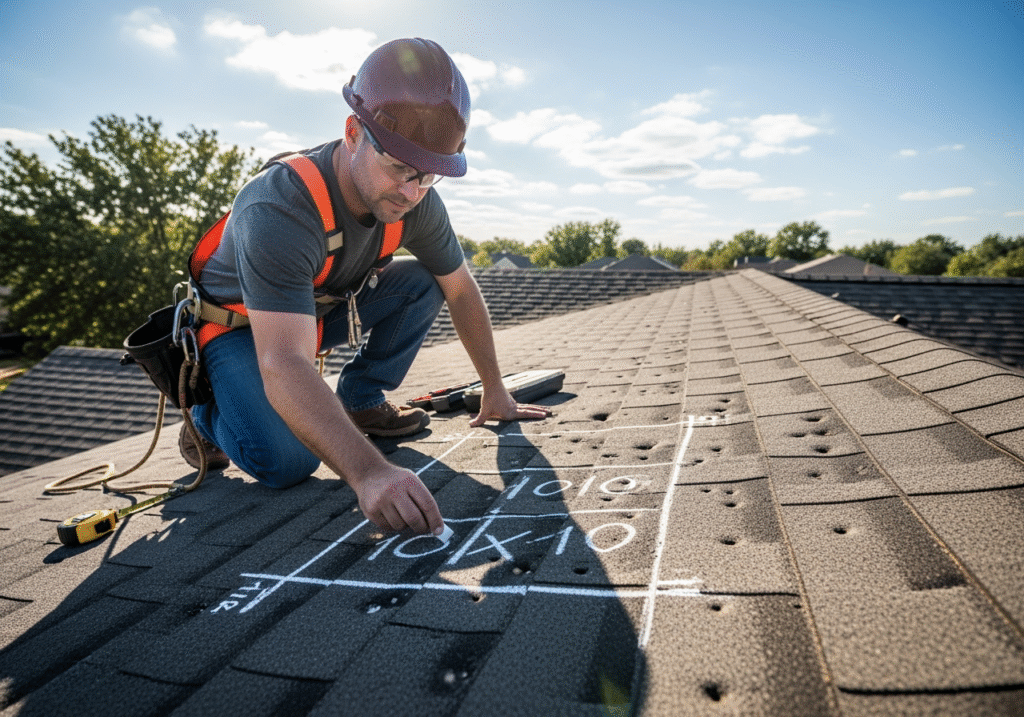
- The “Test Square” Method: For asphalt shingle roofs, a common practice, especially for insurance assessments, is to mark out a 10×10 foot “test square” on each roof slope. Within these 100 square feet, the inspector counts the number of significant hail hits that constitute functional damage. This standardized method helps quantify the damage and supports claims. This forensic approach, detailed in guides on hail damage assessment, helps standardize the evaluation process.
- Attic and Interior Check: A crucial step that many homeowners overlook is checking the attic. The inspector will look for hidden leaks, water stains on the underside of the roof deck or rafters, and wet insulation, which can indicate roof penetrations that aren’t visible from the exterior. They will also check interior ceilings and walls for water stains.
- Gutter and Downspout Examination:Beyond just looking for dents, the inspector will check for excessive granule accumulation in gutters, which can indicate significant granule loss from shingles. They’ll also ensure proper water flow and look for any structural damage to the drainage system.
On average, a professional roof inspection for hail damage will cost $75 to $800. However, many reputable roofing companies offer free inspections, especially after a major storm, understanding that homeowners need an expert opinion to steer potential repairs and insurance claims.
Why a Detailed Report is Crucial for a Pasadena Hail Damage Inspection
After a comprehensive inspection, a professional roofing contractor will provide you with a detailed report. This document is far more than just a summary of findings; it is a critical piece of evidence that serves multiple vital purposes, especially when dealing with insurance companies.
A well-prepared report will typically include:
- Specific findings: A clear description of all identified damage, categorized by type (e.g., granule loss, shingle bruising, dented flashing, cracked tiles).
- Photographic evidence: High-resolution, date-stamped photographs of each damaged area. These photos often include markers or measuring tools to provide scale and context, making the damage undeniable.
- Location details: Precise indications of where the damage was found on the roof (e.g., “north slope, upper third,” “around vent pipe #2”).
- Assessment of severity: An expert opinion on whether the damage is cosmetic or functional, and its potential impact on the roof’s lifespan and water-shedding capabilities.
- Recommendations: Clear recommendations for repair or replacement, along with an estimated cost.
This detailed documentation is crucial because it proves the extent and severity of the damage to your insurance provider, helping to ensure your claim is handled fairly and efficiently. Without concrete evidence, insurance adjusters may dispute the claim or offer a lower settlement than what is truly needed for adequate repairs. For homeowners seeking a complete evaluation, a thorough Pasadena roofing hail inspection provides this essential documentation. It empowers you with the information needed to advocate for your home and ensures that any necessary repairs or replacements are based on an accurate, professional assessment rather than assumptions. The best practices for documenting hail damage for insurance purposes always emphasize clarity, detail, and professional verification.
The Aftermath: Consequences of Neglect and Smart Next Steps
Ignoring hail damage, even if it seems minor, can lead to a cascade of problems that are far more expensive and disruptive than addressing the issue promptly. Understanding the potential consequences and knowing the right steps to take after a hailstorm is crucial for protecting your home and financial well-being.
Documenting Damage for a Successful Claim
If you suspect hail damage, documentation is your best friend. The more evidence you can gather, the stronger your case will be with your insurance company. Immediately after a storm, take date-stamped photos of hailstones (with a coin or ruler for scale if possible), any collateral damage around your property (dented cars, broken fences, damaged landscaping), and any visible damage on your roof from the ground. Keep a record of the date and time of the storm, its duration, and any notable hail sizes. This evidence will be invaluable for your insurance claim.
When it comes to your roof, focus on clear, close-up shots of granule loss, shingle bruises, cracks, or any other impact marks. If you have a drone, aerial photos can provide an excellent overview. The goal is to show the extent and nature of the damage. Also, keep records of any professional inspections, repair estimates, and communications with your insurance provider. This meticulous approach to documentation can significantly streamline the claims process and help ensure a fair settlement.
When to Contact a Professional
Knowing when to call a professional roofer after a Long Island hailstorm is critical. We recommend contacting a reputable roofing contractor for an inspection in several scenarios:
- You notice any ground-level collateral damage: As discussed, dents on gutters, damaged siding, or dings on your AC unit are strong indicators that your roof likely took a hit.
- Neighbors are getting roof repairs: If you see roofing contractors working on other homes in your neighborhood after a hailstorm, it’s a good sign that widespread damage occurred, and your home may be affected too.
- Your area has been hit by a significant hailstorm: Even if you don’t immediately see damage, hail that is quarter-sized or larger (1 inch in diameter) has a high probability of causing functional damage to common roofing materials. In regions like Colorado, Nebraska, and Wyoming, where hailstorms are a frequent occurrence, proactive inspections are crucial.
- You’ve experienced a storm with strong winds: Wind-driven hail can cause more severe and widespread damage, as the hail hits the roof at an angle, increasing impact force.
Getting a professional opinion before filing an insurance claim can help you determine if the damage is significant enough to warrant it. A professional roofer can provide an unbiased assessment and guide you on the best course of action.
The Potential Consequences of Ignoring Hail Damage: Ignoring hail damage, even if it seems minor, can lead to severe and costly long-term problems:
- Slow Leaks and Water Damage: Small cracks or bruises on shingles can allow water to seep into your attic, leading to hidden leaks. Over time, this can cause water stains on ceilings and walls, damaged insulation, and even structural rot in your roof decking and framing.
- Mold and Mildew Growth: Persistent moisture from leaks creates an ideal environment for mold and mildew, posing health risks to your family and requiring expensive remediation.
- Compromised Insulation: Wet insulation loses its effectiveness, leading to higher energy bills as your HVAC system works harder to maintain indoor temperatures.
- Accelerated Roof Deterioration: Even cosmetic damage like granule loss can expose the asphalt mat to UV rays, significantly shortening the lifespan of your shingles and leading to premature roof failure.
- Higher Future Repair Costs: What starts as a minor repair can quickly escalate into a full roof replacement, accompanied by additional costs for interior water damage or mold remediation. Hail damage roof repair costs an average of $940, but can range from as little as $20 to thousands for more extensive damage. In the worst-case scenario, you may need to factor in roof replacement costs, which average $9,100.
- Insurance Claim Denials: Most insurance companies require that you report storm damage within six to 24 months. Waiting too long can lead to a denial of your claim, as it becomes harder to prove the damage was caused by a specific storm event. State Farm reported a $1 billion increase in hail claim costs due to the increased number of hail storms in 2022, highlighting the financial impact of these events and the importance of timely claims.
How Insurance Companies Handle Claims: Insurance companies typically send their own adjusters to assess hail damage. They will evaluate the extent of the damage, often using methods similar to professional roofers, such as the test square method. Their goal is to determine if the damage meets the criteria for functional damage as defined by your policy. It’s highly beneficial to have your roofing contractor present during the adjuster’s inspection to ensure all damage is identified and documented accurately.
By being proactive, documenting thoroughly, and consulting with professionals, you can steer the aftermath of a hailstorm effectively, protecting your home and avoiding unnecessary expenses.