Best Kitchen Accessories to Improve Workflow
Modern kitchen design is no longer just about looks – it’s about engineering a space for maximum kitchen workflow efficiency. The right accessories can transform daily cooking from a chore into a seamless, even enjoyable process. In this in-depth guide, we delve into 2025 kitchen accessory trends and technical insights to identify premium kitchen accessories that truly make a high-impact difference. From multi-functional workstation sink accessories to clever space-saving kitchen tools, every recommendation is backed by ergonomics research, consumer behavior data, and real use-cases across different lifestyles. Let’s explore how to turn your kitchen into a well-oiled machine.
1. Why Workflow Matters in Modern Kitchens
Today’s kitchens are bustling multi-purpose hubs, so kitchen efficiency is more important than ever. Studies show that working in a typical family kitchen involves significant movement: on average a person makes over 30 trips between counter and table daily, opens or closes cabinets and drawers 80+ times, and performs more than 50 distinct tasks like chopping or stirring . In a four-person household, someone preparing meals might spend at least two hours per day just walking, bending, and reaching in the kitchen . It’s no wonder daily kitchen activity has been compared to a gym workout . An inefficient layout or lack of proper tools can lead to wasted time and extra physical strain.
Good workflow design eliminates these pain points. Kitchen ergonomics research confirms several benefits to optimizing how we work in the kitchen:
- Time Savings: Shorter distances and smarter setups mean everyday tasks take less time . An ergonomic kitchen frees up time to spend with family or on other activities.
- Reduced Fatigue: Minimizing bending, reaching, and repetitive motions prevents the back and joint strain that a poorly organized kitchen can cause . You can prep meals longer or more frequently without discomfort.
- Safety: A logical layout with well-placed appliances and accessories reduces accident risks (like knife slips or spills) by keeping everything within safe reach . Less clutter and fewer hurried movements mean a safer cooking environment.
- Improved Workflow: Thoughtful design makes the flow of work intuitive . For example, if your cutting board, knife, trash bin, and sink are all within arm’s reach, you can chop and dispose of waste in one fluid sequence. Such “knife-to-board-to-sink” flow prevents constant back-and-forth trips.
- Enhanced Organization: Optimized kitchens ensure “a place for everything and everything in its place.” This reduces clutter and frustration . You spend less time searching for items and more time cooking. Clutter-free counters and concealed storage (a rising trend in 2025) also contribute to a calm, focused mindset in the kitchen .
Importantly, modern lifestyles have raised the stakes for kitchen workflow. With more people cooking at home and even working from home, the kitchen has become a central living space. In fact, 90% of design professionals say clients now prioritize improving kitchen functionality and aesthetics as a result of increased at-home time . Homeowners are seeking clutter reduction and multi-purpose features – 87% want hidden storage to keep counters clear – so that the kitchen remains efficient even as it multitasks for work, family meals, and entertaining.
Movement economy is the guiding principle here: every step and reach you save counts. Industrial kitchen planners and ergonomists often talk about “reach zones.” Common advice is to keep your most-used tools and ingredients within the easy arm’s reach zone between your shoulders and hips, with less-used items stored higher or lower . This way you rarely need to stretch or stoop during daily cooking. Likewise, “task clustering” – grouping related tasks and tools in one area – is key to efficiency. For instance, a prep-to-clean cycle can be streamlined by clustering chopping, rinsing, and waste disposal tasks around the sink area if your accessories allow it. All these concepts boil down to one idea: a well-designed kitchen workflow saves you time and effort every single day.
2. What Makes an Accessory “High-Impact”?
Not all gadgets are created equal. Many trendy tools end up collecting dust in drawers (for example, about 22% of people own a rolling pin but never use it ), whereas a select few become everyday workhorses. A high-impact kitchen accessory is one that meaningfully improves your daily routine – it earns its space in your kitchen through constant use and the value it provides. Here’s what typically makes an accessory high-impact:
- Frequent Utility: The accessory addresses tasks you perform regularly. For example, nearly everyone uses cutting boards and spatulas daily – in fact, the humble spatula is used more frequently than any other tool in the kitchen . So an accessory that enhances such a frequently used task (like a more efficient cutting board system) will naturally have high impact. By contrast, a single-purpose item for a rare recipe might not justify its storage space.
- Workflow Improvement: High-impact tools noticeably reduce the steps or mental load in cooking. Think of a built-in measuring cup in a rice cooker – it eliminates guesswork and extra measuring tools. Or consider a chopping station that lets you slide veggie scraps straight into a bin or disposal; it clusters the task of cutting and cleanup together, saving you dozens of small trips to the trash. Kitchen workflow is all about minimizing unnecessary motions, so an accessory that lets you complete a multi-step process in one spot is invaluable.
- Multi-Functionality: The best kitchen accessories often serve multiple purposes, adapting to different needs. A good example is an over-sink roll-up drying mat – it can act as a dish drying rack, a trivet for hot pans, an extra countertop for defrosting or cooling, and even a washing station for produce. This versatility means you get several functions in one, ideal for space-saving kitchen tools and for those who value a minimalist setup. In 2025, consumers are gravitating toward such multi-use gadgets; industry surveys confirm multifunctionality is a top trend, with 91% of kitchen experts reporting that appliances and fixtures with more than one function are highly popular .
- Ergonomic Design: High-impact accessories are designed with human comfort and ease-of-use in mind. If a tool reduces strain (such as a knife organizer that presents knives at an easy angle, or a jar opener that saves your wrist), you’ll be inclined to use it often. Even something like the handle design on a high-pressure sprayer attachment can determine whether it’s comfortable for prolonged use when cleaning. Good ergonomics also tie back to safety – an accessory that stays stable (non-slip cutting boards, for instance) can prevent accidents.
- Time and Motion Savings: The less time an accessory helps you spend on a task, the more “impact” it has on your day. Best prep tools like sharp chef’s knives or efficient food processors are classic examples – they significantly cut down prep time. But even simple accessories can offer big time savings. A sliding cutting board that lets you chop and then slide ingredients directly into a pot or waste into the sink can shave off countless little transfer steps. Over the course of a year’s cooking, that can equate to hours saved.
- Quality and Durability: Finally, an accessory can’t be impactful if it breaks or deteriorates after a few uses. The most impactful tools are often premium kitchen accessories made from long-lasting materials. Look for things like 304 stainless steel, known for its corrosion resistance and strength, or solid hardwoods like maple for cutting boards. These materials ensure the accessory maintains its performance over years. (For example, 304 stainless is considered the gold standard for kitchenware because it resists acidic foods, has a non-porous hygienic surface, and offers an ideal balance of strength and affordability .) Durable accessories also invite you to use them more – you trust a sturdy utensil more than a flimsy one. Investing in good materials means your favorite tool will be there every day, delivering value long-term.
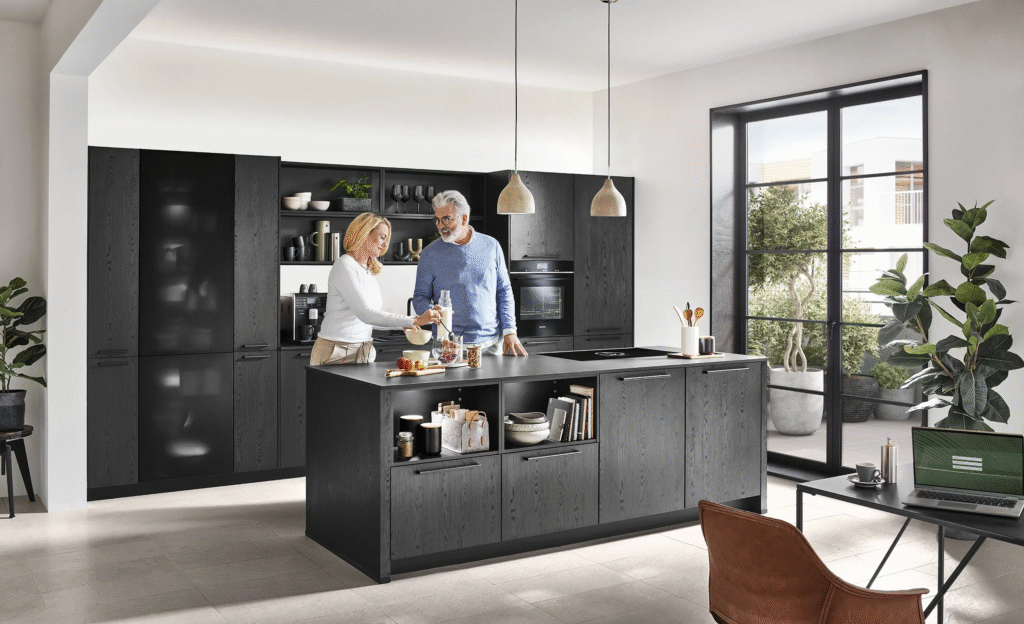
In short, “high-impact” kitchen accessories are those that profoundly streamline daily routines. They adhere to the 80/20 rule: a small set of tools (maybe 20% of what you own) end up handling 80% of your kitchen tasks. The goal is to identify those game-changers and make them a staple of your kitchen. Next, we’ll explore specific categories of such accessories and why they matter.
3. The Role of Workstation Sinks in Workflow Optimization
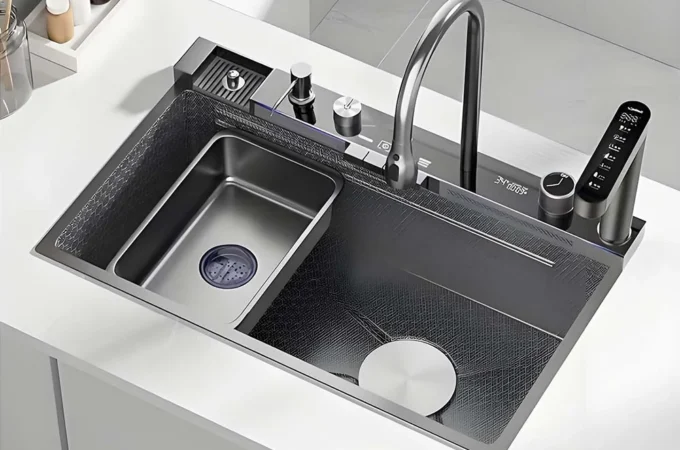
One of the most transformative developments in kitchen design is the rise of the workstation sink. In simple terms, a workstation sink is an expanded, multi-functional sink that includes built-in ledges or tracks for accessories like cutting boards, colanders, drying racks, and more. By turning the sink into a versatile work zone, it profoundly improves kitchen workflow. It’s not just a sink – it’s a prep station, cleaning station, and sometimes even a serving station in one.
Global Trend: Workstation sinks have become a worldwide trend and a centerpiece of 2025 kitchen accessory trends. Designers and homeowners have realized that a lot of kitchen work gravitates around the sink area – cleaning, chopping, rinsing, filling pots, etc. So why not optimize that area for efficiency? As a result, multi-functional kitchen sinks are surging in popularity. One industry report found that 83% of kitchen professionals see sinks with integrated prep and serving features growing in demand . Similarly, manufacturers have flooded the market with innovative workstation sink models. As we move into 2025, workstation sinks are considered “the ultimate in kitchen efficiency,” revolutionizing workflows by incorporating sliding accessories in deep basins .
Multi-Zone Functionality: A hallmark of workstation sinks is their multi-zone functionality. With tiered tracks, you can use several accessories simultaneously at different levels. For example, you might have a cutting board on the upper ledge, a colander or over-sink strainer on a middle ledge, and the sink basin free below – effectively creating a prep zone over a wash zone. This layered approach means you can, say, chop vegetables on the board and sweep the trimmings straight into the colander to rinse, all without moving an inch. It clusters tasks (wash, cut, discard) in one compact area. In The Rise of Multi-Functional Kitchen Sinks in Modern Homes, we broke down why these multi-level configurations matter: they allow tasks that used to be separate to happen together, drastically cutting down on countertop mess and back-and-forth trips.
Engineering Precision: The success of a workstation sink lies in engineering details. Track precision is critical – the built-in ledges must be perfectly level and strong to support heavy accessories and cookware. Premium workstation sinks, such as accessory-rich workstation sinks from brands like Crauf , which designs deep handmade stainless steel systems optimized for maximum workflow efficiency, invest in precision fabrication so that cutting boards don’t wobble and slide smoothly. Weight support is another factor: the ledges are built to hold not just a board but the weight of say, a full pot or a heavy cast-iron pan on a drying rack. This opens up possibilities to use the sink as a sturdy cooling rack or loading surface for heavy items, which would be risky on a flimsy sink insert.
Accessory compatibility and modularity also come into play. Many workstation sinks come as a package with an array of custom-fitted accessories (boards, grids, baskets). Some systems even allow you to interchange accessories or buy add-ons – for instance, swapping in a pasta strainer, a knife holder, or a small drying rack as needed. The best designs ensure water flows and sizes are standardized, so you can mix and match without issue. Ledge placements often adhere to a quasi-standard that aftermarket accessories can fit, although it’s usually best to use the manufacturer’s provided pieces for perfect fit.
Deeper Single-Bowl Advantage: Most workstation sinks are deeper single-bowl sinks, and that’s not by accident. As explained in A Complete Guide to Deep Single-Bowl Sinks, a deep, wide bowl provides the canvas for a true workstation. Depth (often 9-10 inches or more) means that when you place a cutting board or colander on the ledge, you still have plenty of clearance below. You can fill the sink with water or stack dishes underneath the work surface without interference. The depth also helps contain splashes even when multitasking – chop scraps can drop into water or a disposal without making a mess. A single-bowl (as opposed to a divided double sink) maximizes the open space to accommodate large sheets pans or multiple accessories at once. Deeper sinks also physically create better spaces for workflow by allowing more vertical layering and by accommodating bulky items like stockpots for cleaning (no juggling around a divider).
Notably, deeper sinks have ergonomic implications: one might worry about bending more, but workstation sinks often solve this by bringing the work to a higher level (the ledge). You can do most prep on the ledge at countertop height, then only use the full depth for washing. Many users find this arrangement more comfortable than constantly moving between counter and sink – it’s all one continuous surface.
Integrated Drainage: A subtle but important engineering aspect is water drainage logic. Workstation sinks are designed to handle water from accessories efficiently. For example, that over-sink drying rack or colander will drip – so the sink often has slight slopes or grooves to channel water from the edges to the drain. Some sinks include slight pitching under the ledges or custom drain trays so that your cutting board juices or dish drippings don’t end up puddling. High-end models may include accessories like a small drainboard or catch basin for things like a soap dispenser or dish rack. In essence, everything is designed so water goes where it should (down the drain) and not onto your counters or floor. This is where quality manufacturing shines: lesser products might have poorly fitting parts that cause water to splash out.
Workstation sinks have proven to be a global workflow game-changer. Home cooks report significant efficiency boosts – with everything at their fingertips, meal prep and cleanup feel smoother and faster . These sinks are especially lauded in smaller kitchens where countertop space is limited; converting the sink into usable workspace is a smart two-for-one deal . In The Rise of Multi-Functional Kitchen Sinks in Modern Homes, we detailed how such sinks enable even compact kitchens to function like a larger space by compressing multiple functions into one area. In short, a workstation sink acts as the command center of a kitchen, embodying many of the principles of good workflow design: multi-functional, ergonomic, space-efficient, and task-centric.
4. Best Accessories for Daily Prep
Daily meal preparation involves repetitive tasks – washing produce, chopping, mixing, and gathering ingredients. The following best prep tools and accessories are designed to streamline those tasks and cut down prep time, all while keeping your kitchen organized. Each item has a specific role in optimizing the prep workflow:
- Sliding Cutting Board: A sliding cutting board (often part of a workstation sink or as an island extension) lets you chop ingredients and then easily slide the board or the chopped food itself to where it’s needed. For example, on a sink ledge, you can slide the board aside to dump scraps directly into the garbage disposal or a waiting trash bin without lifting the board. Some sliding boards are mounted on countertop rails and can cover the sink – effectively increasing counter space during prep and then sliding away when you need the sink. This design not only saves space but also creates a knife-to-board-to-sink flow that minimizes mess. No more dripping vegetable peels across the kitchen; you simply scrape them through a hole or gap straight into the sink/trash. Stability is key here, so quality boards have non-slip edges or fit custom tracks to prevent any dangerous shifting while cutting.
- Over-Sink Colanders & Strainers: Integrated colanders (sometimes called over-sink strainers) are prep MVPs. These are colander baskets that rest on the sink edges or ledges, allowing you to rinse fruits, veggies, or drain pasta right over the sink. The water goes directly into the sink, so you avoid wetting the counters. Integrated versions often come with workstation sinks – a stainless steel or plastic colander that fits perfectly – but you can also buy adjustable ones for any sink. The big advantage is combining washing and draining with other tasks: you can soak produce in the colander, lift and let it drain, then immediately chop it on an adjacent board. No separate strainer to manage, and you free up your hands. This accessory exemplifies kitchen workflow efficiency by merging two steps (washing and holding) into one container and keeping it in the prep zone. Look for food-safe polypropylene colanders or stainless steel ones; both materials are durable and hygienic. (Polypropylene plastic is often used because it’s BPA-free and approved for food contact , plus it won’t scratch your sink.)
- Multi-Level Prep Rails: These refer to the built-in multi-level tracks or rails on workstation sinks and some cutting board systems. By having two or three levels of rails, you can use multiple accessories together. For instance, one rail holds a cutting board, while right below it a second rail holds a shallow bin or another board. This allows task stacking – you could slice chicken on the top board and have a bowl on the lower rail catching the pieces, or use a second board below as a landing pad for chopped veggies. The benefit is all about efficiency and containment: everything happens in one compact vertical column. Multi-level setups cater to the concept of mise en place (everything in its place) by letting you organize ingredients in layers around your workspace rather than spreading out across the counter. The rails need to be well-engineered to be precisely level and strong, as mentioned earlier, to ensure accessories on different levels don’t collide or slip. When done right, multi-level prep stations can increase your effective work area significantly within the same footprint.
- Roll-Up Drying Mat (for Prep): We often think of roll-up mats for drying dishes (and we’ll revisit it for cleaning), but during prep, a roll-up silicone-coated mat over the sink is incredibly handy. You can use it as a quick drying rack for washed produce – lay herbs or lettuce on it to drip-dry while you prep other items. It can also hold cutting boards or utensils you’ve washed mid-recipe. Because it’s basically a series of silicone-coated metal rods, it’s strong enough to hold heavy pots or even function as an extra cooling rack for baked goods. Many people place a cutting board on top of a roll-up mat over the sink, effectively creating a stable extended countertop. When you need the sink free, just roll it up and stash it. These mats are made of heat-resistant silicone (often safe up to ~400–500°F) so they can handle hot pans, which adds to their versatility as trivets. Their foldable nature makes them a darling of small kitchens and renters – easy to deploy, easy to store.
- Sink “Tel” Grid (Steel Sink Grid): Sometimes called a sink bottom grid, the “tel grid” is a protective stainless steel grid that sits at the base of your sink. For prep, its significance is subtle but important: it allows you to set down colanders, heavy pots, or sharp utensils in the sink without worrying about scratching the sink or blocking the drain. When washing vegetables or fruits, a sink grid means grit and dirt can fall through and water circulates freely under the items. It effectively turns the bottom of your sink into an extension of your workspace – you can rinse and leave things to drain in the sink while you continue with other tasks, and they’re not sitting in residual water. Also, if you drop a glass or ceramic in the sink, the grid can prevent direct impact with the hard sink surface, reducing breakages. High-quality grids are made of 304 stainless steel (for rust resistance in constant water) with rubber feet to prevent slipping. This accessory supports workflow by enabling more “use” of the sink area during prep (it’s not just a basin but a platform).
- Knife Organization Blocks: A sharp chef’s knife is arguably the most important prep tool, but equally important is having it safely and quickly accessible. Knife organization accessories, such as in-drawer knife blocks, magnetic wall strips, or dedicated knife slots on a cutting board or sink caddy, can dramatically improve prep flow. Instead of hunting through a drawer (dangerous and inefficient), you have your knives displayed and protected, ready to grab. For instance, some high-end workstation sinks offer an accessory knife holder that sits on the ledge, keeping knives at your fingertips as you switch between, say, a chef’s knife for chopping and a paring knife for detail work. Even a simple countertop knife block, if well-placed in your prep zone, saves you steps. Safety and hygiene are big here too: a proper block keeps blades from dulling and avoids accidents when reaching for a knife. Magnetic strips are popular in modern kitchens – mount one on the backsplash near your prep area, and you can instantly see and retrieve the knife you need. A tidy knife storage also means faster cleanup (each knife has a home). In terms of materials, knife blocks can be wood (gentle on blades) or plastic; just ensure it’s kept clean and dry to avoid bacteria. A well-organized knife setup exemplifies task clustering – all your cutting tasks flow smoothly when the right knife is immediately at hand and then easily put away.
By incorporating these prep accessories, you create a highly efficient “prep station” in your kitchen. Imagine this scenario: You pull out ingredients, set your knives from the magnetic strip, place a colander in the sink with veggies to wash, then transfer them to the board right next to it, chop them and slide into a bowl – all without moving your feet. That’s the power of a good prep setup. These accessories reduce the friction between each step of cooking, which adds up to a more enjoyable and faster cooking experience every day.
5. Best Accessories for Cleaning & Post-Cooking
After cooking comes the inevitable cleanup. But cleaning up doesn’t have to be drudgery – the right accessories can streamline dishwashing, drying, and resetting the kitchen for the next use. Here are the top accessories that improve the kitchen workflow during the cleaning and post-cooking stage:
- Deep-Bowl Rinse Baskets/Grids: When it’s time to wash produce or even scrub grimy pots, a deep-bowl rinse basket (or grid insert) is a game changer. This is typically a large, deep colander or perforated bin that fits into your sink, allowing you to submerge and rinse items easily. For cleaning, you can fill it with soapy water to pre-soak dishes or oven racks, then lift it out to drain – all the mess stays contained. If you’re washing vegetables or fruits in bulk (think big farmers’ market hall), a deep rinse basket lets you wash them thoroughly and drain without scattered debris. Some workstation sink systems include large perforated stainless rinse baskets that hang on the sink ledges; you could fill one with soap water to do an initial scrub of dishes above the sink water. The workflow optimization is that you’re not juggling dishes one by one – you batch process them in the basket, then move the whole basket. It also saves your sink from food bits clogging the drain, as the basket catches them. For those with gardens or compost, you can collect peels in the basket, then easily dump out. Like sink grids, these baskets should be stainless steel or food-grade plastic for durability. They embody the idea of doing more at once, which is key to efficient cleaning.
- Adjustable Dish Racks: Drying dishes can take up a lot of counter real estate, especially if you don’t have a dishwasher. Adjustable dish racks help by customizing to your load and then folding away. Over-sink drying racks (like an expandable rack that sits across your sink) are particularly useful – they use the empty air above your sink to dry dishes, so water drips into the sink rather than onto a mat. Some modern dish racks are tiered or expandable based on how many dishes you have; if it’s a light load, it occupies little space, and for big post-dinner party loads, it can extend. There are also in-sink dish racks that fit one half of a double sink, allowing you to use one basin for drying while keeping the other free. A neat example is a rack that telescopes to different sink widths or a rack with movable prongs to accommodate various plate sizes. These features might seem small, but they can drastically improve kitchen workflow by adapting to the task at hand. Once dishes are dry, many of these racks can be folded flat and tucked away, clearing your counter for the next cooking session. Look for rust-proof materials (coated steel or plastic) since these will be wet often. Also, an integrated drip tray or spout that returns water to the sink is desirable for countertop models – nobody wants a puddle on the counter.
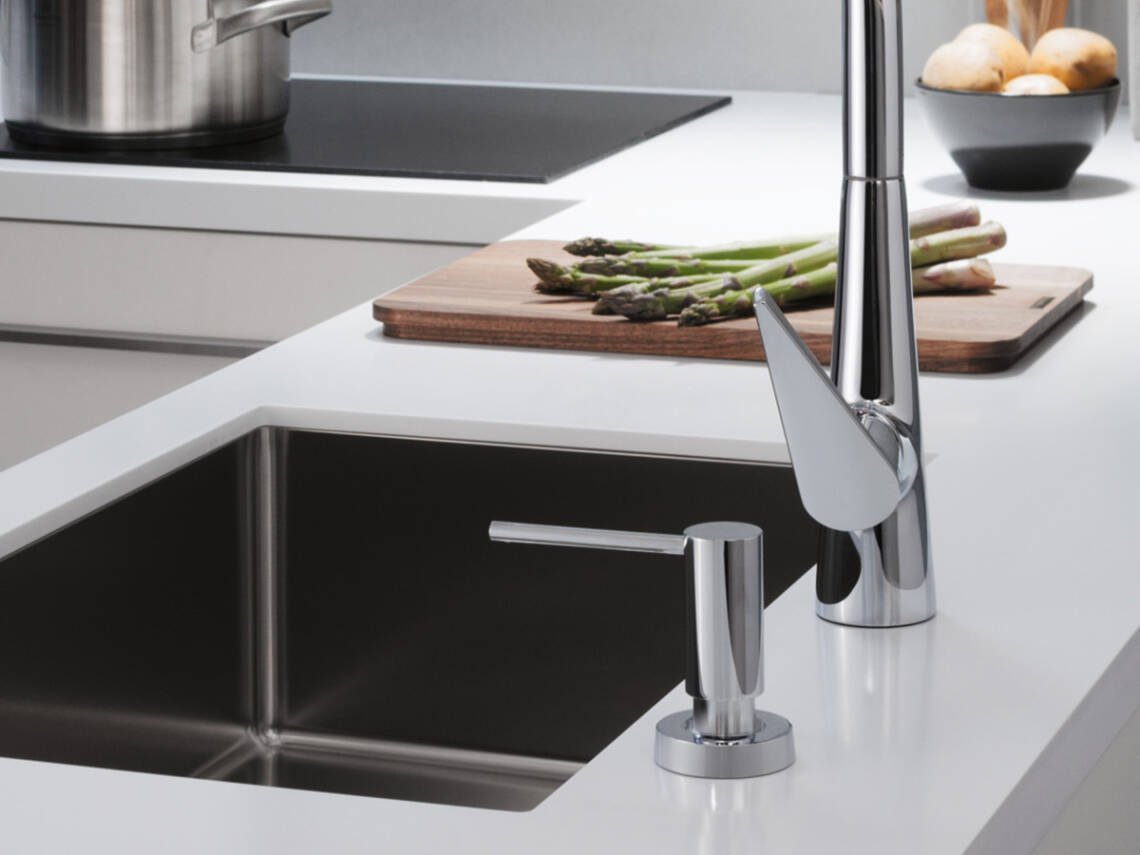
- Built-In Soap Dispensers: Reaching for the dish soap bottle and having it clutter the counter is a minor annoyance that, over hundreds of repetitions, becomes a real inefficiency (and an eyesore). A built-in soap dispenser mounted by your sink streamlines this. With a pump right at sink level, you can quickly squirt soap with one hand – no fumbling with caps or tipping over bottles. It’s a small convenience that keeps the cleaning rhythm going. Built-in dispensers are typically refillable from above (just lift the pump and pour in soap) or below the sink. They keep your sink area organized, which contributes to workflow by letting you focus on washing rather than finding the soap. For an even more high-tech solution, consider touchless soap dispensers. These infrared sensor pumps dispense soap when you place your hand underneath – fantastic for hygiene (no contaminated pump to touch when hands are messy). They can be countertop models (with a sleek design blending into a modern kitchen) or some new faucets even come with touchless soap dispensing integrated. In any case, a dedicated dispenser (manual or automatic) also helps you manage soap portions better – reducing waste and the need to refill as often.
- High-Pressure Sprayer Attachment: If you’ve ever seen a restaurant kitchen sink, you know they often have a pre-rinse spray nozzle that blasts off food debris in seconds. You can have a similar experience at home with a high-pressure sprayer attachment or a pull-down faucet with a strong spray mode. These sprayers make post-cooking cleanup far more efficient. Stuck-on food from pans or baking sheets can be dislodged with a targeted high-pressure stream, reducing the elbow grease needed. They’re also excellent for quickly rinsing out sinks and counters. Many modern kitchen faucets come with a dual-spray or turbo-spray setting; if not, you can retrofit your faucet with a sprayer attachment that increases water pressure or adjust the aerator for a focused jet. Another related accessory is a sink faucet hose extension – basically turning your faucet into a sprayer if it isn’t pull-out already. This helps reach all corners of the sink (or to fill a bucket on the floor, for instance). Workflow-wise, a strong sprayer rinses dishes faster and can even act like a mini pressure-washer for produce (great for cleaning root vegetables). It shortens the time each dish spends under the water, which, multiplied over a full load of dishes, is a big time saver. A caution: ensure your sink has a deep bowl and possibly a grid if you’re going to spray vigorously, to avoid water splashing out. But in a deep workstation sink, a high-pressure spray is contained and very effective.
- In-Sink Rinse Grid: Similar to the prep function, a sink bottom grid or a slightly raised rinse grid is very useful during cleanup. When scrubbing pots or plates, the grid allows soapy water to flow off and not create suction between the dish and sink – meaning you can rinse faster and more thoroughly. It also means you can stack some items on the grid while rinsing others above them; water flows under and around, so you’re effectively multi-tasking rinsing. After washing, you can leave items on the grid to drip-dry a bit while you wash others, rather than having to immediately transfer each one to a drying rack. This overlapping of tasks (wash next item while previous drains) speeds up the whole dishwashing process. Plus, as mentioned, grids protect the sink and dishes from each other. Many users also utilize the sink grid to air-dry heavy pots or fragile glasses that they don’t want to put in a normal rack – the items stay safely in the sink. In summary, a rinse grid makes the sink a more efficient cleaning workstation, not just a bowl that holds water.
Taken together, these cleaning accessories do for the post-cooking phase what prep accessories do for pre-cooking: they batch tasks, reduce physical effort, and keep everything neatly organized. A scenario to imagine: Dinner’s over, you clear plates straight onto your sink’s rinse grid, quickly spray off debris with your pull-down sprayer, plug the sink and let pans soak in the deep rinse basket, pump your built-in soap to scrub, then load plates into an over-sink rack to drip dry. The counters stay dry and free, and you’ve cut down the number of steps (literally and figuratively) required to go from dirty dishes to a clean kitchen. A smooth cleanup means you’ll be less reluctant to cook the next meal – an efficient kitchen feeds your enthusiasm to use it again and again.
6. Best Space-Saving Accessories
Whether you have a cozy urban apartment kitchenette or a spacious home kitchen that you want to keep uncluttered, space-saving kitchen tools are essential for improving workflow. By maximizing the utility of every inch and often serving multiple purposes, these accessories ensure even small kitchens function efficiently. Here are some of the best space-savers that also boost organization and workflow:
- Foldable Mats and Boards: Flexibility is the name of the game in a tight kitchen. Foldable or rollable cutting mats, mentioned earlier, can be tucked away in a drawer and brought out when needed, unlike a bulky cutting board that permanently occupies counter space. Some cutting boards are designed to fold into a chute, so after chopping, you can funnel ingredients neatly into a pot – a clever way to avoid spills (and thus extra cleanup space). There are also foldable countertop extenders: think of a small cart or tray that hooks onto a counter edge to create a bit of extra workspace, then folds down when not needed. A roll-up drying mat (foldable silicone-coated rack) is a prime example of a space-saver: it unrolls over your sink to act as a drying rack or extra surface, then rolls up and stores in a utensil drawer. By going vertical or collapsible, these tools ensure you only use space when you need it, not 24/7.
- Over-Sink Shelves and Racks: The area above and behind the sink is often underutilized. Over-sink shelves turn that airspace into storage for frequently used items. For instance, a sturdy rack that sits over the sink (some have suction cups or tension rods to hold in place) can have tiers for dish soap, sponges, and even dishes or mugs. There are “dish drying shelves” that sit over the sink: after washing, you place dishes on this rack and they drip into the sink below. This is hugely space-saving because it removes the need for a countertop dish rack. Other variants include an over-sink shelf that spans the width – giving you a spot for small plants, spices, or dish accessories. By moving items off the counter and onto an over-sink organizer, you free counter space for prep. These shelves also centralize cleaning or prep items right where you use them (improving workflow by cutting search time). They often come in adjustable lengths to fit different sinks and can be easily removed if needed (making them renter-friendly as well). Since they’re in a wet area, look for stainless steel or rust-proof coated metal construction.
- Hidden Trash Bins and Scrap Collectors: A lot of kitchen workflow inefficiency comes from dealing with waste – think how many times you move to the trash can when chopping vegetables. Hidden or integrated trash solutions can save steps and keep the kitchen neat. One popular accessory is a built-in trash bin that sits in a pull-out cabinet right by your prep area (often under the counter or the sink). This way, you simply pull out a drawer and swipe waste directly in. Some cutting board designs even have a cut-out hole that leads to a container or trash beneath – you cut, slide scraps into the hole, and they’re gone. For those who can’t install a built-in bin (renters, for example), there are hanging trash bins that hook over a cabinet door or attach temporarily to the counter edge. These allow you to position a small bin exactly where you’re working, then dump it into the main bin later. It dramatically reduces back-and-forth time during prep and keeps your work surface clean. Hidden trash also refers to keeping the main garbage out of sight (and perhaps odor-contained) in a cabinet, which makes the kitchen feel cleaner and more spacious. Overall, integrating waste management into the workflow (rather than as an afterthought) is key for efficiency – it’s part of the prep-to-clean cycle that shouldn’t be ignored.
- Pull-Out Cabinet Systems: In terms of storage, pull-out systems are a godsend for space utilization. Instead of deep cabinets where items get lost in the back, a pull-out shelf or drawer brings everything to you. For example, a narrow pull-out pantry rack can fit in a 6-inch gap next to the fridge and hold dozens of spice jars or cans in a vertical arrangement. Pull-out corner units (like those clever corner shelves that swivel or slide out) turn the dreaded “blind corner” into accessible storage for pots or appliances. Even pull-out cutting boards that hide above a drawer can provide an extra workspace in a pinch. The workflow benefit is twofold: you maximize storage space (often increasing capacity by significant percentages) and you make access faster – no digging or kneeling to reach the back of a cabinet. Blum’s research shows that full-extension drawers and pull-outs can increase storage capacity by up to 55% in the same space compared to old-style shelves . More storage in less space means less clutter outside, which in turn means a more efficient environment. Every frequently used item can have a home within arm’s reach. As a bonus, modern pull-outs often come with soft-close and smooth slides, making them feel premium and preventing the jarring motions that can rattle contents.
- Integrated Workstation Modules: Beyond individual accessories, some brands offer entire integrated workstation modules – these are bundled sets or designs where multiple functions are built into one unit. A prime example is an all-in-one kitchen island with modular accessories: it might have built-in cutting boards, knife slots, a sink with a cover that doubles as a counter, and maybe even slide-out burner or cooling elements. In sinks, the workstation sink itself is a module integrating many tools in one footprint. Another interesting concept is a cutting board that nests various tools: e.g., a cutting board with a grater that fits into it, measuring cups that slot into cut-outs, and containers that attach to the side to collect chopped food. These modules keep all the parts together, often stacking or nesting them to save space. For instance, workstation sinks come with accessories designed to sit on top of each other or store within the sink when not in use – some have an accessory storage rack that you can tuck in a cabinet. The idea is to avoid separate pieces scattered around; integration and nesting condense the space footprint. For small kitchens especially, having a single unified “station” for prep or cleaning is a lifesaver. One could say these modules bring a bit of professional kitchen efficiency into the home by centralizing functions (much like a chef’s mise en place station or a commercial sink with all the trimmings).
Space-saving accessories often go hand-in-hand with organization accessories, as an organized kitchen automatically feels more spacious. By utilizing vertical space (over-sink, walls), collapsible designs, and hidden storage, you ensure that every tool has a place and purpose. The result is a kitchen that feels open and tidy, which psychologically can make cooking feel less stressful. Moreover, when your space is maximized, you can comfortably do more at once – for example, lay out ingredients for a complex recipe without running out of room. Especially in urban living or older homes with limited kitchen square footage, these accessories are the difference between a frustrating cooking experience and an enjoyable one. They embody the principle that efficiency is not just about speed, but also about making the best use of available space.
7. Accessories That Improve Hygiene & Safety
A truly efficient kitchen isn’t just fast – it’s also safe to use and easy to keep clean. Hygiene and safety accessories ensure that your workflow isn’t interrupted by spills, cross-contamination, or accidents. They give you peace of mind, which in turn lets you work more confidently and swiftly. Here are some key accessories and features focusing on cleanliness and safety:
- Antimicrobial and Food-Safe Materials: The materials of your accessories can actively contribute to kitchen hygiene. For example, high-quality stainless steel (like 304 stainless) and food-grade plastics (polypropylene, etc.) are non-porous and resist harboring bacteria. Stainless steel surfaces are easy to sanitize and don’t retain odors or stains – one reason they’re used in professional kitchens. Many premium accessories now also come with advanced coatings; PVD-coated accessories not only have a stylish finish but also add durability that resists corrosion and wear . PVD finishes create an extremely hard, scratch-resistant surface , meaning fewer crevices for bacteria to hide and a finish that won’t chip off into food. Silicone tools are another hygienic choice – silicone is inert, BPA-free, and can handle high heat without degrading, so you can stir boiling soup with a silicone spatula and then toss it in the dishwasher without worry. When choosing cutting boards, consider that wood, especially in maple or walnut end-grain form, has natural antimicrobial properties . Studies have found that properly cared-for wooden boards can be as safe or safer than plastic because bacteria die off more quickly on wood . That said, you should dedicate separate boards for raw meats vs. veggies to avoid cross-contamination (or use color-coded plastic boards for meats, since plastic can go in the dishwasher for sanitizing). Ultimately, opting for accessories made of hygienic materials sets a baseline of safety in your kitchen workflow – you’ll spend less time deep-cleaning or worrying about germs.
- Knife Safety Accessories: Working with sharp tools is inherently risky, so any accessory that tamps down that risk is valuable. We mentioned knife organizers in the prep section for efficiency, but they’re equally about safety. A knife block or magnetic strip keeps blades safely stored – no chance of reaching into a drawer and getting cut on a loose knife. Magnetic strips also display the whole knife, reducing the chance of accidentally grabbing the wrong end. There are also knife guards (plastic or silicone sleeves) that you can put on knife blades if you store them in a drawer, to both protect the blade and your fingers. Another accessory for safety is a cut-resistant glove; not exactly a kitchen fixture, but wearing one while using a mandoline slicer or shucking oysters can prevent nasty cuts – a worthwhile “accessory” for safe workflow if you do such tasks regularly. And speaking of mandolines, many now come with food holders/guards and even cut-resistant safety attachments to keep your hand away from the blade. Good workflow means maintaining momentum without trips to the first-aid kit, so these safety measures actually do improve your efficiency in the long run.
- Stabilizing Cutting Board Features: A sliding or rocking cutting board is an accident waiting to happen. To improve safety (and actually make chopping faster), look for boards with non-slip feet or edges. Some boards have silicone grips on the corners; others come with a wet rubber mat to place underneath. This simple addition prevents the board from skidding even if your countertop is a bit wet. If your favorite board doesn’t have grips, you can improvise with a damp kitchen towel or a piece of non-slip drawer liner under the board – a classic chef’s trick. Additionally, the heft and material of a board affect stability: a solid maple or walnut board has good weight and tends not to move much, plus as noted, they’re gentle on knife edges and won’t develop deep grooves quickly (where bacteria could reside or where the board could catch the knife). Ensuring a stable cutting surface means you can chop confidently at a good clip without slowing down to adjust the board or worrying about injury.
- Hygiene-Focused Dispensers and Tools: Certain accessories specifically target germ control. Touchless soap dispensers and even touchless faucets (ones you operate with a wave or elbow touch) reduce the spread of bacteria from raw foods or dirty hands to your fixtures. This not only protects your health but also means you don’t have to constantly stop and scrub down handles and pumps – saving a bit of cleaning time. Consider also a UV knife block or utensil sterilizer if you want to go high-tech – these devices use UV-C light to kill microbes on your knives or cutting tools when stored, adding an extra layer of sanitation (common in commercial settings, now trickling into home use gadgets). For sponges and dish brushes, simple accessories like a sponge holder with drainage (so it dries out between uses) or brush holders that keep them upright will prevent stagnant water and bacterial growth. It’s easier to maintain a clean kitchen if your tools aren’t breeding germs between uses. Some modern kitchens even incorporate small UV sanitizing chambers for things like baby bottles or water bottles – an optional but interesting accessory for the health-conscious, albeit not a must for everyone.
- Easy-Clean Surfaces & Protective Accessories: Part of maintaining hygiene is minimizing how often big messes happen. Accessories like splatter guards (for frying pans) can keep your stove and backsplash from getting coated in grease, reducing the heavy cleaning required later. Likewise, a simple lid on your blender or food processor (make sure to always use it!) prevents sauce from repainting your walls. In sinks, having that bottom grid means you can wash things without them sitting in dirty water, and it also protects the sink’s finish from scratches that can be harder to clean. Another example: liners for oven or microwave – a thin reusable mat or even aluminum foil (food-safe) in the bottom of your oven can catch spills and be removed, instead of you scrubbing burnt-on pie drippings. While not “accessories” you use for cooking, these protective add-ons streamline the cleaning workflow dramatically by containing mess.
In essence, hygiene and safety accessories ensure that efficiency doesn’t come at the cost of health or accidents. A kitchen that’s optimized for workflow but has raw-chicken juice spreading everywhere or a high risk of burns and cuts will ultimately slow you down (if you get sick or hurt, that’s the worst workflow killer!). So, integrating these considerations is crucial. Fortunately, modern 2025 kitchen accessory trends show a lot of overlap between efficiency and hygiene. For instance, many premium kitchen accessories come with antimicrobial coatings or easy-clean designs by default. As explained in How to Maintain Stainless Steel Products, even durable stainless tools require some basic care – wipe down and dry to prevent water spots or minor rust – but if you incorporate that into your routine, they remain sanitary and sleek for years. Remember, a clean kitchen is not only safer but also more pleasant to work in, which indirectly improves efficiency because you won’t dread cleaning before the next cooking project. By using these safety and hygiene accessories, you create a kitchen that supports fast workflow without compromising on well-being.
8. Accessories Every Small Kitchen Should Have
In a small kitchen, every square inch counts and every accessory must pull its weight. But a compact space doesn’t mean you have to sacrifice functionality or kitchen efficiency. With smart choices, even a tiny apartment kitchen can perform like a chef’s laboratory. Here are the must-have accessories for small kitchens (many of which we’ve touched on), chosen for their space-saving prowess and multi-functionality:
- Workstation Sink (Compact Version): If you can upgrade your sink, even a relatively small 24” or 27” workstation sink will be a hero in a tiny kitchen. It instantly grants you extra counter space via covers and boards, and creates a defined zone where you can chop, wash, and even serve. Many brands make smaller-scale workstation sinks for apartments – they come with the same accessories (roll-up mat, cutting board, colander) scaled down. This effectively gives you a prep station that can be tucked away by sliding accessories or covering the sink when not in use. As one of the accessory-rich workstation sinks we discussed earlier, it’s an all-in-one upgrade that addresses prep, cleaning, and space expansion at once.
- Over-the-Sink Cutting Board: If replacing the sink isn’t an option, a universal over-the-sink cutting board is a great alternative. These boards have adjustable handles that span across your sink, turning that unused area into working surface. For a small kitchen with limited counters, this is a game-changer. You can chop vegetables over the sink (with scraps falling into a bowl or trash below), then lift the board away when you need the sink. Some over-sink boards even have collapsible colanders integrated at one end – perfect for washing and chopping produce in one place. By combining the functions, you eliminate the need for separate counter space for a colander and a board. Small kitchen workflow is all about consolidation, and this does just that.
- Magnetic Wall Rack or Pegboard: When drawer and cabinet space is scarce, the walls become your best friend. A magnetic knife strip not only stores knives safely (freeing a drawer or counter space from a knife block) but can also hold metal utensils, spice tins, even a pair of kitchen shears. It keeps frequently used tools in plain sight and easy reach. Similarly, a kitchen pegboard or a rail with hooks can hold pots, pans, measuring cups, and more. This is the classic small-kitchen trick pioneered by Julia Child’s pegboard kitchen – outline your tools and give each a spot on the wall. It looks organized and actually can be quite decorative if done nicely (cue the Architectural Digest aesthetics). The key advantage is you’re using vertical space, not footprint, which is ideal in tight quarters. Plus, when everything’s visible, you don’t waste time rummaging in overstuffed drawers – it’s an organizational win (and organization = efficiency).
- Stackable or Nesting Cookware: Not an “accessory” in the gadget sense, but worth mentioning: choose equipment that nests. Bowls that stack into each other, pots and pans that can nest or have removable handles (some brands cater specifically to small kitchens with this), and measuring cups/spoons that stack or clip together. This reduces the storage space needed and prevents the dreaded cabinet avalanche. For instance, instead of five separate mixing bowls scattered about, a nesting set of five sits in the space of one bowl. Less space used for storage means more area available for working, or it means you can have the tools you need without cluttering the kitchen. Some accessories double as others – e.g., a colander that can also act as a steamer insert, or a pot lid that fits multiple pans – which also minimizes the number of items you need to store. Every item in a small kitchen ideally should do at least two jobs.
- Fold-Down Tables or Cutting Stations: If you lack a traditional island or enough counter, consider a fold-down cutting station or table that attaches to the wall. Drop-leaf tables, or cutting boards that hinge out from a cabinet, can be folded away when not needed, but give you precious extra surface during prep or dining. For example, a small wall-mounted breakfast bar that folds down can serve as extra prep area during cooking. There are also rolling carts with foldable wings that you can tuck into a corner and expand when you need more space. These effectively give you the benefit of an island or extra counter only on demand. The mobility and flexibility of such furniture/accessories is perfect for rentals or multi-use spaces (studio apartments where kitchen and living space blur). With a cart, you also gain some storage (shelves below) while using the top to work – multi-function again.
- Under-Cabinet Organizers and Lighting: Often overlooked, but good lighting under cabinets (like LED strips or puck lights) can make a small kitchen feel larger and more workable by illuminating your work surfaces. It’s not a physical space saver, but it improves your ability to work efficiently (no cutting shadows, literally). As for organizers, under-cabinet spice racks or jar openers that mount under the cabinet can save space. There are slim accessories like an under-cabinet paper towel holder, or a tin foil/plastic wrap dispenser that mounts on a wall or door – all these keep surfaces clear. A clutter-free small kitchen feels bigger and lets you actually use the little counter you have.
Every small kitchen should focus on vertical storage, collapsible tools, and multi-use accessories. By implementing these, you essentially make a small kitchen function like a larger one. The workflow improves because you’re not constantly moving things around to make space or searching through jumbled cabinets. Instead, the space adapts to what you need when you need it. For example, with a fold-down counter, you create space only during the cooking or eating, and fold it away for the rest of the time, so you’re not bumping into it. Or an over-sink rack keeps the drying dishes out of the way so you can use the counter for plating food. These optimizations can make a 100-square-foot kitchen feel as functional as a 200-square-foot kitchen.
In summary, small kitchens thrive on smart accessories. Prioritize those that add surface area (over-sink boards, foldable tables), those that organize vertically (magnetic racks, wall shelves), and those that vanish when not in use (nesting, foldable gear). With these, every small-kitchen cook can enjoy an efficient, frustration-free workflow that rivals any full-size kitchen.
9. How to Combine Accessories for Maximum Efficiency
Individually, the accessories we’ve discussed can do wonders for specific tasks. But the real magic happens when you thoughtfully combine them to create a cohesive, optimized system tailored to your cooking style. It’s like orchestrating an ensemble – each accessory plays its part, but together they perform a symphony of efficiency. Here’s how to integrate your tools for the ultimate workflow:
Design Your Zones: Just as professional kitchen planners talk about prep zones, cooking zones, and cleaning zones, you can arrange your accessories into functional groupings. Identify where in your kitchen each major activity happens and equip that spot with the right tools. For example, your primary prep zone might be the section of counter between the sink and stove. In that area, you could combine a workstation sink (with cutting board and colander on the ledge) with a magnetic knife strip on the backsplash and a pull-out trash bin below. Now you have a self-contained prep station: ingredients come from the fridge to this zone, get washed, chopped, and are within arm’s reach of the stove when it’s time to cook. If you also keep your cutting utensils and mixing bowls in nearby drawers or pull-outs, you’ve clustered everything needed for meal prep together. This task clustering means you aren’t zigzagging around the kitchen for each ingredient or tool – saving steps and time.
Sequence Accessories Along the Workflow: Consider the sequence of a typical cooking session: take ingredients out, wash/chop, cook, plate, then clean. You want to set up a logical flow. One efficient layout is counter (or fridge) → sink → counter → stove in a continuous line or triangle, often referred to as the classic “kitchen work triangle” concept. Accessories should facilitate movement along that sequence. For instance, you might place a roll-up drying mat or an over-sink cutting board such that it bridges the sink and counter – symbolically connecting the wash and chop steps. Then ensure there is an uninterrupted path to your stove where maybe a spoon rest and spice rack await (so you can season and stir easily). By arranging tools in the order you use them, you reduce backtracking. Another example: after cooking, you move to cleaning; if your dish drying rack is over the sink, you can wash and immediately place items to dry without turning around – a straight line from dirty dish to clean dish. Think of yourself as the assembly line worker and arrange the “stations” (accessories) in the assembly order.
Use Multi-Tasking Combinations: Some accessories naturally complement each other when used together. One favorite combo is the cutting board + scrap bin + knife set. As you chop on the board, sweep scraps either into a bin that’s sitting in a lower ledge of your workstation sink or into a portable scrap bowl that you keep beside the board. This way you’re not accumulating scraps on the board (which reduces effective cutting space and gets messy). If you have a pull-out trash can under that counter, even better – open it slightly and position your scrap bowl there to toss waste directly. Meanwhile, your knife set is right above via a magnetic strip, so switching knives mid-task is fluid. In testing this kind of setup, many cooks find they cut their prep time significantly because everything is at their fingertips – it’s the same reason chefs arrange mise en place, but here your tools are mise en place as well.
Synchronize Prep and Cook: A truly efficient workflow lets you prep and cook in parallel when possible. Accessories can aid this parallelism. For example, using a stove-side cutting board (like one that fits over an unused burner or an adjacent counter) means you can chop aromatics or vegetables while something is already sautéing in the pan, and immediately transfer them into the pan. A small kitchen cart or mobile island that you position near the stove during cooking can hold ingredients, utensils, and a chopping block, so you essentially form a “cook’s cockpit” where turning from cutting to stirring is one step. If you have a workstation sink with built-in colander, you could be blanching vegetables in that colander in the pot on the stove, then lift and immediately run under cold water in the sink, all in one motion – the sink and stove working in tandem thanks to the accessories bridging them. Look for these kinds of overlaps: where can one accessory allow a smooth handoff between cooking stages?
Leverage Down Time: Part of efficiency is using waiting time productively. Accessories that allow “passive” work are great for this. Let’s say you’ve combined a deep rinse basket in your sink with a timer; you can soak something or let dishes drip-dry while you do another task. Or use a lid stand or clip on your pot so you can prop the lid and free a hand (some clip-on lid holders attach to the pot, holding the lid upright – no more setting a dirty lid on the counter). This kind of accessory combination (lid holder + pot + perhaps a over-the-pot stirring spoon rest) means even in the middle of an active cooking step, your tools are managed and you can take a moment to, for example, wipe a spill or chop the next ingredient. In The Rise of Multi-Functional Kitchen Sinks in Modern Homes, we noted how multi-level sinks let you, say, thaw meat on one level (taking time) while chopping veggies on another. Combining accessories to enable multitasking safely is key.
Personalize the Setup: Maximum efficiency comes when your accessories match your personal cooking habits. Think about what you cook most often or what bottlenecks you usually face. If you bake a lot, maybe an over-the-sink mixing bowl holder (they exist – brackets that hold a bowl for you) combined with a measuring cup rack will let you measure and mix with less mess. If you do a lot of stir-fry, a wok spatula rack or utensil holster on the counter might speed things up. Essentially, identify your frequent tasks and tweak the accessory combo in that area. Many kitchens have dead corners or underutilized spots – those could be ideal for setting up a specialized station (like a coffee/tea station with all accessories grouped, or a baking station with mixer, measuring tools, etc., stored together). By grouping all needed accessories for a particular task in one dedicated area, you cut out the inefficiency of fetching items from different places each time.
For a concrete illustration, imagine making a weeknight pasta dinner in an optimized kitchen: You pull a pot from a pot drawer next to the stove (pull-out cabinet makes it easy), fill it at the faucet with a pull-out sprayer (quick and nearby), and set it to boil. While water heats, you slide your chopping board over the sink, pluck a knife from the magnetic strip, and chop garlic and veggies, sweeping stems and peels into the waiting over-sink strainer. The pasta box and strainer insert are already out because your “pasta zone” has a cabinet with pasta pots and the insert right by the stove. Pasta goes in; meanwhile, you place a skillet on the stove and, using the same board, quickly dice tomatoes and herbs. The board’s right next to the stove, so ingredients slide off into the skillet in seconds. As sauce simmers, you pop a lid on and rest it in the lid holder, freeing the stove area to drain pasta – you lift the pot and pour into that over-sink strainer you used for scraps (washed it quickly with the sprayer; it’s heat-safe for draining). While it drains, you already have dishes in the sink with soapy water (because earlier you filled your deep sink basin partially – a trick for overlapping cooking and cleaning). Toss pasta with sauce, serve directly onto plates that you had sitting in an over-sink drying rack, and done! The cleanup is partly done too: fewer cutting boards used (just one), scraps contained, and some utensils were soaking. You then finish cleanup by washing items and setting them on the roll-up mat to dry, which you later roll away.
This scenario shows multiple accessories combined: workstation sink setup, magnetic strip, lid holder, over-sink strainer, etc., all playing a part in a continuous flow. The cook never had to take more than a step or two in any direction, there were no “where did I put that?” moments, and even the transitions (cook→clean) were blurred to save time. A well-combined set of accessories essentially choreographs your cooking dance.
The key is to constantly think in terms of zones, sequences, and overlaps. It might take some experimentation (and yes, sometimes rearranging your kitchen when you realize something could be better positioned), but the reward is huge. When everything “clicks,” cooking feels effortlessly fast and smooth. And as you adopt new tools or appliances, integrate them thoughtfully. For instance, if you get an air fryer and find you use it a lot, maybe reorganize a bit so it sits near the serving area with heat-proof mats, etc. Efficiency is an ongoing process of tuning your environment to your habits. Using these principles, you can truly achieve a kitchen that works with you, not against you.
10. Final Thoughts
Kitchen workflow might sound like an abstract concept, but it has very real impacts on our daily lives – from how long it takes to put dinner on the table, to whether cooking feels like a joy or a stress. The best kitchen accessories to improve workflow are those that address the little inefficiencies that bog us down. By investing in smart, high-quality tools and organizing them effectively, you transform your kitchen into a supportive partner in your culinary endeavors.
In 2025, we’re seeing an exciting convergence of design and function in the kitchen. Consumers are demanding more than gimmicks; they want truly useful solutions that reflect how we cook, entertain, and live today. That’s why kitchen workflow optimization and organization accessories are at the forefront of kitchen design trends. Deep single-bowl workstation sink accessories with multi-tier tracks, for instance, represent a shift toward integrated, system-based thinking – the sink is no longer just for washing, but a foundation for prepping and cleaning as well. Similarly, the emphasis on space-saving kitchen tools aligns with urban living needs and a general desire for uncluttered, calming spaces. As explained in A Complete Guide to Deep Single-Bowl Sinks, the move to larger, deeper sinks is one piece of this puzzle, enabling much of the accessory synergy we discussed. And as The Rise of Multi-Functional Kitchen Sinks in Modern Homes highlighted, multi-functionality is not a luxury but a necessity in contemporary design.
What’s also clear is that material science and engineering are giving us accessories that are both elegant and hard-working. From 304 stainless steel that endures heavy use while staying hygienic, to PVD coatings that add both durability and a touch of luxury (matte black or brushed gold sink, anyone?), to heat-resistant silicone that can roll up and stash away – today’s accessories are built to last. Maintenance of these items is relatively easy too, especially with resources like How to Maintain Stainless Steel Products guiding homeowners to keep their investments in top shape.
Real-world use cases underscore why all this matters. A large family might find that with the right setup – say a massive workstation sink and plenty of drying racks – even the chaos of multiple people cooking and cleaning becomes orchestrated rather than haphazard. A minimalist homeowner in a chic city condo will appreciate that having just a few premium kitchen accessories (perhaps a great chef’s knife, a clever over-sink combo board, and an integrated trash system) can keep the space looking pristine and still highly functional. Small apartment dwellers can do more with less space, using foldaway and vertical solutions to simulate a full kitchen’s capabilities. Professional home cooks and avid entertainers can piece together almost a mini restaurant line in their home: imagine two workstation sinks, one as a dedicated prep sink with all the accessories and another for cleaning – there’s a reason many pros at home adopt multi-functional sinks and commercial-grade accessories to support their art. And renters, who often can’t make structural changes, can still apply many of these principles with portable accessories (rolling island, over-sink units, etc.) to dramatically improve their kitchen lives without risking their security deposit.
Ultimately, improving kitchen workflow is about respect – respecting your own time and effort. When your kitchen is efficiently outfitted, cooking becomes less about labor and more about creativity and enjoyment. Instead of fighting the space or cursing a cluttered drawer, you move smoothly from one task to the next. The 2025 kitchen accessory trends all point toward empowering the home chef with solutions that are at once practical, space-savvy, and elegantly designed.
So, whether you’re planning a full kitchen remodel or just looking to upgrade a few key items, think in terms of systems and flow. Start with one zone or one routine that frustrates you, and ask: what accessory or arrangement could remove this frustration? Perhaps it’s as simple as a new dish rack, or as grand as a custom workstation sink with all the trimmings. Every improvement, big or small, will compound into a noticeably better daily experience. In the end, an efficient kitchen isn’t just about cooking faster – it’s about making the heart of your home a more delightful place to be.