How WPC Cladding is Transforming Australian Home Exteriors
The Key Advantages of WPC Modern Cladding
Wood Plastic Composite (WPC) cladding has rapidly emerged as a material of choice for architects, builders, and homeowners across Australia. Its growing popularity stems from a compelling blend of aesthetic appeal, robust performance, and strong sustainability credentials. We find that WPC offers a sophisticated solution that addresses both the visual and practical demands of modern construction, including the often-overlooked aspect of acoustic management. The global acoustic panels market, valued at USD 2.1 billion in 2022 and projected to reach USD 3.5 billion by 2030, growing at a CAGR of 6.5%, clearly indicates a rising awareness of sound quality, and WPC is strategically positioned to contribute to this growth.
Best Aesthetic Versatility
One of the most immediate and impactful advantages of WPC cladding is its exceptional aesthetic versatility. Unlike traditional materials that may limit design choices, WPC offers a broad spectrum of possibilities, allowing for seamless integration into diverse architectural styles, from minimalist contemporary to more rustic designs.
The ability to emulate the natural beauty of wood without the associated maintenance demands is a significant draw. WPC panels come in a variety of wood-look finishes, replicating the grains and tones of popular timbers such as oak, walnut, and teak. This allows for the creation of warm, inviting spaces that feel connected to nature. Beyond wood aesthetics, WPC also offers textured profiles and a wide array of colours, enabling designers to achieve unique visual effects. Whether seeking a bold, modern statement or a subtle, understated backdrop, the design flexibility of WPC ensures that the cladding complements and improves the overall architectural vision. This versatility extends to both exterior facades and interior applications, ensuring design continuity throughout a project.
Superior Durability and Low-Maintenance Living
For Australian homes, durability and low maintenance are paramount. The harsh climate, with its intense UV radiation, extreme temperatures, and sometimes high humidity, can take a toll on building materials. WPC cladding stands out for its superior durability, offering a long-lasting solution that resists the common pitfalls of traditional timber.
WPC panels are engineered to be highly weather-resistant, preventing warping, cracking, and fading that often plague natural wood. This inherent resistance means they are rot-proof and virtually impervious to termite infestations, a common concern in many parts of Australia. The composite nature of WPC, combining wood fibres with recycled plastics, creates a material that requires no painting, staining, or sealing throughout its lifespan. This significantly reduces ongoing maintenance efforts and costs for homeowners, freeing up time and resources. The longevity of WPC cladding ensures that the initial investment provides sustained aesthetic and structural integrity for decades, making it a practical and cost-effective choice for modern living.
A Sustainable Choice for Modern Cladding
In an era of increasing environmental consciousness, the sustainability of building materials is a critical consideration. WPC cladding represents a forward-thinking choice, aligning with eco-friendly building practices and contributing to a reduced environmental footprint.
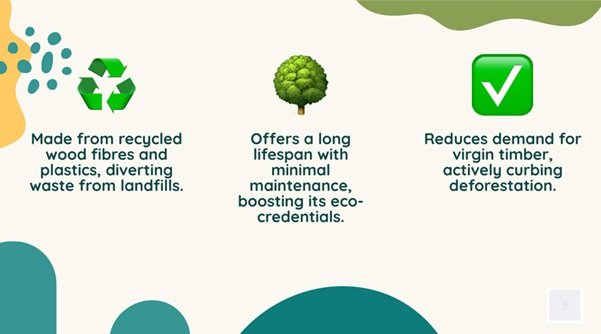
The core of WPC’s sustainability lies in its composition. These panels are typically made from a blend of recycled wood fibres and recycled plastics. By utilising waste materials from other industries, WPC actively contributes to reducing landfill waste and conserving virgin resources. This innovative approach helps to reduce deforestation by offering an alternative to newly harvested timber. The long lifespan and low maintenance requirements of WPC further improve its eco-credentials, as it reduces the need for frequent replacements and the use of chemical treatments. As the global market for acoustic panels increasingly seeks eco-friendly and sustainable solutions, WPC’s material composition positions it as a leader in environmentally responsible design.
Practical Applications and Installation Insights
Beyond its inherent benefits, the practical application and straightforward installation process of WPC cladding significantly contribute to its widespread appeal. We’ve seen it used in increasingly innovative ways, extending its utility far beyond just exterior facades. This section digs into these creative uses and provides essential insights into its installation, especially when considering its role in acoustic soundboard panels.
Creative Applications Beyond the Facade
While WPC cladding is renowned for changing home exteriors, its versatility allows for a myriad of creative applications within the interior of a building, often contributing to improved acoustics. The ability to create a seamless indoor-outdoor flow is a key design trend, and WPC facilitates this beautifully.
We frequently see WPC used for internal feature walls, adding texture, warmth, and a touch of natural elegance to living rooms, bedrooms, or even commercial spaces. These feature walls can double as an aesthetic base for acoustic soundboard panels, where the WPC’s structure can be designed to absorb or diffuse sound. Imagine an alfresco ceiling or soffits clad in WPC, extending the exterior aesthetic into covered outdoor areas, while also providing a degree of sound dampening for outdoor entertaining spaces. The material’s durability and moisture resistance make it ideal for these transitional zones.
In residential settings, WPC can be incorporated into home offices or studies to create a calming and focused environment. When combined with appropriate backing, WPC slatted panels can act as effective acoustic soundboard panels, reducing reverberation and improving speech intelligibility. This is particularly valuable in open-plan living areas where sound can easily travel and create an echoey environment. The blend of visual appeal and functional acoustic benefits makes WPC a dynamic choice for interior design.
A Guide to Installing Modern Cladding
The installation process for WPC cladding is generally designed for efficiency, making it an attractive option for both experienced DIYers and professional installers. Its lightweight nature simplifies handling and reduces the structural load on buildings, which can be a significant advantage over heavier traditional materials.
Most WPC cladding systems employ user-friendly fixing systems, often involving concealed clips or screws that result in a clean, fastener-free finish. This not only improves the aesthetic but also protects the fixings from environmental exposure, contributing to the system’s longevity. For those with a keen interest in home improvement, WPC cladding can be a rewarding DIY project. However, we always recommend that even experienced DIYers thoroughly review manufacturer guidelines and consider the scale and complexity of their project. For larger or more intricate installations, engaging professional installers ensures precision, compliance with building codes, and optimal performance. For those looking to undertake a project, a comprehensive resource for DIY modern WPC cladding can provide invaluable step-by-step guidance and tips for a successful outcome. Additionally, reputable suppliers often offer robust support, including technical advice and installation guides, to ensure a smooth process.
Integrating Acoustic Performance with Design
This is where WPC cladding truly shines as a multi-functional material, particularly in the context of acoustic soundboard panels. While WPC itself is not inherently a high-performance soundproofing material, its structure, especially in slatted designs, can be ingeniously integrated with acoustic backing to create highly effective sound absorption solutions.
What are acoustic soundboard panels and how do they work? Acoustic soundboard panels are specialized panels designed to absorb sound waves, reducing echo, reverberation, and overall noise levels within a space. They work by converting sound energy into heat as sound waves penetrate the porous or fibrous materials within the panel. Unlike soundproofing, which aims to block sound transmission between spaces, acoustic panels focus on improving the sound quality within a room. WPC, particularly in slatted forms, can serve as the decorative face of these panels, with an absorptive material (like polyester fibre, mineral wool, or fiberglass) placed behind it.
What are the primary benefits of using acoustic soundboard panels? The benefits are numerous. They significantly improve speech intelligibility in offices and classrooms, improve the listening experience in home theatres and recording studios, and create a calmer, more comfortable environment in open-plan living areas or commercial spaces. By reducing excessive echo, they can also mitigate the adverse effects of noise pollution on health and productivity, a growing concern highlighted by the market’s expansion.
What are the different types of acoustic soundboard panels available on the market? Beyond WPC-faced panels, the market offers a wide range. These include fabric-wrapped panels (often fiberglass or mineral wool cores), foam panels (like polyurethane foam), perforated wood panels, and diffusers (which scatter sound rather than absorb it). Each type has different aesthetic and acoustic properties. For example, some suppliers offer specialized acoustic panel products designed for specific applications.
What materials are commonly used in the construction of acoustic soundboard panels? Common materials include fiberglass, mineral wool, polyester fibre (often recycled PET), acoustic foam, and wood (often perforated or slatted with an absorptive backing). WPC, with its wood and plastic composite, offers a durable and attractive facing material for these absorptive cores.
Where are acoustic soundboard panels typically installed, and for what purposes? They are installed on walls and ceilings in virtually any space where sound quality is important or noise reduction is desired. This includes home theatres, recording studios, offices, conference rooms, restaurants, educational institutions, healthcare facilities, and even residential living areas. The purpose is to control reverberation, reduce background noise, and improve clarity. The residential segment, with the rising popularity of home theatres and home offices, is seeing significant growth in demand for these solutions.
How do you choose the right acoustic soundboard panels for a specific application? Choosing the right panels involves considering the room’s size and shape, the type of noise problem (echo, excessive reverberation, external noise), the desired aesthetic, and the budget. Factors like Noise Reduction Coefficient (NRC) ratings, fire safety, and material composition are crucial. For instance, a home theatre might benefit from panels designed for broad frequency absorption, while an office might prioritize speech intelligibility.
What are the key factors to consider when comparing different acoustic soundboard panel brands and models?Key factors include the NRC rating (higher means more absorption), material composition (for durability, fire rating, and sustainability), aesthetic options (colors, finishes, sizes), ease of installation, and cost. Customer reviews and testimonials, like those found on Amazon product listings, can offer practical insights into real-world performance.
What is the typical cost range for acoustic soundboard panels? Costs vary widely based on material, size, thickness, and aesthetic finish. Basic foam panels can be quite inexpensive, while high-performance, fabric-wrapped panels or custom-designed WPC panels can range from tens to hundreds of dollars per panel. The overall investment depends on the coverage area and the desired level of acoustic treatment.
Are there any DIY installation options or considerations for acoustic soundboard panels? Many acoustic panels are designed for DIY installation, especially lighter foam or polyester panels that can be attached with adhesive sprays, tapes, or even Command strips. WPC slatted panels, when designed as acoustic solutions, can also be installed by experienced DIYers, often using simple screw-in or clip systems. However, precise placement and adequate coverage are key to effectiveness. For a deeper dive into sound management, our comprehensive guide, “Soundboard Wall Panels: The Ultimate Buying Guide for Soundproofing,” offers valuable insights for both DIY enthusiasts and those considering professional installations.
What are the maintenance requirements for acoustic soundboard panels?Maintenance is generally low. Most panels can be gently vacuumed or wiped with a damp cloth to remove dust. Fabric-wrapped panels may benefit from occasional spot cleaning. WPC-faced acoustic panels are particularly low-maintenance due to the inherent properties of the composite material, resisting moisture and stains.
How do acoustic soundboard panels differ from traditional soundproofing materials? This is a critical distinction. Acoustic soundboard panels primarily absorb sound to improve the sound quality within a room (reducing echo and reverberation). Traditional soundproofing materials, like mass-loaded vinyl or dense drywall, aim to block sound from entering or leaving a space. While both contribute to a quieter environment, they achieve it through different mechanisms. WPC, when used as a decorative facing for acoustic panels, improves absorption, but its primary role in soundproofing (blocking sound) would be limited unless combined with other dense, mass-adding materials.
What are the environmental or sustainability considerations for acoustic soundboard panels? As mentioned, WPC offers excellent sustainability due to its recycled content. Other eco-friendly options include panels made from recycled PET plastic, natural fibres like hemp or wool, and formaldehyde-free fiberglass. The market’s focus on product innovation, including eco-friendly and sustainable acoustic solutions, is a positive trend.
By integrating WPC cladding with acoustic backing, we can create visually stunning and acoustically optimized spaces. This is particularly beneficial for home theatres, where superior sound clarity is paramount, or in open-plan living areas where controlling ambient noise is essential for comfort and communication. The slatted design of many WPC panels naturally lends itself to acoustic applications, allowing sound waves to pass through to the absorptive material behind. This thoughtful integration of form and function lifts interior design, making spaces not just beautiful, but also sonically superior.
WPC cladding offers a compelling combination of sophisticated aesthetics, robust performance, and sustainable credentials, rightfully earning its place as a transformative material in modern Australian design. Its versatility allows for creative expression while its low-maintenance nature answers the call for practical, long-lasting building solutions. We are proud to contribute to this evolution, providing materials that meet the highest standards of design and functionality. To explore the possibilities for your next project, you can request a free sample to see the quality or get in touch with a specialist for expert advice.