How to Plan a Kitchen Renovation in Atlanta Without Disrupting Your Daily Routine
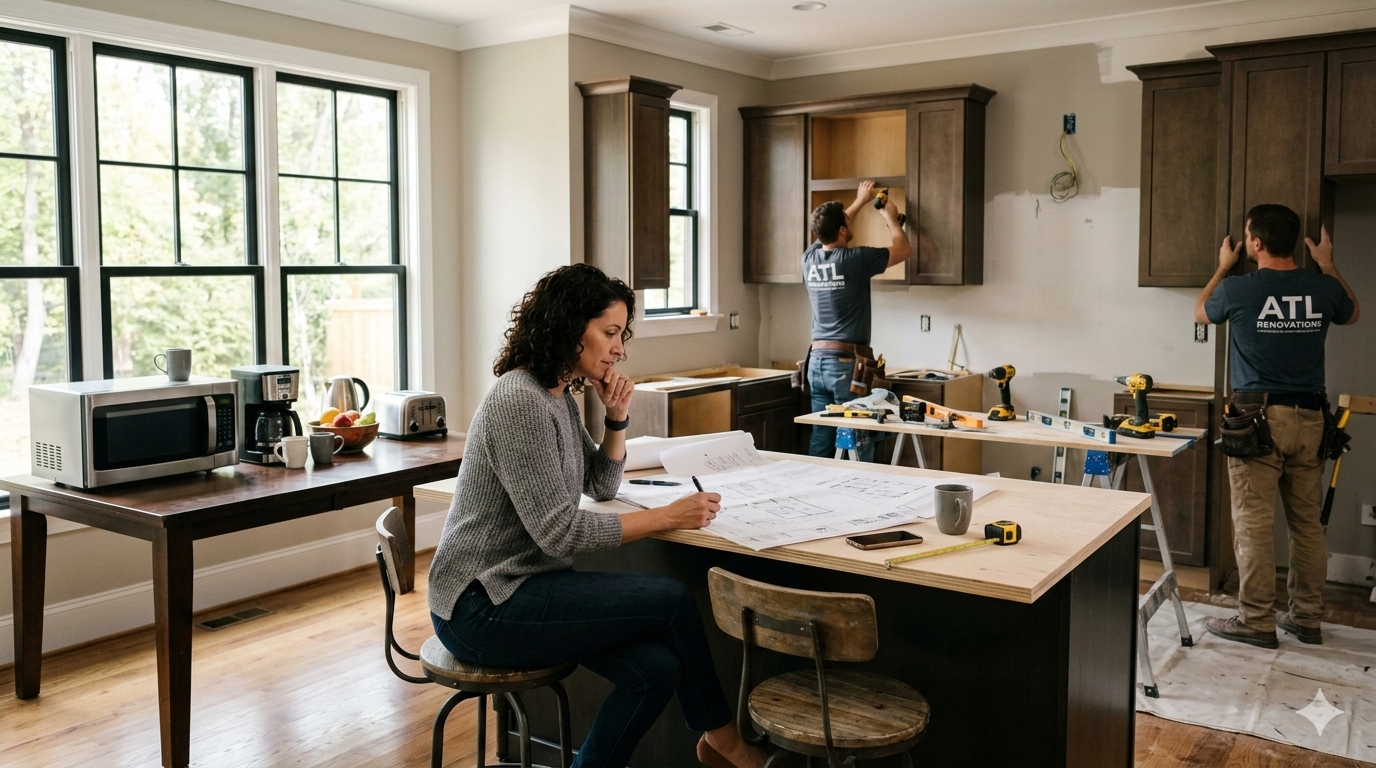
Alt text: A candid photograph captures a woman in a grey sweater reviewing renovation blueprints on a kitchen island, while two contractors install cabinets in the background. The scene features a temporary setup on a side table with a microwave and coffee maker, set against large windows overlooking a green, leafy view.
Key Takeaways
- Start with a realistic timeline that accounts for contractor demand and permit timelines in Atlanta
- Set up a temporary kitchen before demolition begins, not after
- Order materials early because supply chain delays are common in active renovation markets like Atlanta
- Budget for the unexpected, including appliance failures mid-project
- Communicate daily schedules with your contractor to protect work-from-home hours
- Finalize major design decisions early, so you do not stall progress later.
The first time I managed a kitchen renovation in Atlanta, I underestimated one thing completely. The disruption affects everything else in the house. Meals, mornings, and daily routines get thrown off the moment demolition starts.
Atlanta homeowners are busy. Atlanta homeowners are busy. Whether you live in Buckhead, Decatur, or East Atlanta Village, daily life does not pause for a remodel. That is why planning a kitchen renovation is not just about choosing cabinet finishes and countertops. It’s about protecting your daily rhythm while the work gets done.
This guide is for homeowners who want a renovated kitchen without weeks of disruption to their household. I will walk you through what actually works based on real experience managing renovations in Atlanta.
Create a Realistic Kitchen Renovation Timeline
The biggest mistake I see homeowners make in Atlanta is starting a renovation without a phased timeline in place. Larger renovation projects often involve multiple specialists working at different stages. Understanding which professionals are involved and when they enter the process helps prevent delays.
A realistic kitchen renovation in Atlanta typically runs between four and ten weeks, depending on the scope. Cosmetic updates, such as new cabinet doors, hardware, and backsplash, land on the shorter end. Full gut renovations with layout changes typically take 10 weeks or more, especially if structural work or permit approvals are involved.
Permitting in Fulton County and DeKalb County can add one to three weeks to your timeline for most kitchen renovations, especially when plumbing, electrical, or structural changes require plan review. Factor that in from day one.
Break the Renovation Into Clear Phases
Instead of thinking of the renovation as one long event, I break it into clear phases:
- Pre-construction — permits, material orders, contractor scheduling
- Demolition — usually two to four days
- Rough work — plumbing, electrical, framing changes
- Installation — cabinets, appliances, fixtures
- Finishing — countertops, backsplash, paint, hardware
- Final walkthrough and punch list
Each phase has different disruption levels. Rough work is the loudest and dustiest. Installation is when the kitchen starts coming back to life. Knowing this helps you mentally prepare — and plan around it.
Set Up a Temporary Kitchen Before Demolition Begins
This is the most practical preparation I recommend, and many homeowners skip it entirely.
Before your contractor removes a single cabinet, set up a functional temporary kitchen. It doesn’t need to be elaborate. A folding table, microwave, coffee maker, and mini fridge in a dining room or garage can support daily meals surprisingly well.
In Atlanta’s warmer months, which are most of the year, a covered patio works well as an extended prep area. You can run a power strip out there and keep a toaster oven or electric skillet handy.
What to Stock in Your Temporary Setup
- Microwave and small countertop appliances
- Paper plates and disposables to reduce dishwashing
- A cooler or mini fridge for daily essentials
- A single-burner induction cooktop if you want real cooking capability
- Access to a bathroom sink for quick food prep rinsing
The goal isn’t gourmet meals. The goal is surviving the renovation without ordering takeout every single night, which adds up fast.
Order Materials Early in Atlanta’s Busy Renovation Market
Atlanta’s renovation market stays active throughout most of the year. Contractors are booked out weeks in advance, and material lead times have stretched significantly in recent years. Custom cabinets often take six to twelve weeks from order to delivery.
My rule: order everything before demolition starts. That means cabinets, countertop slabs, tile, fixtures, and appliances should all have confirmed lead times before anyone swings a hammer.
If you’re sourcing materials from the Atlanta Design Center near Peachtree Hills or visiting showrooms along the Marietta Street corridor, go early in the process — not mid-renovation when you’re scrambling.
What Gets Delayed Most Often
- Custom or semi-custom cabinetry
- Natural stone countertops (especially quartzite and marble)
- Specialty tile or handmade backsplash materials
- High-end plumbing fixtures
- Built-in appliances with specific cutout requirements
If your preferred countertop is out of stock, having a backup option picked out in advance saves days of stalled work.
Alt text: A woman in a blue sweater and jeans is sitting on a wooden stool at a marble-top kitchen island, using a calculator and writing on a clipboard. A man in a work shirt stands nearby, holding blueprints and looking at her. They are in a partially renovated kitchen with unpainted wood cabinets, tools, and a laptop on a workbench, and large windows looking out onto a green yard.
Budget a Contingency for Renovation Surprises and Appliance Issues
Every renovation budget needs a contingency line. I recommend setting aside 10 to 15 percent of the total project cost for surprises. In Atlanta, where older homes in neighborhoods like Candler Park, Grant Park, and Virginia-Highland regularly hide outdated wiring or aging plumbing behind walls, surprises are more common than rare.
One issue that often surprises homeowners is appliance failure during a renovation. It happens more than you’d expect. The stress of construction, temporary disconnections, and reinstallation can expose underlying issues in appliances that were barely holding on. Your refrigerator gets moved, your dishwasher gets reconnected, and something stops working.
When that happens during an active renovation, you don’t have time to wait days for a repair appointment. That is why I recommend having a reliable same day appliance repair service in Atlanta saved in your contacts before construction begins. Getting a washer, refrigerator, or range back online the same day keeps the project and your household moving without a costly detour.
Replacing a functioning appliance because it’s inconvenient to repair mid-renovation is one of the more expensive mistakes I see. A fast repair call is almost always the smarter first move.
Communicate Daily With Your Contractor During the Renovation
Experienced contractors in Atlanta often manage several projects at once. If communication expectations are not established early, homeowners often find themselves wondering who will arrive and what work will be done that day.
I recommend a brief daily check-in — even a two-minute text exchange — that covers:
- What work is planned for that day
- What areas of the house will be affected
- Any decisions needed from you before work can continue
- End-of-day progress summary
If you work from home, identify your non-negotiable quiet hours upfront. Most contractors will schedule loud work in the morning and reserve afternoons for quieter tasks if you ask.
Finalize Design Decisions Before Construction Begins
Renovations often stall because a design decision has not been finalized. The countertop hasn’t been chosen. The homeowner can’t decide between two cabinet colors. The tile hasn’t been confirmed.
Every day your contractor waits for a decision costs you money and prolongs your disruption. Make every finish selection, such as colors, materials, hardware, and fixtures, before demolition begins. Keep a physical or digital file with all confirmed choices and product specs to avoid ambiguity on site.
Protect the Rest of Your Home During the Renovation
Dust is one of the most underestimated problems during a kitchen renovation. In an open-plan Atlanta home, which is common in newer builds and renovated bungalows alike, fine construction dust travels everywhere within hours.
Before work begins, seal off adjacent rooms with plastic sheeting. Remove or cover furniture in connected living spaces. If you have an HVAC system, seal the nearest vents temporarily to prevent dust from circulating through the ducts.
This is not excessive preparation. It is the difference between a one-hour cleanup and a full day of deep cleaning.
Renovating Has Its Own Rhythms
Atlanta’s climate and renovation culture influence project timelines in ways many homeowners do not initially expect.
Summer humidity, consistently high from June through September, affects drying times for paint, grout, and adhesives. Work that cures in two days in dry climates can take three or four days in August in Atlanta. Plan accordingly, especially for countertop installations and tile work.
Atlanta also has a strong contractor market concentrated around specific neighborhoods. Renovation companies based in Sandy Springs, Smyrna, and Marietta frequently work across the metro area. Getting referrals from neighbors in your specific neighborhood is often more reliable than broad online searches, since local contractors know the housing stock and common issues specific to your area.
Permit inspections through Atlanta’s Office of Buildings can be scheduled online, but inspection slots fill quickly during peak renovation season, typically spring and early fall. Your contractor should be pulling permits and scheduling inspections in advance, not reactively.
Lessons I’ve Learned Managing Kitchen Renovations in Atlanta
After working through multiple Atlanta kitchen renovations, a few lessons keep proving themselves true:
The lowest quote is rarely the best long-term value. In a city with as much renovation activity as Atlanta, contractors who undercut the market are often managing too many jobs or cutting corners on scheduling. Vet your contractor thoroughly — check reviews, ask for references from completed Atlanta projects specifically, and confirm they’re licensed with the Georgia Secretary of State’s office.
Delayed material decisions almost always increase renovation costs. Every time a homeowner says, “I’ll decide on the countertop next week,” the project cost goes up. Idle contractor time is billable time in most contracts.
Your temporary kitchen matters more than you think. Homeowners who set up a real temporary kitchen with a microwave, induction burner, and mini fridge report significantly lower stress during the renovation. The ones who wing it spend more on food and more time frustrated.
Appliances fail at the worst times. Mid-renovation is peak appliance vulnerability. Having a same-day repair contact ready isn’t pessimism. It’s just good planning.
Common Questions About Kitchen Renovations
How long does a kitchen renovation typically take?
A cosmetic refresh takes four to six weeks. A full gut renovation with layout changes runs eight to twelve weeks, especially factoring in Atlanta’s permitting process and contractor availability.
Do I need a permit for a kitchen renovation in Atlanta?
Yes, in most cases. Any work involving electrical, plumbing, or structural changes requires permits through the City of Atlanta’s Office of Buildings or your county’s permitting authority. Your contractor should handle this. Confirm it before signing any contract.
What’s the best time of year to renovate a kitchen in Atlanta?
Late fall and winter, from October through February, tend to offer better contractor availability and shorter permit timelines. Summer work is possible, but humidity can affect the curing times of materials.
How do I find a reliable contractor?
Ask neighbors in your specific neighborhood for referrals, check Google reviews for contractors with Atlanta-specific project histories, and verify licensing through the Georgia Secretary of State’s Corporations Division. Houzz and the National Kitchen and Bath Association also maintain contractor directories.
What should I do if an appliance breaks during my renovation?
Don’t assume it needs replacing. Contact a same-day appliance repair service first. A fast diagnostic call often resolves the issue the same day and avoids unnecessary appliance replacement costs during an already expensive project.
Final Thoughts on Planning a Smooth Kitchen Renovation in Atlanta
A kitchen renovation in Atlanta doesn’t have to mean weeks of domestic chaos. The difference between a smooth project and a stressful one almost always comes down to preparation. This includes a realistic timeline, a temporary kitchen, early material orders, and clear communication with your contractor.
Atlanta’s renovation market is active and competitive, but it rewards homeowners who come prepared. Know your phases, make your decisions early, and plan for the unexpected, including the appliances that always seem to act up at the worst moment.
The kitchen is the heart of the home. With the right plan, you get it back — better than before — without losing your mind in the process.