Stormwater Pipe Inspection Camera: The Essential Tool for Drain Diagnostics
What Is a Stormwater Inspection and Why Does It Matter?
Stormwater systems are often out of sight, out of mind – until a problem arises. These hidden networks, designed to manage rainwater runoff, are crucial for protecting properties from flooding, erosion, and pollution. But neglecting their condition can lead to significant structural damage, environmental hazards, and unexpected repair costs.
This is where advanced CCTV (Closed-Circuit Television) stormwater inspection becomes an indispensable tool. Using high-resolution camera technology, we can peer deep into your underground drainage pipes. This non-invasive method uncovers hidden issues before they escalate into major crises.
In this comprehensive guide, we will examine the crucial role of CCTV stormwater inspection. We will dig into what it entails, why it is essential for maintaining infrastructure, and the specific problems it can identify. You will learn how this technology contributes to proactive maintenance, extends system lifespan, and ensures compliance with environmental regulations. This modern approach to trenchless stormwater inspection enables us to make informed decisions about the health of our infrastructure. Join us as we uncover how this powerful diagnostic tool safeguards our communities and environments.
A stormwater inspection is a thorough check of the pipes that carry rainwater away from your home and property. Unlike sewer lines that carry waste from inside your house, these pipes handle runoff from your roof, driveway, and yard. In places like Winston-Salem and High Point, where heavy clay soil doesn’t absorb water quickly, and large trees are common, these systems are critical for preventing flooding and foundation damage.
Stormwater systems are integral to modern societies because rainwater cannot be naturally cycled through developed landscapes. They act to collect, manage, and maneuver rainwater for repurposing and redistribution away from communities. Without proper management, excess stormwater can lead to significant problems, impacting both private property and public infrastructure.
What Causes Stormwater Pipe Problems?
Stormwater pipes, although designed for durability, are constantly subjected to various stressors that can lead to deterioration and failure. Understanding these common culprits is the first step in proactive maintenance.
- Tree Roots: This is perhaps the most notorious problem. Large, mature trees, common in many residential areas, have extensive root systems that naturally seek out moisture and nutrients. Even the most minor crack or loose joint in a stormwater pipe can provide an entry point for these roots, which then grow, expand, and eventually block or even fracture the pipe.
- Pipe Age and Material Deterioration:Like any infrastructure, stormwater pipes have a lifespan. Older pipes, often made of materials like clay or cast iron, are particularly susceptible to corrosion, cracking, and collapse over time. Modern pipes, made of PVC or HDPE, are more resilient but can still suffer damage from external pressures or improper installation.
- Clay Soil Shifts: The heavy clay soil prevalent in areas like Forsyth County is prone to expansion and contraction with changes in moisture content. This constant shifting can exert immense pressure on underground pipes, leading to misalignments, cracks, and even complete breaks.
- Blockages: Beyond tree roots, pipes can become blocked by a variety of debris. Sediment, leaves, silt, construction material, and even foreign objects like plastic bags or discarded items can accumulate, restricting water flow and causing backups. Obstacles such as cinder blocks and bikes are not uncommon in stormwater pipes, especially compared to sewer lines, where access is more restricted.
- Cross Bores: A particularly hazardous problem, cross bores occur when new utility lines (such as gas or fiber optic cables) are drilled horizontally and unintentionally intersect existing stormwater or sewer pipes. These breaches can lead to severe blockages, structural damage, and even hazardous situations if gas lines are involved. More than one million cross bores are estimated to exist in the U.S. subsurface infrastructure.
- Poor Installation: Improper grading, insufficient bedding, or incorrect pipe connections during installation can create weak points that fail prematurely under normal operating conditions.
These issues, if left unaddressed, can escalate rapidly from minor inconveniences to major emergencies, highlighting the critical need for regular inspections.
The High Cost of Ignoring the Signs
Ignoring a potential stormwater issue can lead to expensive and stressful consequences. Water that can’t drain properly will always find the path of least resistance, which could be your home’s foundation, basement, or crawl space. This can lead to structural damage, mold growth, and costly landscape repairs. The financial burden can be substantial, with repairs potentially running into thousands of dollars, not to mention the emotional toll of dealing with property damage.
Beyond your property, untreated stormwater issues have broader environmental implications. Damaged pipes can lead to uncontrolled runoff, which carries pollutants into local waterways, impacting aquatic ecosystems and potentially violating environmental regulations. For example, 850 billion gallons of untreated sewage are discharged into U.S. waterways annually. While this statistic primarily refers to sewer contamination, stormwater can also contribute significantly to water quality degradation.
A clear and calm diagnosis is the first step toward a lasting solution. Knowing exactly what you’re dealing with removes the anxiety and allows you to focus on the fix, not the fear. Proactive identification of issues through inspection can prevent millions of dollars in property damage and destruction of surrounding habitats.
Have questions? Call The Pipe Boss for expert sewer line repair you can trust.
How a Trenchless CCTV Stormwater Inspection Works
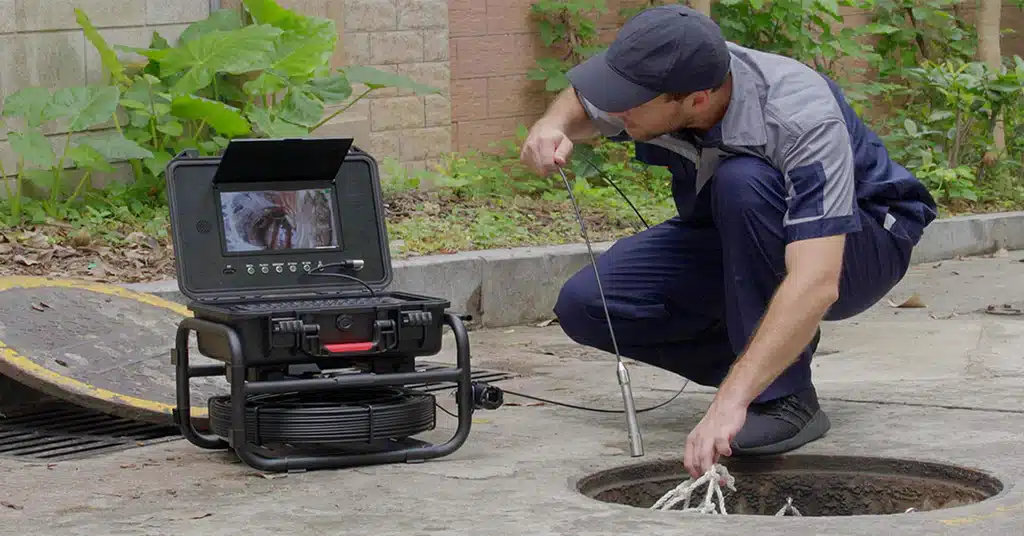
Seeing inside a buried pipe sounds complicated, but modern technology makes it straightforward and non-invasive. A trenchless CCTV (Closed-Circuit Television) inspection means we don’t have to dig up your yard to find the problem. This method provides a clear, real-time view of the pipe’s interior, enabling us to diagnose issues without the need for disruptive excavation.
The Tools of the Trade: Crawlers and Cameras
The heart of a CCTV stormwater inspection lies in its specialized equipment. These tools are designed to steer the challenging environments of underground pipes, delivering high-quality visual data to technicians above ground.
- Robotic Crawlers: For larger and longer pipe sections, robotic crawlers are deployed. These are self-propelled, wheeled, or tracked units equipped with high-resolution cameras. They can steer through pipes, often equipped with pan-and-tilt heads that provide a 360-degree view of the pipe’s interior. Some advanced systems can inspect pipes ranging from 2 inches to 120 inches in diameter. These crawlers are robust, capable of handling a wide range of pipe materials and conditions. They can even be fitted with different wheel configurations (pneumatic tires, tracks, or rubber wheels) for optimal traction on corrugated steel, HDPE, or concrete.
- Push Cameras: For smaller diameter pipes, shorter runs, or areas with limited access, a push camera system is used. This involves a flexible rod with a camera head at the end, which is manually pushed through the pipe. While less automated than crawlers, push cameras offer excellent maneuverability in tight spaces and bends.
- High-Resolution Video and Lighting:All inspection cameras capture high-definition video and still images, providing clear visuals of defects. Integrated LED lighting illuminates the pipe’s interior, ensuring visibility even in dark and wet conditions.
- Pan-and-Tilt Heads: Many cameras feature pan (side-to-side) and tilt (up-and-down) capabilities, allowing technicians to thoroughly examine specific areas of concern, such as cracks, joint separations, or potential blockages.
- ROVs (Remotely Operated Vehicles):For fully submerged, large-diameter pipes, ROVs are the most effective tool for visual inspections. These underwater drones can steer through water-filled pipes, providing crisp visuals of the entire pipeline.
- Safety Benefits: One of the most significant advantages of CCTV inspection is improved safety. Remote inspection vehicles eliminate the need for manned entry into confined spaces, which are inherently dangerous. From 2011 to 2018, 61 fatalities were reported on the job inside a manhole, sewer system, or storm drain. With the use of remote inspection vehicles, operators no longer have to enter hazardous environments.
- AI-Assisted Analysis: Emerging technologies, including AI and deep learning, are enhancing CCTV stormwater inspections. These systems can automatically identify, classify, and even quantify defects from video footage, reducing the labor-intensive nature of manual review and improving consistency and accuracy. This technology can significantly decrease the ongoing annual costs of inspections, making them more efficient and effective.
A Simple Checklist for Homeowners
If you suspect a stormwater drain issue, here’s a simple checklist to follow:
- Check the Obvious: Before calling a professional, take a moment to ensure your gutters and downspout openings are clear of leaves, twigs, and other debris. A simple blockage here can mimic a more serious underground problem.
- Observe During Rain: Pay close attention to your property during the next rainfall. Note where water is pooling, overflowing, or failing to drain correctly. Are there areas of erosion? Is water backing up from the drain grates? These observations can provide valuable clues for inspectors.
- Schedule an Inspection: If the problem persists despite checking obvious surface issues, or if you notice recurring issues such as sinkholes, slow drainage, or persistent damp spots, it’s time to call a professional for a camera inspection to identify the underlying cause.
The Benefits of a Trenchless CCTV Stormwater Inspection
Using a camera is about more than just finding a clog. This technology enables us to assess the overall health of your pipe, identifying small issues before they escalate into catastrophic failures. This proactive approach is a core component of modern, advanced trenchless stormwater inspection techniques, enabling repairs without major excavation. By providing a clear visual record, CCTV inspections help in:
- Early Problem Identification:Pinpointing cracks, root intrusion, blockages, or misaligned joints before they cause significant damage.
- Accurate Diagnosis: Eliminating guesswork, ensuring that any necessary repairs are targeted and effective.
- Non-Invasive Process: Avoiding the need for disruptive and costly excavation, preserving your landscaping and property.
- Cost Savings: Preventing expensive emergency repairs by addressing minor issues proactively.
- Compliance Verification:Documenting the condition of your stormwater system to meet local regulations and permits.
The Proactive Power of a Camera Inspection
A camera inspection isn’t just for emergencies. It’s a powerful tool for proactive maintenance that saves you money, protects your property, and helps the environment. By getting a clear view of your pipes, you can move from reacting to problems to preventing them. This foresight is invaluable for both property owners and municipal managers.
Early Detection and Targeted Repairs
The ability of CCTV inspections to provide a detailed, real-time view of the pipe’s interior is crucial for early detection of any issues. We can identify a wide range of specific problems:
- Cracks and Fractures: Small fissures that can lead to leaks or root intrusion.
- Joint Misalignments and Separations: Points where pipe sections have shifted, causing leaks or creating ledges that catch debris.
- Blockages and Sediment Buildup:Accumulations of silt, debris, or foreign objects that restrict flow.
- Root Intrusion: Tree roots that have entered the pipe and are beginning to grow.
- Corrosion and Deterioration: Signs of aging and material breakdown, ubiquitous in older pipes.
- Pipe Collapses or Ovality: Structural failures where the pipe has caved in or deformed, severely impeding flow.
- Infiltration and Exfiltration: Water leaking into the pipe from the surrounding soil (infiltration) or out of the pipe into the soil (exfiltration).
- Cross Bores: Unintentional intersections with other utility lines.
By pinpointing the exact location and nature of these issues, we can recommend targeted maintenance and repairs that address the specific needs. This means no unnecessary digging, less disruption to your property, and more efficient use of resources. This approach significantly contributes to extending the lifespan of stormwater systems, ensuring they remain functional for years to come. Furthermore, the data gathered facilitates more accurate budget forecasting and maintenance planning, enabling a strategic approach to infrastructure management.
Protecting Your Property and the Environment
Properly functioning stormwater systems are essential for protecting our local waterways. Damaged pipes can leak pollutants into the ground or cause erosion by discharging water where it is not intended. Stormwater runoff can carry sediment, chemicals, and other contaminants from streets and lawns directly into rivers, lakes, and streams. When stormwater pipes are compromised, this pollution pathway becomes more direct and damaging.
Regular inspections help ensure your system is functioning correctly, which is vital for maintaining compliance with local regulations, such as NPDES (National Pollutant Discharge Elimination System) permits, and protecting the local hydrologic cycle. NPDES permits often require consistent visual stormwater inspections as a standard practice, typically on a quarterly or annual basis, to ensure facilities are maintaining their Stormwater Pollution Prevention Plans (SWPPP). By maintaining the integrity of these systems, we help prevent flooding, reduce stream erosion, and safeguard the quality of our water resources. This commitment to environmental stewardship benefits the entire community.
How Often Should You Inspect Your Stormwater System?
For most homes, an inspection isn’t needed unless you see symptoms. However, it’s a wise investment when:
- Buying a New Home: Especially in an older neighborhood like Ardmore, a pre-purchase inspection can reveal hidden issues in the stormwater system, giving you leverage in negotiations or peace of mind about your investment.
- You Have Large, Mature Trees Near Your Drain Lines: Trees are a common cause of pipe damage. If you have significant tree growth near your stormwater pipes, a periodic inspection can help catch root intrusion early.
- You’re Planning a Major Landscaping or Construction Project: Before undertaking significant work that might impact underground utilities, an inspection can help identify the exact location and condition of your stormwater pipes, preventing accidental damage and ensuring proper planning.
- After Major Storms: Severe weather events can put significant stress on stormwater infrastructure. An inspection after a major storm can identify any damage or new blockages.
- Recurring Issues: If you consistently experience slow drainage, localized flooding, or sinkholes, a CCTV inspection is crucial for diagnosing the root cause.
Need help fast? Call The Pipe Boss for trenchless pipe repair in Winston-Salem. Same-day camera inspections and written estimates.
From Video to Action: Understanding Your Inspection Report
After the camera has completed its work, you’ll receive a report detailing the findings. This isn’t just a video; it’s a roadmap for repair. A professional report provides clear, actionable information, translating the visual data into understandable insights. It serves as a comprehensive record of your pipe’s condition, crucial for making informed decisions.
What’s in a Professional Inspection Report?
A thorough CCTV stormwater inspection report typically includes several key components, providing a complete picture of your system’s health:
- Video Footage: The raw video captured during the inspection is a primary component. This allows you to confirm any identified issues and visually understand their severity.
- High-Resolution Images: Still images are often extracted from the video to highlight specific defects, making them easier to reference and discuss.
- Defect Identification and Description:Each identified problem (e.g., crack, root intrusion, blockage, joint separation, cross bore) will be clearly noted and described.
- NASSCO Standards and PACP Codes:Many professional inspection reports adhere to NASSCO’s (National Association of Sewer Service Companies) Pipeline Assessment Certification Program (PACP) standards. This provides a standardized, industry-recognized method for documenting sewer conditions and defects, using specific codes to describe the type, severity, and location of each anomaly. This ensures consistency and facilitates communication among professionals.
- Pipe Material Assessment: The report typically identifies the pipe material (e.g., PVC, HDPE, clay, cast iron) and assesses its overall condition, noting any signs of deterioration or corrosion.
- Location of Issues: Precise measurements and mapping are used to pinpoint the exact location of each defect within the pipe run. This is critical for targeted repairs, minimizing guesswork and excavation.
- Recommended Actions: Based on the findings, the report will include expert recommendations for maintenance or repair. This could range from simple cleaning to trenchless repair methods, such as pipe lining, or more extensive excavation if necessary.
- Overall Condition Rating: Many reports include an overall condition rating for the inspected pipe segment, enabling the prioritization of repairs and maintenance efforts.
Making an Informed Decision
The goal of the report is to empower you. With a clear understanding of the pipe’s condition, you can confidently choose the correct repair method, whether it’s a simple cleaning, a spot repair, or a full trenchless pipe lining. This data-driven approach ensures you’re only paying for the work that’s truly needed. It eliminates the guesswork and provides transparency, allowing you to make cost-effective decisions that protect your property for the long term. This comprehensive documentation also serves as a valuable asset for future reference, maintenance planning, and property transactions.
FAQs
How long does a stormwater camera inspection take?
Most residential inspections are completed in about an hour or two, depending on the length and complexity of the pipe system. The process is quiet and doesn’t require any significant disruption to your property. For larger or more complex commercial systems, it may take longer.
Can a camera inspection detect leaks?
Yes. While the camera itself doesn’t measure water loss, it can clearly see cracks, holes, and separated joints where water is escaping the pipe (exfiltration) or where groundwater is infiltrating it (infiltration). Visual evidence of water movement or debris entering/exiting the pipe is a strong indicator of a leak.
My house is old. Can you inspect cast iron or clay pipes?
Absolutely. Our cameras are designed to work effectively with all types of pipe materials, including the cast iron and clay pipes commonly found in older Winston-Salem homes and other historic neighborhoods. High-resolution cameras can provide a clear picture of corrosion, cracks, bellies, and collapses in these aging lines, offering crucial information for informed repair or replacement decisions.
What happens if you find a major problem?
If we find a significant issue, such as a collapse, severe root intrusion, or a cross bore, we will immediately show you the footage, explain the problem calmly, and walk you through your repair options. We prioritize non-invasive solutions, such as trenchless pipe lining or pipe bursting, whenever possible, to minimize disruption to your property. We’ll provide a precise, written estimate for any recommended work.
Will I get a copy of the video?
Yes, we believe in complete transparency. We will provide you with the video footage from the inspection, along with a detailed report, so you can see the condition of your pipes for yourself and keep it for your records. This documentation is valuable for understanding the issue, making decisions, and for future reference.
A Final Word of Reassurance
Dealing with water issues can be stressful, but you don’t have to do it alone. A camera inspection is a straightforward, decisive first step that clarifies the issue. By utilizing advanced CCTV technology, we can provide you with an accurate diagnosis, enabling you to understand the exact condition of your stormwater system without the need for invasive digging. With a clear view of what’s happening underground, you can make a calm, informed decision to protect your home and get your peace of mind back.